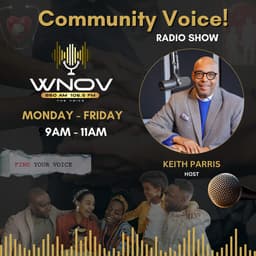
Good morning. Welcome to Community Voice. I'm your host Keith Parris over to thank everybody for everybody for joining us this morning. What you two Negroes was talking about prior to us coming on the air. I didn't even know you was listening. I'm just happy you're here.
So good morning. Good morning. Good morning. Good morning. Clark. How are you, sir? Jesus. Kind of look like my car back in the day. Hot boxing. I swear it looked like my car.
Like you get out like looking like my son That's crazy man, let me go just go back Thursday. Let me You know the dudes I hate it and the women the one who they be riding with you, you know, we blaze and they go do it
They just want to inhale it. They do the contact. Yeah. First of all, you really don't get a contact. Because I'm going to tell you how I know that that's the whole thing is false. No, seriously. When I was on papers, I tried that.
My PO looked at me and said, man, stop it. That's the dumbest thing I've ever heard in my life. I swear, she said, in order for your numbers to be that high, you got it in hell. You can't. And I was like, nah, man, I was around. Who was the football player for the Browns?
He was on paper And they drug tested him and he said no man, I was around some people that was smoking And it was like dude, it don't work that way They said the same thing my PO says that's the dumbest thing That is so psychosomatic, but you know why you ride with us, you know we ride dirt come on You know there's other ways to the club
Right. Call your other guy because you know what's going on in this. The crazy thing is it wasn't like then you walk up and wherever the spot was not smelling. Oh, yeah. You know, like let the window down, man. What? But anyway, that throwback moment was brought to you by the cannabis growers of America. No, but you know, what I don't understand is for these guys, man, that
Go into the funerals like you get right out the car and Come into the funeral and light the funeral do church up Folk folks we getting right right in front of this window here. You go right. I've seen the yet come out. I've seen the bloods come out Man, I didn't know mama's funeral was messing with you that bad. It's I mean and you go I'll be on the Oregon. I'm on the Oregon And I look around like man something did somebody just spark one of these
Because that's how loud is it. It's like, wow. Yeah, well. Angel Dust. Man, I was all geeked up the day. I thought I was going to get a chance to talk to Kelly Price. And that interview has been moved to next week. Oh, man, I went and did my prep work. Now you can do some more prep work. Yeah, man. You know, I forgot she did as we lay.
Oh, yeah She got a whole lot of trouble with church folks on that one When she recorded that song was she married to Bishop there She was she was married to a bishop. Oh, was she cuz he's just I just saw that she's been she's just got divorced What? Natalie Natalie Cole was married to a preacher Marvin Yancey was
Not only a songwriter. He was supposed to be a preacher too Now you know what I found out I didn't know that when little Richard left rock and roll he became a preacher. Oh, man There's two great docs out there little Richard one that HBO did it when PBS did and He had been I think for a Lot of people
who struggle with their sexuality. And I don't know if he struggled with his sexuality as much as he was trying to reconcile his love for God with his sexuality. And so, yeah, he went on a little period where he actually had gone to, what's the college down in? Is it Oak down in Alabama? Oakwood?
He was down there studying theology. Yeah, you know and and and this is this is hopefully is not too much inside baseball, but That's that's always been just because of society's view on Same-sex attraction same-sex relationships It's hard for people who are called
to ministry, for example, to reconcile their sexuality with the teachings of the church. I heard Bishop Yvette Flunder said that, you know, your pulpit needs to align with your bedroom, which is really a controversial statement. But I think that that was it. I think he was troubled, you know, and I think that a lot of people, Billy Preston, there were a lot of people, especially those folks who came out the church because
I know what they were hearing and what the church's stance was. And, you know, before Bill Clinton ever introduced this to the military, the church was, don't ask, don't tell, right? We could care less about what you do if we don't see what you're doing, even though it's obvious you are who you are. I don't know if the church is ever going to get to the point where that's going to be reconciled. I just, I just think it's too big then to.
the culture of the church and It's even hard having conversations around it because You know again, and I'll just be honest there there are a lot of closeted Bishops and and this is this is a cross Denomination, so this is not anything particular to one denomination, but I could tell you that
Uh, it's a career killer for pastors. Well, I mean, more so though. Well, I don't know any more so than, but a pastor having a child out of wedlock is not necessarily a career killer. So I'm just saying when, when people get to certain behaviors, um, yeah, that's what I'm saying. But, you know, but I, I don't know, I don't know a lot of pastors who have survived, um, um, being exposed as gay.
That's a tough one. And that's just culturally where we are. Donnie McClurkin right now is dealing with his issues. But he refuses to step away from ministry until that situation is resolved. There's a lawsuit out there alleging sexual assault. So I think it's a woman. I mean a man.
So I mean, I think it's we still live in a homophobic world and you know That people As we had this serious conversation, they're back here Eating some nasty potatoes. That's what you get. Listen here doc. I'm so hungry. This cat brought in some
And I believe everything goes back to slavery. Oh, these chips right here. Oh, these ain't bad. No, they bad. Yeah. Yeah, slavery. I told you. I told you.
That's what you get for looking all in my eyes while
Yeah, these ain't too bad. I mean they got a little sweet aftertaste, but the aftertaste is kind of It's kind of hard man. It's kind of oh those are kettle chips Those are kettle chips man tastes like it was made with molasses Molasses Anyway, hey y'all phone lines open throwback Thursday 414 444 5250 414 444 5250
Man, boy. Whoo. I don't know if you saw the match. No, I missed it. Oh, my God. Oh, my God. Me and Rhonda watched the end of it. Oh, Argentina scores two goals in the last seven minutes of the match. They was now one zero. Oh.
And they scored two goals in the last two minutes and the last seven minutes seven minutes. Oh man, that was just they they scored a goal 85 minutes 85 at 85 point and then he scored another one an extra time two minutes So it was seven minutes. So they won two to one dude England made all kind of tactical mistakes at the end of the ball game remember ball games are one or at the last two minutes
and then when you get tired habits. Oh man, it was do put in these dudes. He made a substitutions and the people he put in could not defend and it was just like get the ball to messy. I don't know if everybody's seen Will Ferrell movie kicking and screaming with the kids soccer players. He said, what's our office? Get the ball to the Italians, right? It is get the ball to messy and get out the way. Yeah.
And Massey did his magic, man. So Spain and Argentina Sunday. So which one of those teams are the teams that nobody has scored on? Was it Spain? Spain. Now, that game, something is what I'm going to be glued to that one, man. And that's what I'm saying. And look for a lot. England was pretty much controlling the match until, like I said, the 85-minute point. And then you could see that the dudes from Argentina
Had been there because you know they they're the reigning, you know world cup champs so You know and that's important too that that you there that you've been there enough, but man that was a great match You know Like I said for soccer if you're not used to watching it you have to calibrate how you watch it Many of us are used to where people are scoring like basketball or football. They're scoring constantly, right? That's not the case with soccer and then You know there was one dude
put it right on the post. This was like an inch away from scoring that first time. That ricochets out, goes out to Messi. Messi puts it over, dude does the header. But man, and that's what people sit there and wait for. Now, you know, Rhonda's been watching it because our nephew Bryson is a soccer player in Miami, big Messi fan. And Messi plays for the Miami professional team. So amen.
I Thank God for For the World Cup It's been interesting. Let's see. Got any comments in the anybody's part of the Profound or I Know Salise was yesterday Great third or good morning What is the name and the artist of the opening song Valdez in the country
Donnie Hathaway. That's going to be a great interview one day. Layla. Oh, you almost scared me. What we talking about superstition? Yes. I was in my bedroom. I turned off the light. And it was Donnie Hathaway.
I don't know if Civic Media has a drug policy. They're going to have me in there being drug tested. No, man, I'm telling you, man. And I'm talking to Donnie. Donnie got the apple on. And you know, we rapping. Like, man, what would you think about when you wrote the ghetto? Listen, Doc, if you haven't interviewed her with Donnie, you're going to be on other sides, brother.
Right. Right. Right. With a microphone. With a microphone. Yeah. Little ribbon tied on the microphone. Oh man. Well you know there's some people that's superstitious though. I I mean I believe it man. Like people with dreams like old folks and dreams and if you if you dream of fishes with that pregnancy. No but that's true though. Man no listen I promise you.
I'm not lying, man. My mom... Oh, what had a guy? Right here. My momma told me. My momma told me. And I don't know how she knew, but my mother told me when my daughter momma was pregnant. Like, she didn't even see her. And she was like, she had a dream about some fishes. And she was like, somebody pregnant. And so...
She looked at me. It was like boy. Don't you bring no babies? He's speaking of Canada. A lot of people. Why do ducks have flat feet to put out forest fires?
Thank you for listening listening down in Houston, Texas. Hey man speaking of forest fires, man Somebody is starting these fires man
No, man. Four fires. Yeah, nature does. Wait a minute. So you mean it to me? Yes. So you mean it to me that fire just abruptly starts out of nowhere, man? Why do elephants have flat feet to put out the flaming ducks and we're trying to put out the fire?
Where's my guy from the dungeon? Please don't tell me that happened to him. Please Lord Oh, please all right. I'm talking about man. We haven't heard from a man. Maybe it's still in the dungeon. Let's hope that you know what I'm looking at that cowbell
And Peacot has been doing some documentaries on different parts of SNL. I did not know that the most popular skit of all time is Will Ferrell and Christopher Walken doing the Cowbill. More Cowbill. More Cowbill. So they actually go back and talk to the members of the Blue Oyster Club. They're arguing about who played the Cowbill.
on the song. Oh my god. This was so cool because I remember when I watched it the first time, I was in tears, man. But when you get the background on how they put it together, you know, I mean, it was, they said it was just like probably one of the greatest moments on Saturday Night Live. And that outfit that will throw that out. And you know what he did, he said in dress rehearsal, he had a normal shirt.
for the actual skin, he wouldn't have put on this too tight shirt, right? So, I mean, it was comic genius. Everything, man, in terms of... It looks watered. It looked like it, don't it? Yeah, right here. It sure is blue. It's like on the street. No. That's water on the street from where, though? It didn't rain. No, it ain't raining. No, it ain't raining. Is it raining? Yeah.
Well, why people ain't got their wishing wipers on? It ain't raining. So that's the do. The sprinklers, OK. Oh, I was going to say, hold on. Man, I was driving down Pasadena. Pasadena is a stretch of street from Center to North Avenue. It's like 87th Street. And so when me and Frankie go down there, because, you know, Frankie's my lawn guy, when we go down there, we're looking at the lawns.
And most people have just given up water in the grass. It's over, man. I mean, you just, it's brown. And if you water in the grass now, it ain't going to make a difference. You know what, man? I want to ask you something. I see that Mr. Stingley just put something in the thread. But I was asking him, asking.
I remember back in the day, they used to say, if you had a dream about you falling, you were supposed to wake up before you hit the ground because if you don't wake up. You're going to die. You're going to die and you'll sleep. And you ever had those dreams that you was falling in all of a sudden? No, man. And don't do that. Because here's what you're doing. Y'all created. Right. Y'all created suggested. So are you going to stop? Yeah. You're right. Because, you know, and I'm going to use a big word today. I know it's Thursday.
Because I'm just that malleable. You put it in my brain. It's like a song. I gotta be coming in and listen to what you're saying. The last thing I heard on the radio. Speaking of Kelly Price. That song fell in love with Christmas. You know who she does it with? Mary Mary. Oh, yeah, yeah, yeah, yeah. And they were singing on that song. Oh my God, dude. I can't wait to have this conversation.
uh with her man oh man i gotta okay all right y'all um throwback thursday we talked about why certain animals have flat feet this program is about everything and nothing take a quick break we'll be right back fm fm
FM, FM, FM, FM, FM, FM. You got a problem with Echo, man? FM, FM. Do you have a problem with Echo? No, man. I can't see it because that light is so bright. The one that's facing you? Yeah. That's scary. Yeah. Yeah, that's a man. My mama said, wait, I'm going to preference it with this before I tell y'all what she said.
That's the dumbest thing I've ever heard in my life. She said, I don't know why they won't put up some kind of shield or something to stop the smoke. That's the dumbest thing I've ever heard in my life. I didn't tell her that, of course. And hopefully she's not listening right now, or none of her friends. But yeah, she said that this morning, man. You know, there's been points in my life where that would have made sense.
Yeah, like after you yeah taking the walk with your cousin, you know the cousin walk. Yeah, that didn't would make sense. You know what dog? She wait man. You should invent that man. You should invent that man. Say what Clark? Look at too much. Yeah. Yeah. Oh my god. Oh man. You know it would make sense though.
I guess it would make sense, but I was out on the Linné this morning and man, I'm the Linné. Oh, yeah, you're being a bougie again. Yeah, I had my cup of coffee and getting ready for for the third time by Kelly Price interview and I forgot she did you not my daddy. Yeah. Yeah.
Oh, I can't wait to have that conversation. Yeah, she writes some deep stuff, man. I don't know if she writes them or who's writing for her, but her delivery is, yeah, she gives it to you. Carmen, we're not doing a show here. Just walk right on in. Hey, how's it going? Oh, you're right on the air. Hey, hey, Carmen. Jeez.
Oh God, who was this man? I was watching. Oh, we's at Juneteenth. Okay. And my boy came up
And so, you know, we interacted with the crowd. Come on, say something. I want to shout out all my words. Yeah. Yeah. Yeah. Yeah. Yeah. Not today. Not today. We won't be using that word today. Not a freedom day. Freedom day. Oh, my God. You got to love. You know what, child? It is throwback Thursday. So, you know, and come on, y'all 4144445250.
So back in the day, uh-oh back in the day What what what was your go-to soda? You go to soda back in the day You know like like this this this this is my jam here. This is my joint. What what? What was your throwback soda? He could tell I'm from Milwaukee because I didn't say pop. Yeah, it's soda. So when you know, well, I mean for me I don't I don't remember exactly when it
came on the scene, but it's still one of my favorites. Even now is a peach crush. Oh, oh, oh, oh. Peach crush. That peach, that peach. Knee high, knee high back in the day. I would do a knee high peach. I like knee high peach. Those would not. I don't know. I like orange. Great. But, you know, when you want to splurge a little bit and go off off the beaten path, so to speak, I would get a peach.
Now I'll tell you something I really had a fetish with that. I just could not it took me a long time to get kicked was the original honey bun Dude the honey bun I'm gonna tell you when that's the jam eat that bad boy up Yeah, they used to have there was a store over on like Hopkins and our
You know where the golden You know right across the street used to be golden chicken. Yeah, but there was a corner store right there Yeah, that was our 21st Street. Yeah hour. Yeah. Yeah, and Yeah, and that was my go-to I was send 21st Street send the kids to the store and get me a coke Get me a bag of J's barbecue potato chips and get me a honey bun Wow
That that that that's a good mixture. Let's see orange Orange what?
Call and welcome to any hi, right? He said hi. Oh Yeah, yeah the the original Mountain Dew Yeah Mountain Dew was liquid crack Mountain Dew was liquid crack call it right to the program. Good morning. What's happening?
Good. I just made this post about my that shoulder man. Okay. It was it was a Pineapple Orange Wildwood. Oh, yeah. Man, that thing right there. Ooh, when it's cold. When it's cold, that thing was 35 cents. Wildwood. You're right. Wildwood, man. I'm just, man, I'm just saying.
I guess that's too ghetto, huh? No, no! That's the perfect drink to what the ghetto thinks, man. Isn't this an urban radio program? Yeah, yeah, okay, but, okay, but then if I was with the group, my mama had to give me a black bear for a quarter, though. The black bear, yeah. Yeah, that, uh, the cherry. The cherry, yeah. Yeah, right over there on Lisbon. Yeah. Yeah.
That's correct. We have Black boys. That's good feedback. All right, man. Appreciate you calling. Welcome to the program. Good morning. Good morning. How are you this morning? I'm all right for a Black man living in America. Well, I didn't get a chance to say happy birthday. Thank you. Thank you. And I didn't get a chance to say welcome back. I'm glad you're doing well. Being better. Okay.
Well, you're acting better. Anyway, I have to ride with Nebo on this one. That orange crush. Orange crush. Orange crush to this day. What about Fathom Orange? Fathom Orange taste. Oh, no. A little different. Yeah, the orange crush is better than Fathom. Oh, yeah. Oh, yeah.
Fanta is It's a little assity No, I like fruit punch man, but to he's in trees and the right Oh
Certain pop drinks may they could be flat Okay, that's all right Now you know what and and my guy is listening He was one of my campers out at at now. He wasn't a camper though when this happened. It could have been They used to have something called I'm trying to think what is it the canteen? Oh, and that's where campers can go and buy candy and buy soda And I'm trying to remember was when I was working as a teenager as an adult
You could taste the rust. Oh, yeah in the can because they've been there so long. Yeah, do you think those kids cared? No, it was older It was older one of my and one of my middle-class bougie friends said that hold on Let me let me get what she said here. She says that We couldn't drink too much soda
But my go-to was home juice fruit punch and papaya. Oh Now home juice if anybody knows what home juice was that's when they deliver the juice That was some good Wow Yeah, that's that's when they would actually deliver look always said you could always tell where person
Families financial situation was if you're drinking how Hawaiian punch, you're doing pretty well. If you're drinking high C, maybe not so well, right? Now, you know what? I used to love when he used to make the floats with the Tahees and treat in the ice cream. They put it in a pole. They put a treat over it, put it in the air and it turned into a float.
And it was so good. Yeah, I still I still like a good cold. I like a good cold. There is no valid flow.
other than a root beer flow. root beer! root beer! I can't do the Tahitian flow. yeah try the Tahitian flow. Tahitian flow should be called diabetic flow. you're right. you're gonna float on sugar go shoot right up. no. float on. now you know again over at Squatch Ice Cream they have like this Dreamcicle Orange.
which always get run the great. I love it. I love it. Oh, man, that dream sickle orange. And you know what? That was one of the few ice creams I ate as a kid. They made a big circle. Yeah. That old Dr. Sickle. That's one of the few that I ate, man. It was good. You know what? A few years ago, I was in Illinois and we went to Arby's there and they had an orange crush. So a shake.
Yeah. Man, if that was awesome. Yeah. Yeah, I know that that that that's about the only thing I can bring from over there for Rhonda. But if I do that orange now, it's going to send you to the bathroom. It's so rich. Oh, yeah. That's the thing about the ice cream. Yeah, it's because my mom had a sweet tooth, but I took her some of the what is that vanilla bean? That was too sweet for her. Oh, yeah. Yeah, I forgot about the number one. So what's that?
Jolly good the jolly good So you know we still round the still drinks jolly good. You get them at Sendix That's right Yeah, yeah, all right. Thank you. Well, yeah, you all have a great day and thank you. Thank you. Thank you. Okay. All right
All right, bye-bye. It was Jolly Good, Krakenjax, and uh... Krakenjax. Yeah. I used to love Krakenjax, man. I know those little cheap toys they gave you. Yeah, man. Puzzles and all that. That's a good question. Zebra 1, does Jolly Good make... You're struggling this morning with your spelling. Does Jolly Good... Jolly Good. Moving too fast, man.
Hey, I'm gonna tell you something they're down in They're down in down near Racine the jelly bean company Yeah, but they're solders oh my god, dude, yeah
Yeah, I tell you listen to community voice throwback Thursday. You'll go through sodas And that's good. I don't know if they had ginger ale because I know like we said jolly good. Yeah. Yeah. Yeah. Yeah. Okay. I take a quick break We'll be right back with your host Keith Paris. All right. Welcome back. Welcome back small walkie. Yeah, small walkie We're joining studio by mr. Randy Bryant
I'm doing good. And you know, I think, you know, you were talking about your wife. I think she was at Mesmer with my brother. Yes. Gary was, Gary was at Mesmer. And then he transferred to Dominican. What's happening, man? Life is happening. Man, every day, every day, I'm not going to put your business business. Y'all still up on the.
We're still there. That's a beautiful place. Every time I see Sicily, I just say that that is just the view. How old is that house? The house was built in 1903. Wow. Yeah. So it's, you know, it fits my soul. So it's a really great house. Yeah. What attracted you to that? To the house? You know, I'm an architecture historian, a preservationist, and
It just had all the bones and whistles and all that. So that was it. I love the style. I love the location. The location is primo. And yeah, so it's pretty good. Oh, it's dope, man. And I don't know if it's by accident or by design that the two colleges I went to, both of them were...
One, both of them were on hills. And that whole idea of being able to look over, but man, that's like, you've got to be. Yeah. Well, you know, my grandmother was one that she did not want to be low. She always wanted to be high. So she said, very good a chance to be high. So yeah. So tell us a little bit about yourself when we sit up here and just talking about, uh, so man, tell us about where you grew up. Absolutely.
Well, I am a proud Milwaukeean, born and raised in Milwaukee, went to public school, went to Victor Burger, which was heaven for me back then. Went on to Robert Fulton, then on to Boys Tech, and then educating the UW system. So just really happy about that. And I had a corporate career.
Started out at all state insurance company went from there and I had a corporate purchasing there then went to Motorola and at Motorola had a my long corporate career. I was out of the country for Many years seven years in Brazil for in Barcelona for in London and Singapore and South Africa and work Russia and just hungry basically everywhere And then when it was time to repatriate and come back
I decided I want to come back to Milwaukee and just love home life. Wow, so like when you were at Tech, were you one of the first group of Black students there? Oh, no, no, the many Blacks before me. Yeah, so I graduated in 75. I think that's when I was, yeah. But there was, yeah, there's been Blacks at Tech for a long time.
It was the first group of girls that came after. After you got, right. Yeah. Because you would have been there with a drum lover. Yeah. Yeah. He was, you know, people, my guy, Craig Stingley, who went to tech and he was in keep you didn't get in the tech. I can pass the math test. I mean, and it really was like that spot for for guys who end up going into engineering and and well, it was one of the best schools. It's not.
the best school at the time and so you did have to test get in and But it was it was a great school. I mean really it really prepared me inside was really happy about it the being able to to experience, you know the Wow the experience the world and the way that you sit and then bring that perspective back to Milwaukee Tell us About ten chimneys. Yeah
So, Tim Chimneys is the estate of Alfred Lunt and Lynn Fontan, who were the premier stage actors from the 20s to the 60s. Yeah, I forgot that they were from here. Yes. And Alfred was born and raised in, he actually was born in Milwaukee, raised out in Waukesha County, and he happened to love vacationing with his family and picnicking out in Genesee Depot. And so, he'd go out there. So, when he came into his inheritance, his father was a lumber baron, father died when he was two.
And so when he came into his inheritance, he bought just three acres at the time. And then as his career grew, he kept buying more property and more property, and eventually came to 107 acres. And basically, it became the place for theatrical expression. So all the greats, Catherine Hepburn, so Laurence Olivier, Charlie Chaplin, Boris Kolov,
Carol Channing they always been they was been their summers out at 10 chimneys and He believed in creating your own work. And so even though they were the top actors and actors at the time They brought together directors playwrights Actors and everyone within the theater in order to create their own work. So many of the plays that you see today that have been out for years Were created there
but they also invested in place. So, for example, many plays that you hear of today, they made an investment in. For example, Oklahoma, or was that... Yeah, several others, yeah. Is that kind of like, is it Settlewood, Settle? This idea where during the summertime these folks would come together and have these expressionists, kind of, as you said, like workshops where they're able to work on their plays.
And we're going to talk about this year's feature artist, but had there been black actors who had participated? Oh, absolutely. So the black actors participating, yes. So the entire, so let me back up. So 10 chimneys was the lunch died, Lynn died in in 85 and
84 excuse me and then her brother-in-law George Bugby he took over and basically just kept this date intact and then in 1996 it was purchased by 10 chimneys foundation and Created to what it is today, so they started to restoration in 96 it opened to the public in 2003 and then the Lunt Funtan Fellowship
which is a preeminent program for actors that have a minimum of 20 years of acting experience, that started in 2009. And from its inception, there have been black actors, and we are intentional about that. So every class, their African-Americans are represented there because they represent the theater. So if you think about it, going way back, even into the early years, African-Americans have been represented in the theater. How long have you been involved? I've been involved.
Interesting and so how long how did you get involved? Okay, great. So I was living Brazil at the time and my The chairman of board of 10 chimneys he knew that I was an architecture historian the preservationists and I have restored many of the big old mansions on the lakefront and so he Contacted me and and this is before 10 chimneys was restored and asked me
when I come out for a dinner. And they were looking for someone to just like-minded people. And so I came out and I was blown away. And so then they asked me to join the board. And I joined the board. And so I was on the board for 10 years. And then they lost their president. And I always thought it was a great gig.
So I had I was I had turned off and I was at a At the theater and the board chair at the time came said hey Randy, you know, we had a failed search and She said do you know and then she stopped mid-sentence and she said you Would you be interested and and the rest is history. So I joined the board. I mean I I
became the president ten chimneys in 2012 and But I was I was actually on the board. I was the board chair when we were working through the development of a lump-on-tent fellowship and Yeah, what would so was there like art in your background acting in your background? Did you study drama? Not at all. So I'm a corporate guy. So the
I just always been a lover of theater, but I also, when I left corporate life, and I became involved in just my passion project, so the Wisconsin Historical Society, I mean, it's doing Milwaukee County Historical Society, I worked on that campaign there, and I actually ran it for a period of time. But I think that one of the things that happens is that
Well, let me back up one of the worst things that can be said about nonprofits is calling them nonprofits They really should be called mission-driven organizations because they have to make a profit. It's just the profits go back into the mission. So being Fiscalese focus coming from corporate America It was like really the perfect formula and coming in to 10 chimneys. So, you know, we've been in the black basically since
Like five years after I got there and we've stayed that way and so and that's how we manage But if these organizations gonna stay around we have to we have to look at this how they're gonna be funded and Not just in a short term, but actually long term and that's where I'm happy to state that 10 chimneys has been in a great situation So this year's is it like artists in residence? Yes, so yeah, so this year we have our
Let me back up. So each year we select, we have 84 partner theaters around the country and their largest theaters. So Lincoln Center, Manhattan Theater Club, the Goodman Theater, Milwaukee Rep, the Seattle Rep, but all around the country we have these theaters and their artistic directors get to select three actors that they can
nominate to be a part of the Lumpontam Fellowship. And 10 chimneys we only take 10 each year. So these are your 10 top actors. And then they work under the tutelage of a master teacher. And in the past, it's been Lynn Redgrave, Alan Alda, David Hypeers, Jason Alexander, Steve McKinley Henderson, Tyne Daly, and Felicia Rashad. And I'm forgetting a few, I know. But Felicia Rashad, this is her second time back.
And she's the master teacher and she's working on against type. These are roles that you would never be considered for, but you would like to have the opportunity. There's a Washington training day. There you go. Exactly. And yeah, so Felicia is amazing. She's just a great person, but she's a great actress. And her spirit and soul is there. She's truly dedicated to the craft. And many people know her from Cosby.
because she played the mother on the Cosby show. But she's done many, many things since then. She's still in Howard? No, she went to Howard and that was under a three-year agreement there, so she's no longer at Howard. Because she was dean of the School of Fine Arts. She was the dean of the School of Fine Arts, exactly. You've done your homework. No, I mean, you know, when you look at someone had gone in that chat room and asked,
who our theme song was, said Donnie Hathaway. But Donnie Hathaway had gone through Howard's school of fine arts. So. Well, Felicia, both her and Debbie graduated from Howard, including her father, who was a dentist. He graduated from Howard as well. So, you know, that that's one of those things when someone they got. I was thinking a movie. The woman went in for an interview.
And so they were talking to her. She's black woman. They were talking to her and they said, where'd you matriculate? And she said, Howard, they said, Harvard? She says, no, Howard is the black Harvard. Yeah, exactly. The black Harvard. But no, I mean, in terms of what people, Richard Smallwood, all these people who've gone through Roberta Flack. Yes. And I'm thinking when she went out.
That was kind of a healthy time for Howard in terms of, because I think at the same time, was it Hannah Nicole, was it Jones, who wrote the, who did 1619, she came in. And then Ta-Nehisi Coates was also their artisan residence there.
So, I mean, the fact that not only do we know her from the Cosby show, we also know that, you know, she was an instructor. She's an educator. So I think that's a great fit. Well, you know, not only is it a great fit, but, you know, Chad, Chadwick Boseman, you know, the School of Fine Arts is named after him. That actually happened during the time Felicia was there. But, you know, it's so important for all of us to understand
what our legacy is, what the legacy is for Black people. Howard just truly represents the finest in terms of education for our people. And Felicia, most people don't know, but she's also is the ambassador for the African American Cultural Heritage Action Fund. This fund was put in place in order to raise money in order to
save and protect black institutions in those black historic places. And so the fund was, she was there from the inception, basically two weeks after inception. And the fund has raised over $200 million to give to black churches, black institutions. It's just incredible. And I'm proud of her. We both sit on that board. I'm proud of her.
but I'm also proud of what the, the National Trust Historic Preservation is the arm that controls the African-American cultural heritage action. And I'm trying to, didn't Chapman Bozeman, he was it, Denzel Washington was something that he ended up a fellowship. Yes. That he got, okay. Exactly. When you, well, I think, you know, that the promotion of the arts in general, and then particularly the promotion of the black arts becomes real important because art,
tell stories, right? Absolutely. And whether it's our historical story or contemporaneous kind of events where it becomes stories, I think that, and certainly creativity that people bring, I think this is fascinating. You said when you're going against type. Yeah. So, and I kind of, you know, a lot of people, women in particular had a problem when Denzel Washington did training day.
Yeah. And it kind of went against type in terms of his image. Yeah. Um, and that's difficult sometimes for folks too, because, you know, people get feared that they're going to be typecast. And, and I think, and I'm not an actor, but I would think that any art, you want to be able to expand. Yeah. Right. Absolutely. Not just so much be pigeonhole. This is what I do. Uh, you kind of see it more now, uh, with rappers who become an actors. Yeah. True.
you know where and you talk about like going against type you know you look at uh ice cube and iced tea like the police and now they play police you know that that kind of artistic irony that you have absolutely so what now how long is that is the workshop for yeah so the workshop is for eight days um and we fly them in from all over the country
And they're treated like royalty while they're there at Tianjin. And but then they get the focus on their craft. And so, as I mentioned, they're working on against type, which is not easy. And in many ways, you know, you can be type type for many reasons. And sometimes you can actually even work against yourself because you become comfortable with what you do. And so therefore,
Even though you say, I want more. I want to do this. But then within yourself in terms of, well, it's more comfortable in doing this. So you've got to be willing to stretch. And that's where Felicia is really showing them how don't cut off your own opportunities. But also, as you stretch, make sure that you're willing to do the work.
You know, I was thinking about this back in the day, you know, we were coming along two names that really stand out to me was Ronald Neil and William Marshall. William Marshall played Blackie, Ronald Neil played Superfly. They were both classically Shakespearean trained actors. Absolutely. But, you know, not going against type. They was just trying to get work. Exactly. You know, when you go in or you look at a David Allen Greer who went to Yale's drama school, right? I mean, you know, you go...
And you're trained to do something. Yeah, and it's easy to kind of get pigeon-holed into that and then but be able to go against Go against type and then there's some people I just think that there is the word like is it a Neva? What's that being where you can just be anything Yeah, well But Keith just think about it as African-Americans
We get typecast big time and where roles are not even open to you because they see you Okay, I need a black person and what their images of a black actor But there's so much more that you can do and you have to be able to show them that I can do this and So I feel it's so fitting and appropriate for a felicia to do this and You know we have
In the cast this year, we have four African-American actors who are amazing. I mean, they're great. But it's not just about the African-Americans. You have females, you have people that have just been stuck. They've done, like you just mentioned, Shakespeare or just not considered for other things. And so it's... Well, you know, and I talk about that.
Michael Douglas play Liberace. Oh, yes. I mean, you know, I mean, it's truly against right. You know, it was just like and he was good. I think what did he win Academy Award for that? I thought I don't know. He was nominated. But I'm just saying what people can kind of go into where it's very different than you would have expected them. And you talk about get stuck in a particular view. Danny Glover.
for a whole lot of black women have never been able to escape Mr. from the color purple. And he's had a wide range of, but I think being able to go in and be able to have that kind of have that conversation or to be able to work on that where you are able to expand, you know, because you have people like Meryl Streep. I'll tell you someone though who I think does it a lot is Viola Davis. Absolutely.
Now, she's going to cry in every movie. But what I'm saying to just the diversity of what she's been able to do, what was it that the widows? Oh man, I mean that was just like and then you go to the movie she did with Meryl Streep. She was nominated for Best Supporting Actors and she was only in that movie.
maybe three, four minutes in terms of screen time. So being able to, I like that idea. We were having this conversation about sports and how there's a group of guys here. They take these brothers, young kids up camping. And so one of the things that they don't let them do is they don't let them play basketball because, and I saw this when I worked with young people who put a basketball out there, but they were saying learn other things.
I mean, learn, and I say that with singers, learn other styles. But think about what you're saying there, Keith, because the best gift is the gift of exposure. Because if you're not exposed, you don't know. And so when you ask a young child, what do you want to be?
They're going to tell you only what they know. So I want to be a basketball player. I want to be a rapper. I want to be a teacher. I want to be a doctor or lawyer. They don't know all the others. And I was one of those kids. I did not know all that existed. I had an international career. I didn't know that that existed. And so that's why, I mean, I truly enjoy helping our youth and just finding out that there's more. And I try to encourage people just
exposure, just awareness. And I think that that's what people mess with DEI. I used to be a college recruiter. And the whole thing was you cannot apply for Harvard if you don't know how it exists. True. Absolutely. You know, and that was that was the whole piece who how much are you exposed to things and then your worldview? Because my mother, anytime there was a trip, we went. You know, I mean, she and then she taught us that look.
You can see the whole world in a book and you you know right over there on Seventh and you know between this that's Seventh and right where that over thing right keep having to you know, Ackerson Yeah, and there's that little bridge bridge. Yes when I was a kid I used to go and I would just look north I was like look at beyond and I really that was so weird I just looked like there's there's something over and beyond fifth Street Wow, you know where you know you you
And we know we were just kind of talking about before we came on there. There was a lot of people. Fifth Street was the world. Yeah. You know, Second Street was the world. They had no concept that, man, you go someplace. And I love what you just said about this, the whole power of exposure. You know why, you know, and here's the other thing. Don't limit young black people by saying that's white. Oh, absolutely.
Absolutely. I mean, knowledge has no color. Access to it is impacted by complexion. Absolutely. You're listening to Community Voice. We're joined in studio by Mr. Randy Bryant. We're going to take a quick break and we'll be right back. I've FM with your host, Keith Parris. This is a small world, y'all. We were in the sixth grade together now. We didn't feel reminiscent. I saw, man, we came up with some names at Burger. We're talking about...
talk about exposure, though, to the yards. That was Mr. Sharp. Absolutely. Well, let me tell you, Mr. Sharp, I remember he went around and he wanted us all to play an instrument. And so he wanted me to play the flute. No, I told him, he said, what do you want? I said, I want to play the flute. And so he said, well, that'd be great. I go home and my mom says, you're not playing the flute. She said, because I don't know any black people to play the flute. So
I go back to school the next day and I tell him, Mr. Sharp, well, I'm not going to play the flute. I'm going to play piano. And he said, why aren't you going to play the flute? I said, because my mom said there aren't any black people who play the flute. And he said, that's the reason why you should do it. I mean, I remember that. You know what I went home and told my mom I wanted to play? What? The violin. Oh. And you know, my mama shot that down. She was like, well, you know.
that whole sense of what masculine is, and you playing the violin, and then later on in life, there was people like Noel Pointer, John Luke Ponte, you know, I mean, it's just like, see, Mom, you should have let me play violin. And then she was going like, I should have put that boy in music lessons. But we were talking about our sixth grade teacher, Mr. Sharp, to buy in you a music festival.
and going down and I didn't realize that we did a lot of songs for Sound of Music. Sound of Music, yes, I did very well. And do you remember when, so I was a low second and but do you know were you soprano or tenor or anything like that? I was over with the boys, I was a tenor. Yeah. Yeah, they had
And here's why I'm gonna call her name. I had such a crush on Regina Graham. So whatever she did, everybody had a crush on Regina Graham. So she was playing, remember those little little things, you know, she was, so that's how I ended up in the buy-in music festival. You know, I wouldn't have otherwise done it, but then as kids, because we went from, we rehearsed, our first rehearsal was at Ben Franklin. Because I remember the kids from Green Bay had to walk and we were on a bus.
And then we end up going downtown. We're at the auditorium. Yep. Yeah. And then I can't remember. Listen, I'm so shocked, Keith, because these are memories I never had ever again. Really? And now you're bringing them back up. Yes, I forgot about. Listen, I remember all these things, but I had never thought again about the people that you just mentioned.
And it's funny how the names, I can see their faces just as you mentioned the names. That year was probably one of the more transformative years. Now you talk about exposure. Absolutely. Things that we were exposed to. So thank you, Mr. Sharp. I mean, you know, you applied to go to Uffam Woods. Absolutely. And the fact that we went there and
So now we're exposed to nature and camping. And I was like, oh man, Big World is singing. And then he'd have us singing show tunes every class. Yellowbird, yellowbird. Oh my God. But I think the exposure to the arts. And I kind of get back full circle to the work that you do when you expose kids to different influences of...
Where you have and one of those things like of his music even if it's acting, you know, let me take the street level game recognized game You know, and it's great because when you talked about time daily She was married to George Sanford Brown. Absolutely. She was a great actress Yes, still is still. Yeah, there are people out there that you just go like Wow, just just incredible range You know and a lot of people were saying by all the Davis
is our next Meryl Streep, though. I don't know if there ever be another Meryl Streep. And I'm just saying, just when you look at the roles that she played and being able to just, she's bad. I think I would not limit Viola. I think she can surpass Meryl Streep. And so the one thing, again, I feel that it's so
Once you have the exposure and then you're able to work your craft and get into it, it takes you beyond where you ever thought you could be. And I think that's the beauty of it. And that's why it's important to expose children early. The earlier you do it, the better. I mean, look at it. That year was so transformative for each of us.
And when I look back in terms of just how transformed it was for me. And I always remember Mr. Sharp. And I remember even, I'm trying to think of who his teacher's aide was, but she was great. And I can't remember her name. Beautiful too. But I just look at, wow, what that did for me. And a lot of it can even be subconsciously.
And then all of a sudden it comes out later on. I was at the blackmail teach-in. They have a king, which used to be Berger. And we were in that classroom. We used that classroom. It just brought back. Because of our situation, we were only sixth graders there. All the other sixth graders were bust. They either went to cast or they went to McKinley. So because we were 5-T, we were able to stay there. And man, it was, God, it's...
I think about that and then exposure and as I got to Parkman What mr. Douglas exposed us to we? We saw Kofi when they first started really because the Parkman man the assemblies was the thing I mean you you there were people there that we saw they used to bring in a
I think it's Winona State up in Minnesota. They would bring their orchestra, their choir. And so, you know, now we're exposed to that. But then at the same time, very Afrocentric. So that idea, how much could you absorb and in every opportunity that you would get. I just learned, man, keep the door open because you never be surprised. There is a, I always get her name wrong.
She's a therapist Harriet Thomas I think and she was at our church speaking for women's day And she made this point. She said, you know This journey is no accident. Mm-hmm. She said the things that you would think you're exposed to Oh, this doesn't mean anything. Yeah, and then it'll come up again My wife tells the story. She used to run the clinic family health plan
This is when the pharmaceuticals still could throw retreats And take you know doctors out and so they took so we would only do black people there and So the theme that year was country-western and we were up at is it a Place up in El Carcay Exox. I don't know brand new resort great. So we were there so they did trivia and So they asked this question
This country Western they go so who was voted best country Western group? I raised my hand I go Brooks and done You know the look that it said how would you know that and then my wife goes He reads a lot and he watches a lot of television, but that I think that's that's the piece that that becomes exposed people
You know, one of the great regrets I had in high school is that I did not take reading Julius Caesar seriously. But then as a political science major, I was going, hey, I should have read. Because it was in the old, you know, it was in Shakespearean English. It's not the English that we use. And then, of course, now when I get Julius Caesar's backstory, so that exposure, man, I mean, you go out all over the world and get a chance to see different cultures.
But I would say this, if you think back, thank God that we were encouraged to read seriously and where that can take you. You know, those that don't read even to this day, you can see the difference. You come into, whether it's our library or even our bedroom, my wife, she's always like, you're not bringing another book up in here because
Around the bed. I got books everywhere books everywhere and you know, they say this that a child should be exposed to a hundred books. Yeah And and there's a I don't know. This is a slow funky bookstore I go to down in Evanston called squeeze box. Oh, yeah And you get all these books. I mean I was able to get all my play-toe Aristotle But then but you know the book I regret that I didn't get
And I was down there last year for my birthday and I did not get a W.E.B. The Voices Juneteenth. Oh, really? Okay. And so I need to get that, you know, and I was just, I have to make, like the classics now, I will buy hardcover. Some of the other stuff now I'm going digital on, because I'm just running out of room. I'm still hardcovering everything. Everything. Everything. You don't do any digital? No, everything. And my wife is so upset with me on that, everything.
And Michelle my colleague here, so she likes because you turn the pages and the feel of it absolutely Wow, I'm just running out of room I'm never I'll never I've put it everywhere my mother You know she sold her condo last summer Mm-hmm and the books my mom had yeah, oh man I still got boxes of books in the basement that you know and that was
how me and my mother bonded. I was a little guy who was just me and her at that point. And she used to read these Bible stories to me. And I used to hear this about enslaved Africans, where they thought they called it the talking book. I couldn't wait to learn how to read. And so when I was six, she took me to the old laughing library.
Over there on Seventh and Center, Seventh and North. Got my library card. Couldn't wait to get my regular library card. I lived in the library. You know, you were talking about Akison. Eighth grade year, man, I was on lockdown. I was on punishment. The only place I could go was the library. Wow. And I would walk up here. I know Dewey Decimal. That's how much time I spent in that library. And those folks would be, why is this kid up in here? Well, one, he can't go anyplace. And, you know, right now we used to talk about superstition.
And I had this thing because I was playing AFY I said now I could sneak over to LaVar away and play, but you know what's gonna happen? I'm gonna break my leg They're called my mama and you cancel Christmas Talk about the event that's happening on the 17. I'm sorry, man. We've been all over the paper Yeah, you know, but I had a couple things before then we're going down memory lane so You know I think because of the exposure I had
was fearless and many that when I in my corporate career I would in many cases I was the one and only and so I remember When they announced that the new president for Motorola subsidiary in Brazil wasn't I was an American I go to chambers of commerce and they have this big meeting this big reception for me and It's their first time seeing me and they see that
So they announced, hey, we're so honored. We have a new president for the subsidiary for Motorola. And so everybody starts clapping. I come up, and they see this black guy. And the guy literally said, he says, I thought you were an American. And he said in Portuguese, I said, I am American. And so they didn't expect to see a black American. But again, I'm the only one.
And like, you didn't see blacks in hotels. You didn't see them. I mean, it was like clearly the only one. But I was never fearful. I was never, never felt like I didn't belong. And it's because I was exposed early. And I just kept on just moving on in those circles. So you've helped me today because we talked about the whole exposure and the importance of that. And I'm going to make it.
even more of a point of pushing people to get exposed. I had a classmate my freshman year in college and he saw me walking across campus and we were both freshmen together and he came up and he said, Keith Parris I can't stand you. I'm like Dennis whatever do to you man. He said you walk around here like you somebody and the point I'm getting to was my mother always said that
I am less than no one. I'm not better than anyone, but I'm less than no one. So this idea that a lot of damage black people do to is sometimes self-imposed, not all, but self-imposed, right? Doubt, fear. I don't want to go into this. I don't want to be exposed to this. And then all of a sudden then when you're exposed to it,
What was the definition I heard that sophistication was something like exposure, really, or loss of innocence. And that idea that now you go beyond your comfort. Like our moms thinking, why are you doing this because black people don't play violin, right? But they do. And then,
It really became clear to me because I went to school in Maryland. I had But just the the women that I dated Their parents were very kind of upward thinking and so the thing they had like tapping ballet, right? I did it one young lady. She played the Viola, you know, I mean it was like they were exposed to things and then exposed me to things, you know, I mean cuz
In predominantly white environments you can you have a tendency if you're black we kind of cluster because that out of protection But then you have to go and that's what I love about one of my roommates, man He wherever they went he went and that exposure so then what you're exposed to so yeah, I think I appreciate you doing that man that opportunity so yeah, no so getting it into tonight so on the 17th the police for shot I'm gonna interview Felicia and
It's going to be a nice instrument setting where I will interview her, but then the audience can ask questions of her and she's going to be sharing about her life, whether theater movies or even at Howard. But also the audience will be able to talk to her about any of the movies that she was in and growing up. How did she get into being an actress?
all those things because it's important for people to share their journey. And again, just like we talked about, the whole exposure thing. So that's on the 17th. On the 18th, the L'Enfinement Fellows, they will show what they've been working on with Felicia on against type. And so you'll get to see just how they have stretched themselves, what they're doing, what they traditionally do, and then they're gonna go and show you this, how this is against type for them.
really interesting, really amazing. It brings about thought that you never would have. And again, it stretches everyone. Oh, someone just put in, I was 5T at Green Bay Avenue. No cares, they were over there.
or even our neighborhood. My cousins were over in that neighborhood though, but no, it was funny because Keith Avenue was like the divide. It was the divide. It was the divide. I mean, you know, everybody south of Keith Avenue was burger. I think everybody north was Green Bay. We went by accident. We weren't supposed to go to burger. We supposed to go to Green Bay and then because we were on the north side of Keith and we just got registered to wrong school, but nobody realized that
We were in 3,500 instead of 3,400. And that is a real legacy about the segregated school systems, because maybe we had the districts. And you literally had to transfer. My grandmother lived on first and right. And the dividing line between Lincoln and Riverside was like in the middle of the block. So my uncle, every year, had to transfer.
into Riverside and I didn't realize that this was done to maintain segregation until I saw this thing on Boston because Boston used the same system because the what the middle school that you went to meant that you went to you were feeder to a particular high school so people went to Fulton Parkman part of Fulton part of Parkman went to King
And that would have been the school that I would have had to have gone to based on my address. But it was always there too, because even to go to Parkman, my mom used a friend's address. Oh, that was common. Right, in order to get me into Parkman. So I wouldn't have to transfer, but because the whole transfer and then Parkman was overcrowded, like Fulton was overcrowded, but be able to do that.
people if they want to come to this in the attendance? Yes, no, it's open to the public. You should make sure you're there. It's open to the public. I tell you, it's going to be eye-opener. How far is it from you? It's 35 minutes. Okay, yeah. The walk shall come. Yeah. They let you out there.
Well, I worked at worked at beautiful camp Wickham, which was in burden was constant. I understand there was some problems with some fishermen there on Lake Jesus Yeah, okay, they will no problem. Oh, yeah, I'm not gonna say you're not having problems that they will let you know And that's the other thing y'all you really need to get out and see your state Absolutely, and it's a beautiful state. It's a gorgeous. Let me tell you I just took Felicia to
we drove to Madison. And she was commenting just on how beautiful it was. And she said that it reminded her of being on the countryside in France.
But she was just talking about just how beautiful it was. Tell her that, you know, we consume more branding than they do in France. No, I think, you know, especially you go out west, you know, you're going towards Minneapolis and you get out there. I remember someone had come to visit Milwaukee and she was calling home to tell her parents and she said, well, there's two things. She said, it's the cleanest city I've ever been in. She said, ain't no hills. I said, oh.
They're hills hills you got to cuz out in that area going that way. That's the kettle meringue. Yeah, and just that but then you go out and then Yeah, it's a beautiful state. It is it's mentioned the kettle meringue. So the one area the one thing about the property Tins where 10 chimneys is it's a gorgeous piece of property You have the word and it was formed. It's where the glaciers last receded and so you have the kettles
where the glaciers scooped it out, and then you have moraines where they deposited it. So when Alfred decided to build a house, he built it right at the top of a kettle. And now you have the oak savannas that have grown up there. You have all the walnut trees, but it is truly a beautiful setting. I mean, I enjoy going every day to work. I mean, it's just... I was in 1984 at work at Camp Wickham, and my lodge mate was a geologist.
So we learned about pit it out. We learned about kettles. We went up a camp up in the Kettle Moray. A lot of people don't realize that the lake was this is a glacier had moved and pretty much had pretty much stopped.
And so the kettles are where, you know, just like these big holes, man. How many people know that, man? I used to go, we went up to, what is it? Is it the Ice Age Center there? Ice Age Trail. Yeah, but they have a center also where you go in. The kids weren't even paying attention. I'm like, were you all shut up? I'm learning trivia here. So again, if people really want to take part of this. Yeah.
They can call in to tension these directly or they can go online and get tickets. They're still tickets available The premier tickets are all sold out, but there's still seats available and I think that that It's it will truly be eye-opening for many of them. What does this start? It starts at 7 o'clock p.m. You know one of the things that I was going to mention to you is that One of the African-American actors is there
you know, first of all, he's all excited about coming to Wisconsin and never been to Wisconsin before. And so then when he met me there, he said, wow, he said, where, where's your family from? When did they come here? As if there were no blacks in Wisconsin. I'm like, boy. When I was at the Mount, the only people they thought that I was on the Midwest, they said, where's your big hat? And then they said, are there any black people?
I'm going yeah, cuz they all they thought about was the Packers. Yeah, maybe the Bucks and I'm going yeah, but you know what when we were coming along Milwaukee had a million people We're only 10% of the population. Yeah, absolutely. And we can all Mr. Randy Bryant man This has been good man. This has been a treat
This this this is what makes my job so much fun man. I get a chance to talk to some very interesting people and Man, I mean I look wow Can't give you real quick story. Can I have one more minute Clark? Okay Well, you can't stop running this mouth, can't you? All right, let me thank mr. No, no, no you got a minute
Okay, let me thank Mr. Randy Bryan again 10 chimneys Miss Felicia reside a very intimate conversation that will be held on Friday the 17th there 10 chimneys and again You can go to their website get tickets. All right Cog. Thank you D-Bow. Thank you. Mr. Right. I'll thank you and Mr. Brian, of course, thank you give my best of Mrs. You listen. Thank you for listening
We'll get a little real quick. Don't rise up to talk to everybody tomorrow. And as always, go from this place in peace.
I didn't even know you was listening.
Jesus.
Kind of
boxing.
I swear it looked like my
car.
Like you get out like
it
it
Yeah.
First of all, you really don't get a contact.
Because I'm going to tell you how I know that that's the whole thing is false.
No, seriously.
When I was on papers, I tried
My PO looked at me and said, man, stop it.
That's the dumbest thing I've ever heard in my life.
I swear, she said, in order for your numbers to be
that
You can't.
And I was like, nah, man, I was
way They said the same thing my PO says
dumbest thing That
you know why you ride with us, you know we ride dirt come on
Right.
Call your other guy because you know what's going on in this.
The crazy
No, but you know, what I don't understand is for these guys, man, that
go into the funerals like you get right out the car and come into the funeral and light the funeral
church up.
bad.
I mean, and you go it because I'll be on the Oregon.
I'm on the Oregon.
And I look around like, man, did somebody just spark one up here?
Because that's how loud is it.
It's like, wow.
Yeah, well.
Now you can do some more prep work.
Oh, yeah,
one When she recorded that song was she married to Bishop there She was she was married to a bishop.
Natalie
Now you know what I found out I didn't know that when little Richard left rock and roll he became a preacher.
Oh,
man There's two great docs out there little Richard one that HBO did it when PBS did and He had been I think for a Lot of people
who struggle with their sexuality.
And I don't know if he struggled with his sexuality as much as he was trying to reconcile his love for God with his sexuality.
And so, yeah, he went on a little period where he actually had gone to, what's the college down in?
Is it Oak down in Alabama?
Oakwood?
He was down there studying theology.
Yeah,
you know and and and this is this is hopefully is not too much inside baseball, but That's that's always been just because of society's view on Same-sex attraction same-sex relationships It's hard for people who are called
to ministry, for example, to reconcile their sexuality with the teachings of the church.
I heard Bishop Yvette Flunder said that, you know, your pulpit needs to align with your bedroom, which is really a controversial statement.
But I think that that was it.
I think he was troubled, you know, and I think that a lot of people, Billy Preston, there were a lot of people, especially those folks who came out the church because
I know what they were hearing and what the church's stance was.
And, you know, before Bill Clinton ever introduced this to the military, the church was, don't ask, don't tell, right?
We could care less about what you do if we don't see what you're doing, even though it's obvious you are who you are.
I don't know if the church is ever going to get to the point where that's going to be reconciled.
I just, I just think it's too big then to.
the culture of the church and It's even hard having conversations around it because You know again, and I'll just be honest there there are a lot of closeted Bishops and and this is this is a cross Denomination, so this is not anything particular to one denomination, but I could tell you that
Uh, it's a career killer for pastors.
Well, I mean, more so though.
Well, I don't know any more so than, but a pastor having a child out of wedlock is not necessarily a career killer.
So I'm just saying when, when people get to certain behaviors, um, yeah, that's what I'm saying.
But, you know, but I, I don't know, I don't know a lot of pastors who have survived, um, um, being exposed as gay.
That's a tough one.
And that's just culturally where we are.
Donnie McClurkin right now is dealing with his issues.
But he refuses to step away from ministry until that situation is resolved.
There's a lawsuit out there alleging sexual assault.
So I think it's a woman.
I mean a man.
So I mean, I think it's we still live in a homophobic world and you know That people As we had this serious conversation, they're back here Eating some nasty potatoes.
That's what you get.
Listen here doc.
I'm so hungry.
This cat brought in some
And I believe everything goes back to slavery.
Oh, these chips right here.
Oh, these
Yeah.
Yeah, slavery.
I told you.
I told you.
what you get for looking all in my eyes while
Yeah, these ain't too bad.
I mean they got a
sweet aftertaste, but the aftertaste is kind of It's kind of hard man.
man tastes like it was made with molasses
No, I
Oh, my God.
Oh, my God.
Me and Rhonda watched the end of it.
Oh, Argentina scores two goals in the last seven minutes of the match.
They was now one zero.
Oh.
And they scored two goals in the last two minutes and the last seven minutes seven minutes.
Oh man, that was just they they scored a goal 85 minutes 85 at 85 point and then he scored another one an extra time two minutes So it was seven minutes.
So they won two to one dude England made all kind of tactical mistakes at the end of the ball game remember ball games are one or at the last two minutes
and then when you get tired habits.
He made a substitutions and the people he put in could not defend and it was just like get the ball to messy.
I don't know if everybody's seen Will Ferrell movie kicking and screaming with the kids soccer players.
He said, what's our office?
Get the ball to the Italians, right?
It is get the ball to messy and get out the way.
Yeah.
Spain and Argentina Sunday.
So which one of those teams are the teams that nobody has scored on?
Was it Spain?
Spain.
Now,
what I'm going to be glued
And that's what I'm saying.
And look for a lot.
England was pretty much controlling the match until, like I said, the 85-minute point.
And then you could see that the dudes from Argentina
Had been there because you know they they're the reigning, you know world cup champs so You know and that's important too that that you there that you've been there enough, but man that was a great match You know Like I said for soccer if you're not used to watching it you have to calibrate how you watch it Many of us are used to where people are scoring like basketball or football.
They're scoring constantly, right?
That's not the case with soccer and then You know there was one dude
put it right on the post.
This was like an inch away from scoring that first time.
That ricochets out, goes out to Messi.
Messi puts it over, dude does the header.
But man, and that's what people sit there and wait for.
Now, Rhonda's been watching it because our nephew Bryson is a soccer player in Miami, big Messi fan.
And Messi plays for the Miami, the Miami professional team.
So amen.
I Thank God for For the World Cup It's been interesting.
Let's see.
Got any comments in the anybody's part of the Profound or I Know Salise was yesterday Great third or good morning What is the name and the artist of the opening song Valdez in the country
Donnie Hathaway.
That's going to be a great interview one day.
Layla?
Oh, you almost scared me.
What we talking about?
Superstition?
Yes.
in my bathroom.
I turned off the
And it was
wrote the ghetto?
Listen, Doc, if you haven't interviewed her with Donnie, you're going to be on other sides, brother.
Right.
With a microphone.
a
it man.
if
No,
though.
Man, no, listen, I promise you, I'm not lying, man.
My
right here.
My mama told me my mama
and I don't know how she knew but my mother told me when My daughter mama was pregnant like she didn't even see her and She was like she had a dream about some fishes and she was like somebody pregnant And so she looked at me it was like boy
Why do
fires?
Only you can prevent forest fires.
Hey, man, speaking of forest fires, man.
Somebody is starting these fires, man.
yeah, nature does.
Wait a minute.
So you mean to tell me?
Yes.
So you mean to tell me that fire just abruptly started out of nowhere,
Please
I'm talking about man.
Maybe he's still in the dungeon.
that...
I'm looking at that cowbell.
And Peacot has been doing some documentaries on different parts of SNL.
I did not know.
that the most popular skit of all time is Will Ferrell and Christopher Walken during the Cow Bill.
More Cow Bill.
More Cow Bill.
So they actually go back and talk to the members of the Blue Oyster Club.
They're arguing about who played the Cow Bill on the song.
Oh my God.
This was so cool because I remember when I watched it the first time I was in tears, man.
But when you get the background on how they put it together.
You know, I mean, it was, they said it was just like probably one of the greatest moments on Saturday Night Live.
And that outfit that we'll throw
looks watered.
It looked like it, don't it?
Yeah, right here.
It sure is.
It's like on the street.
No.
That's water on the street from where?
Oh,
it ain't raining.
Is it raining?
Yeah.
Well, why people ain't got their whistle wipers on?
It ain't raining.
That's the that's the do the sprinklers.
Okay.
Oh, I was gonna say,
because
You know what, man, I want to ask you something.
I see that Mr. Stingley just put something in the thread.
But I was asking, I want to ask you.
I remember back in the day, they used to say, if you had a dream about you falling, you were supposed to wake up before you hit the ground.
Because if you don't wake up, you're gonna die and you sleep.
And you ever had those dreams that he was falling in all of a sudden?
No, man, and don't do that cuz here's what which I'm doing
y'all created right y'all create suggested Because you know and I'm gonna use a big word today I know it's Thursday because I'm just that malleable you put it in my brain It's like a song I gotta be coming in and listen what you say is the last thing I heard on the radio Speaking of Kelly Price
That song fell in love with Christmas.
You know who she does it with?
Mary Mary.
Oh, yeah, yeah, yeah, yeah.
And they were singing on that song.
Oh, my God, dude.
I can't, man, I can't wait
I got to go.
OK.
FM FM
Do you have a problem with echo
The one that's facing you?
Yeah, that's scary.
Yeah.
Yeah, that's a man.
My mama says, wait, I'm gonna preference it with this before I tell y'all what she said.
That's the dumbest thing I've ever heard in my life.
She said, I don't know why they won't put up some kind of shield or something to stop the smoke.
That's the dumbest thing I've ever heard in my life.
I didn't tell her that, of course.
And hopefully she's not listening right now, but or none of her friends But yeah, yeah, she said that this morning man, you
sense Yeah, like after you yeah taking the walk with your cousin, you know the cousin walk.
Yeah, that didn't would make sense You should invent that man
Say what Clark?
On
On the Linné.
Oh yeah, you're being a bougie again.
Yeah, I had my cup of coffee and getting ready for for the third time by Kelly Price interview.
And I forgot she did.
You're not my daddy.
Yeah, yeah, that's oh Oh, let's I hope I can't wait to have that conversation.
Yeah, she she she writes them
I don't know if she writes them or who's writing for her but but Her delivery is yes.
She she gives it to you Carmen we're not doing a show here.
Just walk right on in.
Hey, how's it going?
Who was this
man
yeah, yeah Yeah, not today not today.
We won't be using that word today
Oh
You know and come on y'all four one four four four four five two five zero Um So back in the day uh-oh back in the day What what what was your go-to soda?
You go to soda back in the day You know like like this this this this is my jam here.
This is my joint.
What what?
What was your throwback soda?
He could tell I'm from Milwaukee because I didn't say pop
Yeah,
when you know, well, I mean for me I don't I don't remember exactly when it came on the scene But it's still one of my favorites even now is a peach crush.
Peach crush peach that peach knee-high knee-high back in the day.
I would do a knee-high peach.
I Like knee-high peach Those were not I don't know I like orange grape, but
You know, when you want to splurge a little bit and go off, off the beaten path, so to speak, I will get a peach.
Now,
I'll tell you something I really
had a fetish with that I just could not.
It took me a long time to get kicked.
Was the original honey bun.
Dude,
the honey bun.
Yeah, that was
21st Street.
Yeah hour.
Yeah.
Yeah, and
the kids to the
That's a good mixture.
Orange what?
Yeah,
Good
happening?
I just made this post about my shoulder, man.
Okay.
It was Pineapple Orange Wild Woods.
Oh, yeah.
Man, that thing right there.
Ooh, when it's cold.
Yes, sir.
When it's cold, that thing will 35 cents.
Wow.
Wow, man.
I'm just mad.
I'm just sad.
I guess that's too ghetto hard.
No, no.
That's the perfect drink.
Oh, isn't this an urban radio program?
Yeah, yeah.
Okay, but
okay, but then if I was on the grill store, my mama had to give me a bride bed for a quarter of the black beer.
Yeah.
Yeah, that the cherry.
Yeah.
Yeah.
That's great.
We have black boys.
Yeah.
That's good.
All right, man.
Appreciate
Good
Good morning.
How are you this morning?
America.
Happy birthday.
Thank you.
And I didn't get a chance to say welcome back.
I'm glad you're doing well.
Okay.
Well, you acting better.
Anyway, I have to ride with Nemo on this one.
That orange crush.
Oh, orange crush.
Orange crush to this day.
What about Phantom Orange?
Do you want to make me happy?
No, Phantom.
Phantom Orange taste.
Oh, no.
A little different.
Yeah, the orange crush is better than
Phantom.
Oh, yeah.
Oh,
yeah.
That Phantom is, it's a little assiny.
No, I like the fruit punch, man.
The Tahitian trees and the regular
Tahiti trees.
Oh man.
When it's cold.
When that one's a little acid-y too, but the Hawaiian.
All of
You know, even you know.
That's like, like, like you eat something.
It don't taste like fish.
It is fish.
Yeah, but you know, certain pop drinks, man, they could be flat.
Okay,
one.
I
am fudge.
The
And that's where campers can go and buy candy and buy soda.
And I'm trying to remember was when I was working as a teenager or as an adult, you could taste the rust.
Oh, yeah.
in the can because they've been there so long.
Would you think those kids cared?
No, it was solder.
It was solder.
One of my middle class bougie friends said that, hold on, let me get what she said here.
She says that we couldn't drink too much soda, but my go-to was home juice, fruit punch and papaya.
Now, home juice, if anybody knows what home juice was, that's when they deliver
the juice.
That was some good juice.
That was some good juice.
Wow.
That was a good healthy juice.
you're
Right.
Now, you know what?
I used to love when they used to make the floats with the Tahizan treat and the ice cream.
They put it in the bowl.
They put a Tahizan treat over it, put it in the air, and it turned into a float.
Oh my
gosh.
And it was so good.
Yeah.
I still, I still
There is no valid float.
other than a root beer flow.
root
flow.
right up.
great.
I love it.
I love it.
Oh,
good.
You know what?
A few years ago, I was in Illinois and we went to Arby's there and they had an orange crush.
So a shake.
Yeah.
if that was awesome.
rich.
Oh, yeah.
Yeah, I forgot about the number one.
So
Jolly good
round the store drinks jolly good.
get them at
That's right.
Yep.
Yeah Thank you.
Thank
Okay.
right
It was Jolly Good, Kraken Jax, and uh... Kraken Jax.
Yeah.
I used to love
Kraken Jax, man.
I
know
you.
Yeah, man.
Puzzles and all
Good.
Move it so fast, man.
Hey,
I'm
gonna tell you something they're down in They're down in down near Racine the jelly bean company Yeah, but they're solders oh my god, dude, yeah
Yeah, I tell you listen to community voice throwback Thursday.
You'll go through sodas And that's good.
I don't know if they had ginger ale because I know like
we said jolly
Yeah.
Yeah.
Yeah.
Okay.
with your host Keith Paris.
Yes.
What's happening, man?
We're still there.
I love
The house was built in 1903.
Wow.
Yeah.
So it's, you know, it fits my soul.
So it's a really great house.
To the house?
You know, I'm an architecture historian, a preservationist.
It just had all the bones and whistles and all that.
So that was it.
I love the style.
I love the location.
The location is primo.
And yeah, so it's pretty good.
Yeah.
Well, you know, my grandmother was one that she did not want to be low.
She always wanted to be high.
So she said, very good a chance to be high.
So yeah.
Absolutely.
Well, I am a proud Milwaukeean, born and raised in Milwaukee, went to public school, went to Victor Burger, which was heaven for me back then.
Went on to Robert Fulton, then on to Boys Tech, and then educating the UW system.
So just really happy about that.
And I had a corporate career.
Started out at all state insurance company went from there and I had a corporate purchasing there then went to Motorola and At Motorola had a my long corporate career.
I was out of the country for Many years seven years in Brazil for in Barcelona for in London and Singapore and South Africa and work Russia and just hungry basically everywhere And then when it was time to repatriate and come back
I decided I want to come back to Milwaukee and just love home life.
Oh, no, no, the many Blacks before me.
Yeah, so I graduated in 75.
I think that's when I was, yeah.
But there was, yeah, there's been Blacks at Tech for a long time.
It was the first group of girls that came after.
After
Yeah.
Because you would have been there with a drum lover.
Yeah.
Yeah.
He was, you know, people, my guy, Craig Stingley, who went to tech and he was in keep you didn't get in the tech.
I can pass the math test.
I mean, and it really was like that spot for for guys who end up going into engineering and and
well, it was one of the best schools.
It's not.
the best school at the time and so you did have to test get in and But it was it was a great school.
I mean really
really prepared me inside was really happy about it
Yeah
So, Tim Chimneys is the estate of Alfred Lunt and Lynn Fontan, who were the premier stage actors from the 20s to the 60s.
Yeah, I forgot that they were from here.
Yes.
And Alfred was born and raised in, he actually was born in Milwaukee, raised out in Waukesha County, and he happened to love vacationing with his family and picnicking out in Genesee Depot.
And so, he'd go out there.
So, when he came into his inheritance, his father was a lumber baron, father died when he was two.
And so when he came into his inheritance, he bought just three acres at the time.
And then as his career grew, he kept buying more property and more property, and eventually came to 107 acres.
And basically, it became the place for theatrical expression.
So all the greats, Catherine Hepburn, so Laurence Olivier, Charlie Chaplin, Boris Kolov,
Carol Channing they always been they was been their summers out at 10 chimneys and He believed in creating your own work.
And so even though they were the top actors and actors at the time They brought together directors playwrights Actors and everyone within the theater in order to create their own work.
So many of the plays that you see today that have been out for years Were created there
but they also invested in place.
So, for example, many plays that you hear of today, they made an investment in.
For example, Oklahoma, or was that... Yeah, several others,
Is that kind of like, is it Settlewood, Settle?
This idea where during the summertime these folks would come together and have these expressionists, kind of, as you said, like workshops where they're able to work on their plays.
And we're going to talk about this year's feature artist, but had there been black actors who had
participated?
Oh, absolutely.
So the black actors participating, yes.
So the entire, so let me back up.
So 10 chimneys was the lunch died, Lynn died in in 85 and
84 excuse me and then her brother-in-law George Bugby he took over and basically just kept this date intact and then in 1996 it was purchased by 10 chimneys foundation and Created to what it is today, so they started to restoration in 96 it opened to the public in 2003 and then the Lunt Funtan Fellowship
which is a preeminent program for actors that have a minimum of 20 years of acting experience.
That started in 2009.
And from its inception, there have been black actors, and we are intentional about that.
So every class, their African-Americans are represented there because they represent the theater.
So if you think about it, going way back, even into the early years, African-Americans have been represented in the theater.
I've been involved.
Interesting
Okay, great.
So I was living Brazil at the time and my The chairman of board of 10 chimneys he knew that I was an architecture historian the preservationists and I have restored many of the big old mansions on the lakefront and so he Contacted me and and this is before 10 chimneys was restored and asked me
when I come out for a dinner.
And they were looking for someone to just like-minded people.
And so I came out and I was blown away.
And so then they asked me to join the board.
And I joined the board.
And so I was on the board for 10 years.
And then they lost their president.
And I always thought it was a great gig.
So I had, I was, I had turned off and I was at a, at the theater and the board chair at the time came said, hey, Randy, you know, we had a failed search.
And she said, do you know, and then she stopped mid sentence.
And she said, you, would you be interested?
And the rest is history.
So I joined the board, excuse me, I,
became the president ten chimneys in 2012 and But I was I was actually on the board.
I was the board chair when we were working through the development of a lump-on-tent fellowship and
Not at all.
So I'm a corporate guy.
So the
I just always been a lover of theater, but I also, when I left corporate life, and I became involved in just my passion project, so the Wisconsin Historical Society, I mean, it's doing Milwaukee County Historical Society, I worked on that campaign there, and I actually ran it for a period of time.
But I think that one of the things that happens is that
Well, let me back up one of the worst things that can be said about nonprofits is calling them nonprofits They really should be called mission-driven organizations because they have to make a profit.
It's just the profits go back into the mission.
So being Fiscalese focus coming from corporate America It was like really the perfect formula and coming in to 10 chimneys.
So, you know, we've been in the black basically since
Like five years after I got there and we've stayed that way and so and that's how we manage But if these organizations gonna stay around we have to we have to look at this how they're gonna be funded and Not just in a short term, but actually long term and that's where I'm happy to state that 10 chimneys has been in a great situation
Yes, so yeah, so this year we have our
Let me back up.
So each year we select, we have 84 partner theaters around the country and their largest theaters.
So Lincoln Center, Manhattan Theater Club, the Goodman Theater, Milwaukee Rep, the Seattle Rep, but all around the country we have these theaters and their artistic directors get to select three actors that they can
nominate to be a part of the Lumpontam Fellowship.
And 10 chimneys we only take 10 each year.
So these are your 10 top actors.
And then they work under the tutelage of a master teacher.
And in the past, it's been Lynn Redgrave, Alan Alda, David Hypeers, Jason Alexander, Steve McKinley Henderson, Tyne Daly, and Felicia Rashad.
And I'm forgetting a few, I know.
But Felicia Rashad, this is her second time back.
And she's the master teacher and she's working on against type.
These are roles that you would never be considered for, but you would like to have the opportunity.
There's a
There you go.
Exactly.
And yeah, so Felicia is amazing.
She's just a great person, but she's a great actress.
And her spirit and soul is there.
She's truly dedicated to the craft.
And many people know her from Cosby.
because she played the mother on the Cosby show.
But she's done many, many things since then.
She's
Howard?
No, she went to Howard and that was under a three-year agreement there, so she's no longer at Howard.
Because she was dean of the School of Fine Arts.
She was the dean of the School of Fine Arts, exactly.
You've done your homework.
Well, Felicia, both her and Debbie graduated from Howard, including her father, who was a dentist.
He graduated from Howard as well.
I was thinking a movie.
The woman went in for an interview.
And so they were talking to her.
She's black woman.
They were talking to her and they said, where'd you matriculate?
And she said, Howard, they said, Harvard?
She says, no, Howard is the black Harvard.
Yeah, exactly.
The black Harvard.
But no, I mean, in terms of what people, Richard Smallwood, all these people who've gone through Roberta Flack.
1619,
Well, you know, not only is it a great fit, but, you know, Chad, Chadwick Boseman, you know, the School of Finance is named after him.
That actually happened during the time Felicia was there.
But, you know, it's so important for all of us to understand
what our legacy is, what the legacy is for Black people.
Howard just truly represents the finest in terms of education for our people.
And Felicia, most people don't know, but she's also is the ambassador for the African American Cultural Heritage Action Fund.
This fund was put in place in order to raise money in order to
save and protect black institutions in those black historic places.
And so the fund was, she was there from the inception, basically two weeks after inception.
And the fund has raised over $200 million to give to black churches, black institutions.
It's just incredible.
And I'm proud of her.
We both sit on that board.
I'm proud of her.
but I'm also proud of what the, the National Trust Historic Preservation is the arm that controls the African-American cultural heritage action.
Yes.
That
Exactly.
When you, well, I think, you know, that the promotion of the arts in general, and then particularly the promotion of the black arts becomes real important because art,
tell stories, right?
Absolutely.
And whether it's our historical story or contemporaneous kind of events where it becomes stories, I think that, and certainly creativity that people bring.
I think this is fascinating.
You said when you're going against type.
Yeah.
So, and I kind of, you know, a lot of people, women in particular had a problem when Denzel Washington did training day.
Yeah.
Yeah.
Yeah.
kind of
absolutely
yeah so the workshop is for eight days um and we fly them in from all over the country
And they're treated like royalty while they're there at Tianjin.
And, but then they get the focus on their craft.
And so, as I mentioned, they're working on against type, which is not easy.
And in many ways, you know, you can be type type for many reasons.
And sometimes you can actually even work against yourself because you become comfortable with what you do.
And so therefore,
Even though you say, I want more.
I want to do this.
But then within yourself in terms of, well, it's more comfortable in doing this.
So you've got to be willing to stretch.
And that's where Felicia is really showing them how don't cut off your own opportunities.
But also, as you stretch, make sure that you're willing to do the work.
You know, I was thinking about this back in the day, you know, we were coming along two names that really stand out to me was Ronald Neil and William Marshall.
William Marshall played Blackie, Ronald Neil played Superfly.
They were both classically Shakespearean trained actors.
Absolutely.
But, you know, not going against type.
They was just trying to get work.
Exactly.
You know, when you go in or you look at a David Allen Greer who went to Yale's drama school, right?
I
Yeah, well But Keith just think about it as African Americans
We get typecast big time and where roles are not even open to you because they see you Okay, I need a black person and what their images of a black actor But there's so much more that you can do and you have to be able to show them that I can do this and So I feel it's so fitting and appropriate for a felicia to do this and You know we have
In the cast this year, we have four African-American actors who are amazing.
I mean, they're great.
But it's not just about the African-Americans.
You have females, you have people that have just been stuck.
They've done, like you just mentioned, Shakespeare or just not considered for other things.
And so
Oh, yes.
mean, it's truly against right.
I
I thought I don't know.
He was nominated.
But I'm just saying what people can kind of go into where it's very different than you would have expected them.
And you talk about get stuck in a particular view.
Danny Glover.
for a whole lot of black women have never been able to escape Mr.
from the color
And he's had a wide range of, but I think being able to go in and be able to have that kind of have that conversation or to be able to work on that where you are able to expand, you know, because you have people like Meryl Streep.
I'll tell you someone though, who I think does it a lot is Viola Davis.
Absolutely.
Now, she's going to cry
in every
But what I'm saying to just the diversity of what she's been able to do, what was it that the widows?
Oh man, I mean that was just like and then you go to the movie she did with Meryl Streep.
She was nominated for Best Supporting Actors and she was only in that movie.
maybe three, four minutes in terms of screen time.
So being able to, I like that idea.
We were having this conversation about sports and how there's a group of guys here.
They take these brothers, young kids up camping.
And so one of the things that they don't let them do is they don't let them play basketball because, and I saw this when I worked with young people who put a basketball out there, but they were saying learn other things.
I mean, learn, and I say that with singers, learn other styles.
But think about what you're saying there, Keith, because the best gift is the gift of exposure.
Because if you're not exposed, you don't know.
And so when you ask a young child, what do you want to be?
They're going to tell you only what they know.
So I want to be a basketball player.
I want to be a rapper.
I want to be a teacher.
I want to be a doctor or lawyer.
They don't know all the others.
And I was one of those kids.
I did not know all that existed.
I had an international career.
I didn't know that that existed.
And so that's why, I mean, I truly enjoy helping our youth and just finding out that there's more.
And I try to encourage people just
exposure, just awareness.
True.
Absolutely.
You know, and that was that was the whole piece who how much are you exposed to things and then your worldview?
Because my mother, anytime there was a trip, we went.
You know, I mean, she and then she taught us that look.
You can see the whole world in a book and you you know right over there on Seventh and you know between this that's Seventh and right where that over thing right keep having to you know, Ackerson
Yeah, and there's that
bridge bridge.
Yes when I was a kid
I used to go and I would just look north I was like look at beyond and I really that was so weird I just looked like there's there's something over and beyond fifth Street Wow, you know where you know you you
And we know we were just kind of talking about before we came on there.
There was a lot of people.
Fifth Street was the world.
Yeah.
You know, Second Street was the world.
They had no concept that, man, you go someplace.
And I love what you just said about this, the whole power of exposure.
You know why, you know, and here's the other thing.
Don't limit young black people by saying that's white.
Oh, absolutely.
back.
I've FM with your host, Keith Parris.
We didn't feel reminiscent.
I saw, man,
That
Absolutely.
Well, let me tell you, Mr. Sharp, I remember he went around and he wanted us all to play an instrument.
And so he wanted me to play the flute.
No, I told him, he said, what do you want?
I said, I want to play the flute.
And so he said, well, that'd be great.
I go home and my mom says, you're not playing the flute.
She said, because I don't know any black people to play the flute.
So
I go back to school the next day and I tell him, Mr. Sharp, well, I'm not going to play the flute.
I'm going to play piano.
And he said, why aren't you going to play the flute?
I said, because my mom said there aren't any black people who play the flute.
And he said, that's the reason why you should do it.
I mean, I remember that.
You know
What?
The
Oh.
And you know, my mama shot that down.
She was like, well, you know.
that whole sense of what masculine is, and you playing the violin, and then later on in life, there was people like Noel Pointer, John Luke Ponte, you know, I mean, it's just like, see, Mom, you should have let me play violin.
And then she was going like, I should have put that boy in music lessons.
But we were talking about our sixth grade teacher, Mr. Sharp, to buy in you a music festival.
and going down and I didn't realize that we did a lot of songs for Sound of Music.
Sound of Music, yes,
I did very well.
And do you remember when, so I was a low second and but do you know were you soprano or tenor or anything like that?
Yeah.
Yeah,
So
did,
crush on Regina Graham.
So she was
We're at the auditorium.
Yep.
Yeah.
And then I can't remember.
Listen, I'm so shocked, Keith, because these are memories I never had ever again.
Really?
And now you're bringing them back up.
Yes, I forgot about.
Listen, I remember all these things, but I had never thought again about the people that you just mentioned.
And it's funny how the names, I can see their faces just as you mentioned the names.
thank
you
Oh my
Yeah, and I kind of get back full circle to you know, the work that you do when you expose kids to different the influences of
Where you have and one of those things like of his music even if it's acting, you know, let me take the street level game recognized game You know, and it's great because when you talked about time daily She was married to George Sanford Brown.
Absolutely.
She was a great
And
she's bad.
I think I would not limit Viola.
I think she can surpass Meryl Streep.
And so the one thing, again, I feel that it's so
Once you have the exposure and then you're able to work your craft and get into it, it takes you beyond where you ever thought you could be.
And I think that's the beauty of it.
And that's why it's important to expose children early.
The earlier you do it, the better.
I mean, look at it.
That year was so transformative for each of us.
And when I look back in terms of just how transformed it was for me.
And I always remember Mr. Sharp.
And I remember even, I'm trying to think of who his teacher's aide was, but she was great.
And I can't remember her name.
Beautiful too.
But I just look at, wow, what that did for me.
And a lot of it can even be subconsciously.
and then all of a sudden it comes out later on.
I was
They have a king, which used to be Berger.
And we were in that classroom.
We used that classroom.
It just brought back.
Because of our situation, we were only sixth graders there.
All the other sixth graders were bust.
They either went to cast or they went to McKinley.
So because we were 5-T, we were able to stay there.
And man, it was... God, it's...
I think about that and then exposure and as I got to Parkman What mr. Douglass exposed us to we?
We saw Kofi when they first started really because the Parkman man the assemblies was the thing I mean you you there were people there that we saw they used to bring in a
I think it's Winona State up in Minnesota.
They would bring their orchestra, their choir.
And so, you know, now we're exposed to that.
But then at the same time, very Afrocentric.
So that idea, how much could you absorb and in every opportunity that you would get.
I just learned, man, keep the door open because you never be surprised.
There is a, I always get her name wrong.
She's a therapist Harriet Thomas I think and she was at our church speaking for women's day And she made this point.
She said, you know This journey is no accident.
Mm-hmm.
She said the things that you would think you're exposed to Oh, this doesn't mean anything.
Yeah, and then it'll come up again My wife tells the story.
She used to run the clinic family health plan
This is when the pharmaceuticals still could throw retreats And take you know doctors
out
and so they took so we would only do black people there and So the theme that year was country-western and we were up at is it a Place up in El Carcay Exox.
I don't know brand new resort great.
So we were there so they did trivia and So they asked this question
This country Western they go so who was voted best country Western group?
I raised my hand I go
Brooks and done
You know the look that it said how would you know that and then my wife goes He reads a lot and he watches a lot of television, but that I think that's that's the piece that that becomes exposed people
You know, one of the great regrets I had in high school is that I did not take reading Julius Caesar seriously.
But then as a political science major, I was going, hey, I should have read.
Because it was in the old, you know, it was in Shakespearean English.
It's not the English that we use.
And then, of course, now when I get Julius Caesar's backstory, so that exposure, man, I mean, you go out all over the world and get a chance to see different cultures.
But I would say this, if you think back, thank God that we were encouraged to read seriously and where that can take you.
You know, those that don't read even to this day, you can see the difference.
You come into, whether it's our library or even our bedroom, my wife, she's always like, you're not bringing another book up in here because
Around the bed.
I got books everywhere books
Oh, yeah
Really?
Okay.
I'm still hardcovered, everything.
Everything.
You
No, everything.
And my wife is so upset with me on that, everything.
And
absolutely
I'm never I'll never I've
my
mother You know she sold her condo last summer Mm-hmm and the books my mom had yeah, oh man I still got boxes of books in the basement that you know and that was
how me and my mother bonded.
I was a little guy who was just me and her at that point.
And she used to read these Bible stories to me.
And I used to hear this about enslaved Africans, where they thought they called it the talking book.
I couldn't wait to learn how to read.
And so when I was six, she took me to the old laughing library.
Over there on Seventh and Center, Seventh and North.
Got my library card.
Couldn't wait to get my regular library card.
I lived in the library.
You know, you were talking about Akerson.
Eighth grade year, man, I was on lockdown.
I was on punishment.
The only place I could go was the library.
Wow.
And I would walk up here.
I know Dewey Decimal.
That's how much time I spent in that library.
And those folks would be, why is this kid up in here?
Well, one, he can't go anyplace.
And, you know, right now we used to talk about superstition.
And I had this thing because I was playing AFY I said now I could sneak over to LaVar away and play, but you know what's gonna happen?
I'm gonna break my leg They're called my mama and you cancel Christmas Talk about the event that's happening on the 17.
I'm sorry, man.
We've been all over the
paper Yeah, you know, but I had a couple things before then we're going down memory lane so You know I think because of the exposure I had
was fearless and many that when I in my corporate career I would in many cases I was the one and only and so I remember When they announced that the new president for Motorola subsidiary in Brazil wasn't I was an American I go to the chambers of commerce and they have this big meeting this big reception for me and It's their first time seeing me and they see that
So they announced, hey, we're so honored.
We have a new president for the subsidiary for Motorola.
And so everybody starts clapping.
I come up, and they see this black guy.
And the guy literally said, he says, I thought you were an American.
And he said in Portuguese, I said, I am American.
And so they didn't expect to see a black American.
But again, I'm the only one.
And like, you didn't see blacks in hotels.
You didn't see them.
I mean, it was like clearly the only one.
But I was never fearful.
I was never, never felt like I didn't belong.
And it's because I was exposed early.
And I just kept on just moving on in those circles.
So you've helped me today because we talked about the whole exposure and the importance of that.
And I'm going to make it.
even more of a point of pushing people to get exposed.
I had a classmate my freshman year in college and he saw me walking across campus and we were both freshmen together and he came up and he said, Keith Parris I can't stand you.
I'm like Dennis whatever do to you man.
He said you walk around here like you somebody and the point I'm getting to was my mother always said that
I am less than no one.
I'm not better than anyone, but I'm less than no one.
So this idea that a lot of damage black people do to is sometimes self-imposed, not all, but self-imposed, right?
Doubt, fear.
I don't want to go into this.
I don't want to be exposed to this.
And then all of a sudden then when you're exposed to it,
What was the definition I heard that sophistication was something like exposure, really,
or
But they do.
And then,
It really became clear to me because I went to school in Maryland.
I had But just the the women that I dated Their parents were very kind of upward thinking and so the thing they had like tapping ballet, right?
I did it one young lady.
She played the Viola, you know, I mean it was like they were exposed to things and then exposed me to things, you know, I mean cuz
In predominantly white environments you can you have a tendency if you're black we kind of cluster because that out of protection But then you have to go and that's what I love about one of my roommates, man He wherever they went he went and that exposure so then what you're exposed to so yeah, I think I appreciate you doing that man that opportunity
so yeah, no so getting it into tonight so on the 17th the police for shot I'm gonna interview Felicia and
It's going to be a nice instrument setting where I will interview her, but then the audience can ask questions of her and she's going to be sharing about her life, whether theater movies or even at Howard.
But also, the audience will be able to talk to her about any of the movies that she was in and growing up, just how did she get into being an actress.
all those things because it's important for people to share their journey.
And again, just like we talked about, the whole exposure thing.
So that's on the 17th.
On the 18th, the L'Enfinement Fellows, they will show what they've been working on with Felicia on against type.
And so you'll get to see just how they have stretched themselves, what they're doing, what they traditionally do, and then they're gonna go and show you this, how this is against type for them.
really interesting, really amazing.
It brings about thought that you never would have.
And again, it stretches everyone.
It was
Green Bay.
We went by accident.
We weren't supposed to go to burger.
We supposed to go to Green Bay and then because we were on the north side of Keith and we just got registered to wrong school, but nobody realized that
We were in 3,500 instead of 3,400.
And
And you literally had to transfer.
My grandmother lived on first and right.
And the dividing line between Lincoln and Riverside was like in the middle of the block.
So my uncle, every year, had to transfer.
into Riverside and I didn't realize that this was done to maintain segregation until I saw this thing on Boston because Boston used the same system because the what the middle school that you went to meant that you went to you were feeder to a particular high school so people went to Fulton Parkman part of Fulton part of Parkman went to King
And that would have been the school that I would have had to have gone to based on my address.
But it was always there too, because even to go to Parkman, my mom used a friend's address.
Oh, that was common.
Right, in
Yes, no, it's open to the public.
You should make sure you're there.
It's open to the public.
I tell you, it's going to be eye-opener.
you?
It's 35 minutes.
Okay,
Yeah.
They let you out there.
yeah, I'm not gonna say you're not having problems
will
see your state Absolutely, and it's a beautiful state.
It's a gorgeous.
Let me tell you I just took Felicia to
we drove to Madison.
And she was commenting just on how beautiful it was.
And she said that it reminded her of being on the countryside in France.
But she was just talking about just how beautiful it was.
Tell
No, I think, you know, especially you go out west, you know, you're going towards Minneapolis and you get out there.
I remember someone had come to visit Milwaukee and she was calling home to tell her parents and she said, well, there's two things.
She said, it's the cleanest city I've ever been in.
She said, ain't no hills.
I said, oh.
They're hills
hills
it's mentioned the kettle meringue.
So the one area the one thing about the property Tins where 10 chimneys is it's a gorgeous piece of property You have the word and it was formed.
It's where the glaciers last receded and so you have the kettles
where the glaciers scooped it out, and then you have moraines where they deposited it.
So when Alfred decided to build a house, he built it right at the top of a kettle.
And now you have the oak savannas that have grown up there.
You have all the walnut trees, but it is truly a beautiful setting.
I mean, I enjoy going every day to work.
I mean,
We learned
We went up a camp up in the Kettle Moray.
A lot of people don't realize that the lake was this is a glacier had moved and pretty much had pretty much stopped.
And so the kettles are where, you know, just like these big holes, man.
How many people know that, man?
I used to go, we went up to, what is it?
Is it the Ice Age Center there?
Ice Age Trail.
Yeah, but they have a center
also
Yeah.
They can call in to tension these directly, or they can go online and get tickets.
There's still tickets available.
The premier tickets are also out, but there's still seats available.
And I think that it will truly be eye-opening for many of them.
start?
It starts at 7 o'clock PM.
One of the things that I was going to mention to you is that one of the African-American actors is there.
you know, first of all, he's all excited about coming to Wisconsin and never been to Wisconsin before.
And so then when he met me there, he said, wow, he said, where, where's your family from?
When did they come here?
As if there were no blacks in Wisconsin.
I'm like, boy.
When I was at the Mount,
And then they said, are there any black people?
I'm going yeah, cuz they all they thought about was the Packers.
Yeah, maybe the Bucks and I'm going yeah, but you know what when we were coming along Milwaukee had a million people We're only 10% of the population.
Yeah, absolutely.
And we
Okay Well, you can't stop running his mouth can't you?
All
No, no, no you got a minute
let me thank
Mr. Randy Bryan again 10 chimneys Miss Felicia reside a very intimate conversation that will be held on Friday the 17th there 10 chimneys and again You can go to their website get tickets.
All right Cog.
Thank you D-Bow.
Thank you, mr. Ride-Out.
Thank you and mr. Brian, of course, thank you give my best of Mrs. You listen.
Thank you for listening
We'll get a little real quick.
Don't rise up to talk to everybody tomorrow.
And as always, go from this place in peace.