
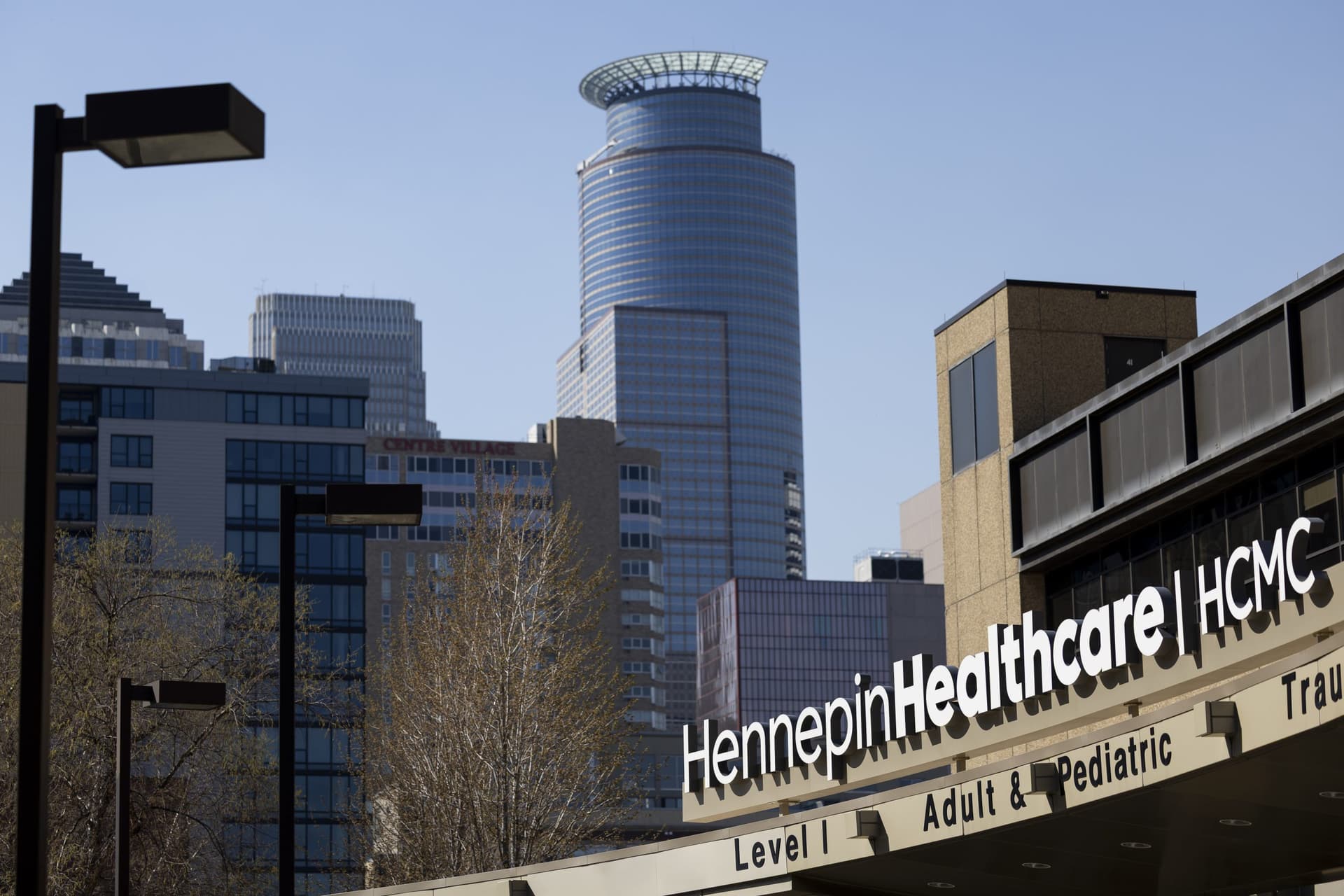


While Hennepin County Medical Center emerged from the legislative session as an obvious winner, Greater Minnesota hospitals are dividing limited spoils.
Lawmakers infused the beleaguered hospital with $205 million to stave off imminent closure. Next to a $1.2 billion bonding bill, it was one of the Legislature’s biggest investments.
As big as HCMC’s needs were, the medical facility wasn’t alone in its desperation for funding. Hospital leaders lobbied state lawmakers for help as they brace for the federal One Big Beautiful Bill Act’s Medicaid cuts.
Instead of a lifeline, however, they came away from the Legislature with stop-gap funding at best.
The amounts aren’t remotely close to what hospitals need to sustain services in Greater Minnesota, said Rick Ash, CEO of United Hospital District in Blue Earth. “If you divide that by all the hospitals, that money is going to go pretty quick,” he said.
Here’s how much (or little) came through for non-HCMC hospitals this session.
Hospital stabilization program brings limited stability
To get this out of the way, hospital leaders and lobbyists acknowledge that HCMC needed saving. As a Level 1 trauma center, it provides vital charity care to metro and rural patients alike.
On top of that, the state’s landmark safety-net hospital hosts rural residency programs to train physicians for work in shortage areas. And hospitals all over the state transport patients to HCMC.
All of this is to say that a working HCMC benefits the entire state. So Ash, as a rural hospital administrator, and the folks at the Minnesota Hospital Association don’t frame the session’s outcomes through an “HCMC vs. other hospitals” lens.
Rather, they wanted a “yes, and” resolution in which lawmakers recognized HCMC plus Greater Minnesota hospital needs.
If the Senate had its way, a new stabilization fund would’ve come closer to their wishes. Senators approved $115 million for it before a reconciliation process with the House hacked down the amount to $30 million.
The smaller sum needs to be spread across a crowded field. Eligible hospitals include:
- 76 critical access facilities, including Ash’s United Hospital District.
- 1 rural emergency hospital, with Mahnomen Health being the only hospital of this kind in Minnesota.
- Facilities that provide disproportionate levels of uncompensated care.
Of these facilities, the hospital association counts at least 31 in financial distress. Let’s say they and only they could access stabilization funds. Spread evenly, they’d receive just shy of $1 million each in one-time funding.
Ash’s facility had a year-to-date operating loss of $700,000 through April. Even a best-case fund outcome for the hospital would paper over months, not years, of issues.
The situation is dire for many hospitals now, but Ash said they’ll be in much worse shape once sweeping changes from the One Big Beautiful Bill Act, also known as H.R.1, take effect in 2027.
“I’m afraid it’s going to be an ugly picture next year for a lot of hospitals,” he said.
All together, the stabilization fund may have a similarly muted impact as the federal Rural Health Transformation Program. From the stabilization fund, hospitals with needs measured in millions are likely to get help totalling thousands. Meanwhile, the Trump administration’s transformation program is throwing millions of dollars in a billion-dollar hole created by H.R.1’s other provisions.
What about $500 million in reserve funds?
On paper, a new hospital stabilization reserve fund makes $500 million accessible to hospitals other than HCMC. More realistically, legislative leaders made no bones about HCMC being the beneficiary, raising its rescue package to up to $705 million.
The problem for other facilities, Ash said, is that the criteria to qualify for the reserve fund is such that his or other facilities likely wouldn’t remain afloat long enough to access it.
“The intent of having that money to help uncompensated care burdens, I think that’s great, but the criteria is unrealistic,” he said. “It won’t be usable for us.”
Medicaid reimbursement changes
This legislation will help in the near and short term. Because of the HCMC funding bill, hospitals stand to receive higher reimbursements for care provided to Medicaid patients.
Compared to about 60-65% of the cost of care previously, the plain language in the legislation says they’re supposed to receive up to the actual cost of care, Ash said.
Receiving closer to a true reimbursement rather than 60 cents on the dollar is no small accomplishment. Unfortunately, it can only help so much when H.R.1 depletes overall Medicaid revenue. The hospital association estimates H.R.1 will cost Minnesota facilities up to $1.5 billion on an annual basis.
In comparison, Michelle Benson, the association’s senior policy director, said the reimbursement adjustment will only bring in an extra $13 million total.
A miss on 340B
Ash extols the virtues of the federal 340B program, which allows hospitals to get prescription drugs at a discount. It’s the difference between his facility paying $4 million in 2025 or $6.3 million, he said.
What does the hospital do with an extra $2.3 million? Ash said it helps maintain obstetric and emergency room care in a part of the state where access is shrinking.
In Blue Earth’s region alone, hospitals in Fairmont and Albert Lea shuttered childbirth services, part of a trend in rural health care. In a separate example of closures, Mayo Clinic’s health system scaled back its footprint in southern Minnesota.
Legislation would’ve mandated pharmaceutical companies to follow all hospital contracts with pharmacies, rather than limiting the number of pharmacies hospitals can coordinate with to dispense drugs. Ash and other hospital leaders hoped to see it pass.
It did pass, but only in the Senate. Republican leadership in the House stopped it from becoming law.
Hospitals could’ve received an extra $150 million through the bill, said Danny Ackert, the hospital association’s director of state government relations. And it would’ve come at no fiscal cost to the state government.
A bonding boost
One last short note on a unique instance of hospital funding coming out of the session. Alongside miles of road projects and enough water projects to drown a fish, the bonding bill steered funding to the aforementioned Mahnomen hospital.
Jointly owned by Mahnomen County and the city of Mahnomen, the facility is receiving $10 million. House Capital Investment co-chair Mary Franson, R-Alexandria, singled out the project on the House floor before the bill’s passage, saying Republicans and Democrats came together to advocate for funding to fix the facility.
Hospital leaders say they’ll want similar energy for more hospitals once lawmakers reconvene in 2027. Far more needs to be done to address troubling conditions in the industry, Ash said. “There’s always challenges, always in rural health care,” he said. “But I have never ever seen it like this where it’s everything all at once.”



