
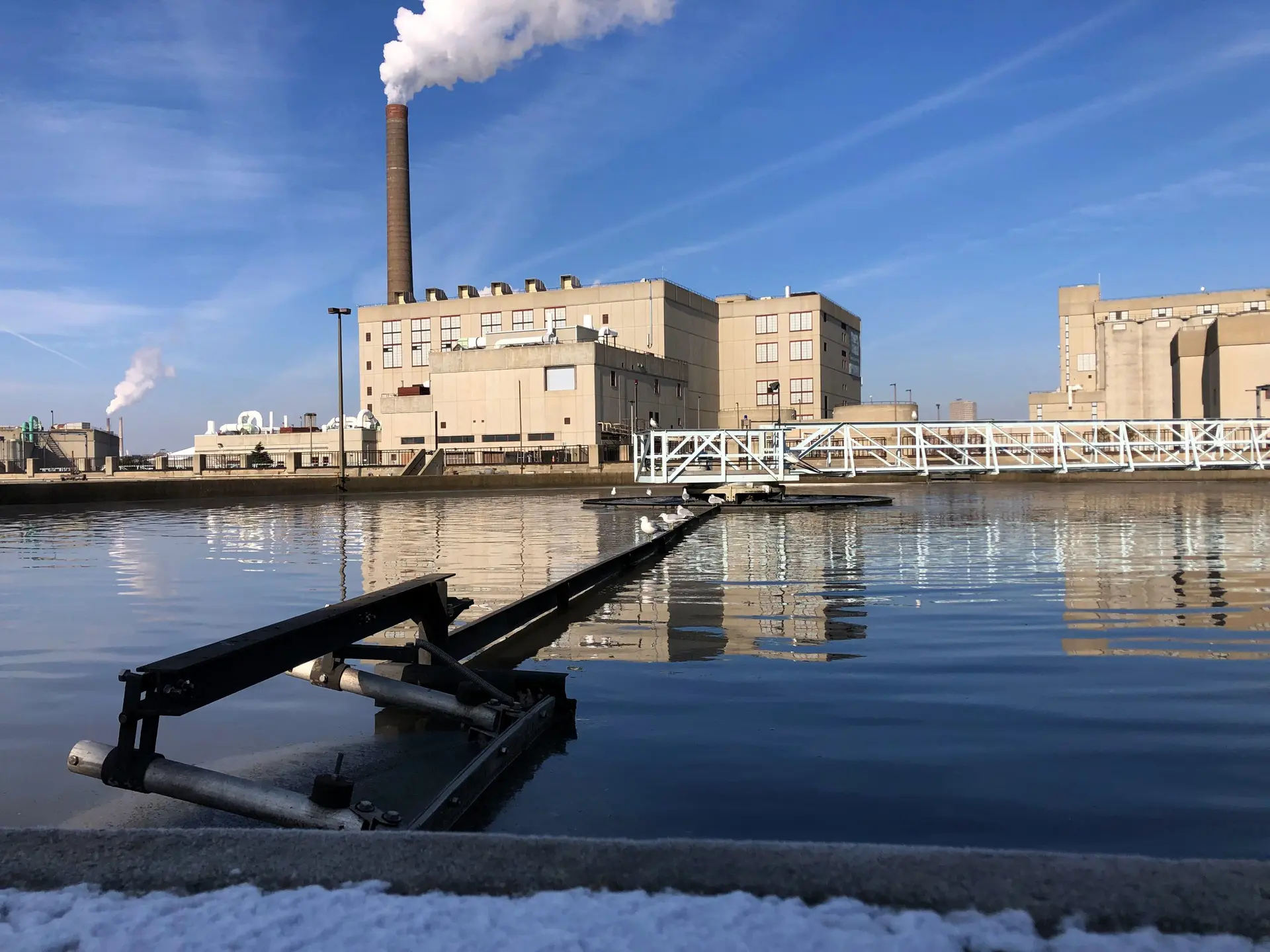


As Milwaukee residents dealt with flooded streets and basements during April’s storms, approximately 2.7 billion gallons of sewage and stormwater were discharged into local waterways, including Lake Michigan, according to a post-storm report from the Milwaukee Metropolitan Sewage District.
The report from MMSD, which coordinates the sewer systems of 29 municipalities, including the City of Milwaukee, stated that the discharges were necessary because “repeated intense rainstorms on already saturated ground overwhelmed” the system, “forcing combined sewer overflow discharges.”
But there is a growing debate about whether that’s true.
At issue are claims that aging equipment and staff shortages prevented wastewater treatment plants from operating at full capacity, increasing the risk of flooding.
There are now public calls, including from Milwaukee County supervisors, for an independent audit of Veolia, the private company contracted to operate MMSD’s Jones Island and South Shore wastewater treatment facilities.
“The reason I get involved is because I get mad,” said Bob Connolly, co-chair of Common Ground’s water team. Common Ground is organizing the campaign calling for a third-party audit of Veolia.
“I get angry at injustice and at things that are wrong,” Connolly said. “This is corporate abuse. It’s stealing our money, not maintaining our facilities and then destroying the public good.”
Connolly said that Common Ground estimates about 200 million gallons of the 2.7 billion gallons discharged were needlessly dumped.
Like Connolly, Meranda Davis is angry – but for different reasons.
Davis, a North Side resident, is focused on more immediate concerns after flooding damaged her home during the April storm.
“I haven’t heard anything from anyone yet about the flood,” Davis said. “I lost my personal belongings.”
She said right now she is in most need of food and clothes.
“I don’t understand why we don’t get any help,” she said.
Public health risks
Wastewater discharges can create significant public health and environmental risks, especially when untreated or partially treated sewage enters waterways used for recreation or as drinking water sources.
Discharged sewage can contain elevated levels of bacteria, viruses and parasites.
The Centers for Disease Control and Prevention warns that exposure to untreated sewage can increase the risk of gastrointestinal infections, among other things.
MMSD says overflows are designed as an emergency pressure-release.
Combined sewer overflows are permitted under state and federal regulations during extreme weather events.
Ideally, wastewater systems are designed to maximize treatment before discharge and minimize the frequency and volume of overflows.
According to MMSD’s post-storm report, the wastewater and stormwater were discharged into the Menomonee River, Kinnickinnic River, Milwaukee River, Lincoln Creek and Lake Michigan.
“I keep thinking about the safety of the many thousands of people who enjoy our beaches and waterways,” said Steve Jacquart, a former MMSD employee and one of the whistleblowers who has raised concerns about Veolia, during public testimony. “I think about how we get our drinking water from Lake Michigan.”
Necessary or not
MMSD and the Milwaukee Department of Public Works have stated that the April storms were historically intense events that exceeded system capacity.
But critics and whistleblowers argue that some of the discharges could have been avoided if the wastewater treatment facilities had been properly managed.
“The patterns of poor maintenance, falsified documents, understaffing and much more are the reasons needless amounts of sewage are polluting our lake and backing up into our basements,” Connolly said.
Connolly said the overflows were caused by human error rather than weather conditions outside officials’ control.
“One simple failure leads to significant problems. Power outages, air outages, pump failures, etc., all lead to rush jobs to barely keep things running,” wrote Greg Gryskiewicz, a longtime MMSD employee, in public testimony.
Advocates and whistleblowers say if these patterns continue, the wastewater treatment plants could eventually become inoperable.
“This cycle of ‘run to fail and not fix’ has led to complete asset destruction,” Gryskiewicz said.
Officials and Veolia leadership have shown a lack of urgency toward fixing the problem, he said.
“Veolia has taken exorbitant amounts of time to fill vacant positions,” he added. “Understaffing is a direct result of elimination of job positions to the point there are not enough people to do the jobs.”
Adam Lisberg, Veolia’s senior vice president of external communications, declined to address whether the discharge was necessary, saying such decisions are controlled by MMSD.
Regarding the demands for an audit of Veolia, MMSD provided a statement: “MMSD is two years into a public procurement effort to hire a company to operate and maintain the district’s infrastructure for a 10-year period.”
“It’s a time-consuming effort for everyone involved, and it must continue to be a fair process. MMSD cannot publicly comment on these accusations until after the procurement process is completed.”
A final decision on the contract is expected this summer, according to the statement.


