

Source: Maskot
We Cannot Balance the Budget on the Backs of Our Children or the People Who Serve Them

May 22, 2026, 10:37 AM CT


Share
There is a saying I return to often when the work gets hard: You cannot pour from an empty cup.
I think about that saying a great deal as I review Milwaukee Public Schools’ proposed $1.6 billion budget for the 2026–27 school year — a budget that arrives under the weight of serious, real, and undeniable challenges.
Let me be clear about what I know to be true; MPS is navigating a genuine crisis. Enrollment has declined. Inflation has driven up costs for everything from transportation to utilities. Staffing shortages have left buildings stretched before the first bell rings. And the structural instability that has plagued this district for years has finally come due — to the tune of a $46 million deficit that can no longer be deferred, delayed, or wished away.
I understand that. I respect the difficult decisions Superintendent Cassellius and the Board of School Directors have had to make. Reducing 53 assistant principal positions, pulling back on outside vendor contracts — none of that is easy. And the intention to add 150 classroom teachers and 138 paraprofessionals, to protect class sizes, to invest resources closest to students — that intention matters. It is the right instinct (probably not feasible, but the intent was there).
But good intentions and sound fiscal strategy are not the same as a plan that is fully ready to be carried.
Here is my concern. And I say this not as a critic from a distance, but as someone who has spent years working in and around education policy, classrooms, and the communities these schools serve.
This proposed budget asks our Building Intervention Teams, our climate teams, our counselors, our psychologists, our social workers, and our existing school-based staff to absorb and sustain much of the work connected to some of our most critical equity initiatives — Black and Latino Male Achievement, Restorative Practices, PBIS, Trauma-Informed Climate supports, and Gender and Inclusion programming.
That is not a small ask. That is an enormous one.
And the question I keep returning to is this: Where is the corresponding investment in the staffing, the training, the planning time, and the infrastructure that these school teams will need to carry this work effectively?
Because here is what I know from decades of watching well-intentioned initiatives land in underprepared buildings: when you hand large-scale responsibilities to people who are already stretched, you do not get implementation. You get survival. You get checkbox compliance. You get professionals doing their best under conditions that were not designed for their best.
And our students deserve more than a system operating in survival mode. As my colleague Angela Harris said, “Equity work matters too much to become symbolic”.
Restorative Practices matter too much to become a checklist on a clipboard.
Black and Latino Male Achievement — work that speaks directly to the lives, the futures, and the full humanity of some of our most historically underserved young people — matters far too much to be quietly reassigned to already-overextended staff without the resources, time, or support structure to do it justice.
I have seen what happens when districts decide that equity work can be folded into existing roles without additional support. The work gets done in name only. The data looks different from the reality. And the students who were supposed to benefit most are the ones who feel it first when the implementation is hollow.
We cannot let that happen in Milwaukee. Not again.
Let me say this plainly, because I believe our community deserves plain speech:
Sustainability cannot come at the expense of implementation capacity inside our schools.
The long-term health of MPS matters deeply — I believe that with everything in me. But the long-term health of the people expected to carry this work every single day matters too. The counselor who is now also the restorative practices coordinator. The social worker who is now also the climate team lead. The assistant principal — where there still is one — who is now managing more students than ever before, with fewer peers to share the load.
These are not abstractions. These are real people. And they are being asked to hold an extraordinary amount. I am not calling for the district to abandon fiscal responsibility. I am calling for honest reckoning.
If we are going to do this work — and we must — then we owe the people doing it a clear-eyed accounting of what they need. Not what sounds good in a budget presentation. Not what fits within the constraints of a deficit-closing plan. What they actually need to succeed.
That means transparent, community-wide conversations about what is being preserved, what is being cut, and what is being quietly shifted onto the shoulders of school staff without acknowledgment or support.
It means the Milwaukee Board of School Directors asking hard questions before this budget is finalized — not as adversaries of the administration, but as the accountable stewards of every family in this district.
And it means the community showing up. At board meetings. In public comment. In school halls and neighborhood conversations. Because this budget will be voted on. And once adopted, it becomes the blueprint for how our children experience school next year.
MPS is at an inflection point. Superintendent Cassellius has said so herself — and she is right.
The question is not whether we make hard choices. The question is whether we make them honestly. Whether we name the tradeoffs clearly. Whether we commit to building real capacity alongside every new expectation we place on our schools.
My grandmother used to say: Don’t just pray over what’s broken. Fix it.
Milwaukee Public Schools — our schools, our children, our community — deserves a budget that doesn’t just address yesterday’s deficit. It deserves a plan that truly builds for tomorrow.
And the people carrying that work every day deserve to be seen, supported, and resourced accordingly.
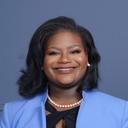
Dr. LaKeshia Nicole Myers is an accomplished education leader, public servant, and advocate for educational excellence with more than 17 years of experience across K–12, higher education, and public policy. A former member of the Wisconsin State Assembly (2019–2024), she championed education initiatives while serving on key legislative committees and previously worked in federal policy with the U.S. House of Representatives. Dr. Myers currently serves as an Adjunct Professor of History at Lakeland University and Managing Partner of EduStar Consulting, bringing deep expertise in instructional leadership, special education, and equity-focused educational reform.
Want More Local News?

Civic Media
Civic Media Inc.
The Civic Media App
Put us in your pocket.