


As Michigan works to test children for exposure to lead, the House Health Policy Committee on Wednesday took a look at a trio of policies intended to further limit exposure and provide treatment, while updating the state’s definition for elevated lead levels in blood.
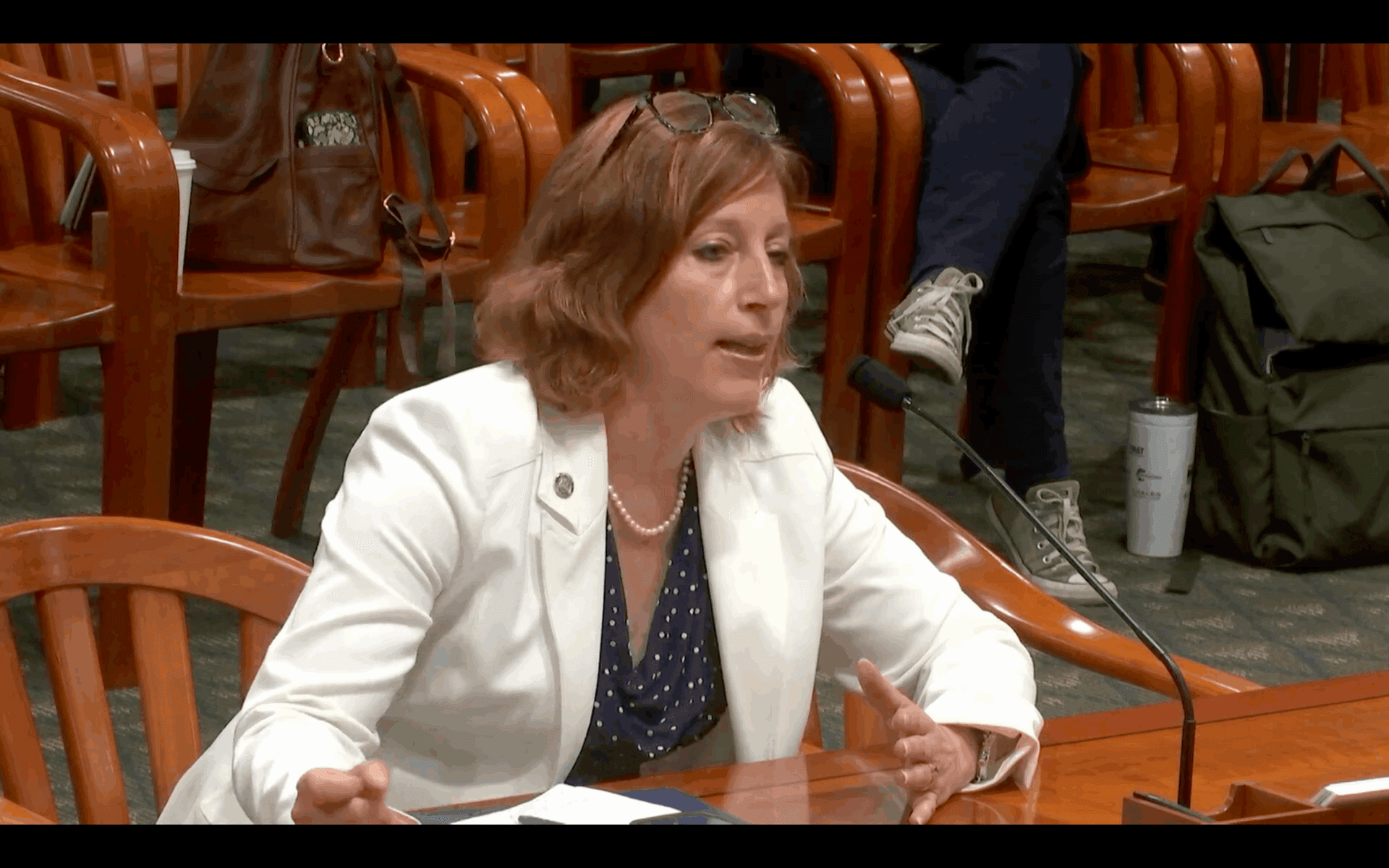
The committee welcomed Reps. Julie Rogers (D-Kalamazoo) and Jaime Greene (R-Richmond) to offer testimony on House Bills 4864, 4865 and 5975, focused on aligning state and federal standards on lead exposure, banning lead and other toxic materials from baby food and ensuring children under age three with elevated blood lead levels receive support for developmental delays and other concerns.
Lead exposure can come from a number of places, Rogers said, pointing to drinking water and lead paint as two examples. No level of lead exposure is safe, she noted, though a detectable level of lead within an individual’s blood is needed to initiate treatment.
Rogers’ H.B. 4864 aligns Michigan elevated blood level for lead with the Centers for Disease Control and Prevention’s threshold of 3.5 micrograms per deciliter.
While the Michigan Department of Health and Human Services has adopted a policy utilizing the 3.5 microgram standard, Rogers said there is nothing in state law ensuring patients can access services if their blood lead levels are above the 3.5 micrograms per deciliter standard but lower than the current state standard of 10 micrograms per deciliter.

However, even individuals who were found to have elevated lead levels in their blood can still slip through the cracks, Rogers said, pointing to Rep. Joseph Fox’s (R-Fremont) House Bill 5975.
If signed into law, the bill would ensure that every child younger than 3 years old with elevated blood levels is referred to the state’s Early On program, which provides support for infants and toddlers with developmental delays or disabilities.
“Exposure to lead can seriously harm a child’s health, including damage to the brain and nervous system, slowed growth and development, learning and behavior problems, hearing and speech problems, anemia, seizure, coma,” Rogers said. “And the longer a person is exposed to lead, the higher the likelihood that health problems could occur and effects can be longer lasting, potentially for the rest of their life.”
Greene explained that her House Bill 4865 sets limits on toxic materials on baby food in Michigan, with testing requirements for materials including arsenic, cadmium, lead and mercury. Beginning Jan. 1, 2027 manufacturers would be required to post results online for each of their products, while providing a QR code on the label to access those results.
“As a parent, I know that families are already really making a lot of decisions every single day, what’s best for their children, and they should not have to wonder whether their baby food – that is marketed for their children – has toxic elements in it,” Greene said.

While the bills received support from organizations including the Michigan Council for Maternal and Child Health, Michigan Association of Local Public Health and a host of environmental advocacy groups, Rep. Jamie Thompson (R-Brownstown) raised concerns about referring children to the Early On program due to its funding structure.
“I represent Wayne County, and in Wayne County, I’ve had several constituents reach out to me saying that their children, their autistic children, are not receiving the services yet,” Thompson said.
Given that the funding for this program is provided by the Michigan Department of Lifelong Education, Advancement and Potential, and handled by intermediate school districts, Thompson questioned how to ensure that those families actually receive services paid for by that funding.
Christine Callahan, president of the early on Michigan Foundation acknowledged that Early On is underfunded, but noted that funding has been gradually increasing since 2019.
“Right now in special education, in early childhood, and in early intervention, we have a critical staffing shortage, in addition to a need for funding for early intervention,” Callahan said. “And so I think the root cause of the problem is a little bit more complex.”
The committee did not vote on the bills.