
Fusion energy startup eyes former Oscar Mayer site for headquarters

May 13, 2026, 9:46 AM CT


Share
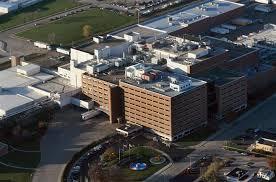
A nuclear fusion company with roots at the University of Wisconsin-Madison has narrowed a nationwide search for a new headquarters to two sites, one of which is the former Oscar Mayer food processing facility on the city’s East Side.
Realta Fusion, currently headquartered in a shared office building on Madison’s Far West Side, is preparing to construct a prototype fusion device and requires a facility large enough to house it alongside the company’s broader research and development operations. The site must also provide access to substantial electrical capacity and move-in-ready office space.
Chief Executive Officer Kieran Furlong said the company expects to announce its final decision within the coming months, with plans to occupy the new facility by year’s end.
“The irony is: It’s in our backyard,” Furlong said of the Oscar Mayer property. “Even though we’ve done this nationwide search.”
Madison Mayor Satya Rhodes-Conway expressed support for the prospect, calling an R&D facility at the former Oscar Mayer site “a great fit for Madison.”
“Ever since Kraft moved operations from this site, we identified this location as a huge opportunity to create jobs and economic activity for our community,” Rhodes-Conway said in a written statement.
Significant Investment Planned
Realta currently employs approximately 40 people. Furlong said the company projects growth to 200 employees by 2030 as it expands operations at its new headquarters. He said the company anticipates investing at least $200 million over the next two years, with total buildout of the R&D facility ultimately exceeding $500 million.
The new facility would not occupy the entirety of the existing property, Furlong said. Construction of an operational fusion power plant — the company’s next major milestone — would take place at a separate location, likely by the mid-2030s.
The Science
Nuclear fusion differs fundamentally from fission, the process that powers every commercial nuclear plant currently in operation worldwide. Fission generates energy by splitting the nuclei of heavy atoms, most commonly uranium. Fusion, by contrast, produces energy by forcing light atoms — such as hydrogen — to combine under extreme conditions.
Realta’s approach involves heating hydrogen gas to temperatures sufficient to transform it into plasma, which powerful magnetic fields then stabilize to sustain the fusion reaction. Furlong said the process would generate no long-lived radioactive waste, produce no risk of an uncontrolled chain reaction and yield only helium as a byproduct.
Despite its potential advantages over fission, fusion energy has proved extraordinarily difficult to harness at commercial scale. Sustaining the intense, sun-like conditions necessary for fusion reactions to occur remains one of the central engineering challenges facing the industry.
Realta’s prototype device is intended to test whether plasma will behave as projected when scaled toward commercial production.

John is the Interim News Director for Civic Media. Reach him at [email protected].
Want More Local News?

Civic Media
Civic Media Inc.
The Civic Media App
Put us in your pocket.