

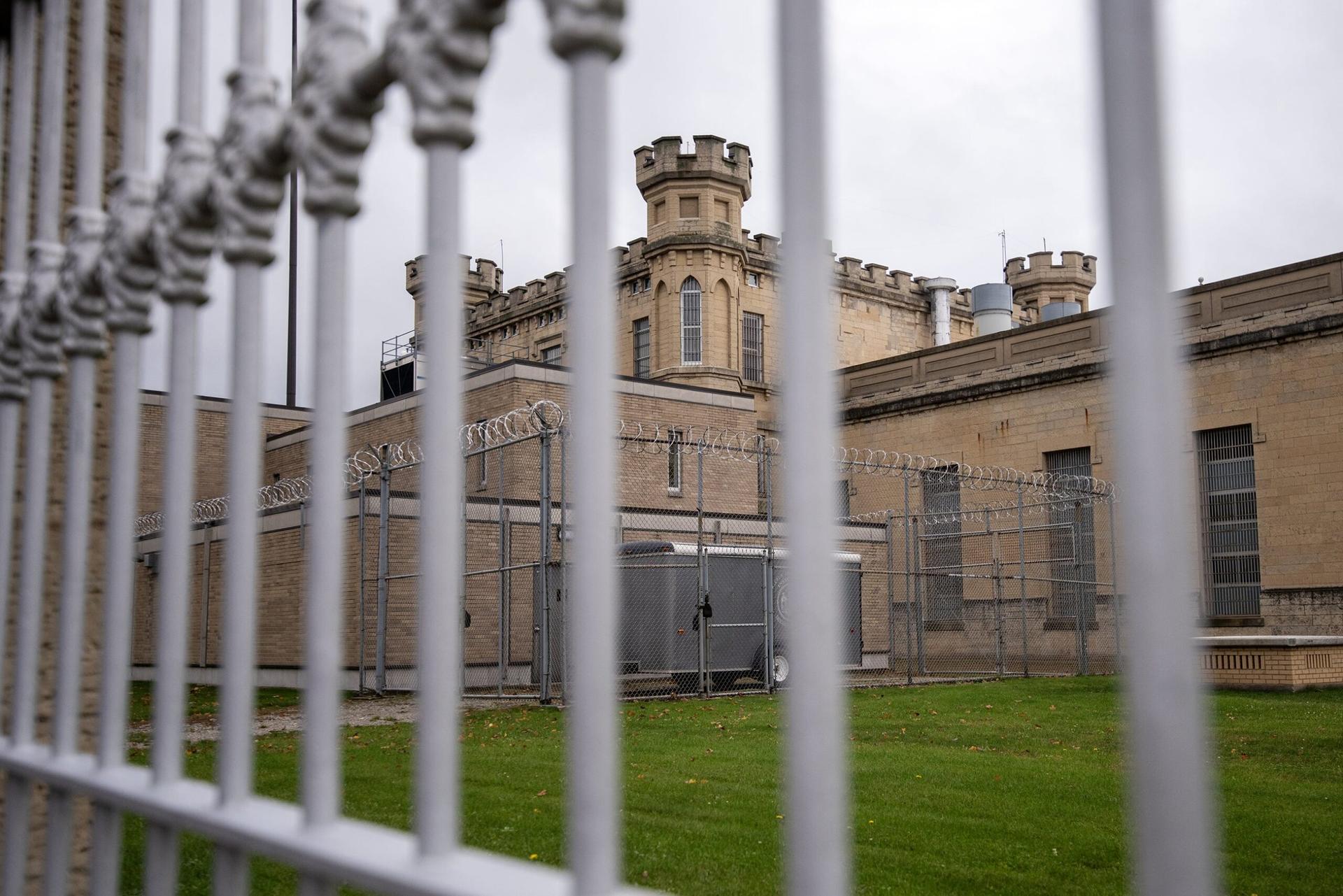


The top Democratic candidates for governor plan to continue allowing commutations and pardons if they are elected in November — though one split with the current governor on whether to offer commutations in murder cases — while the front-runner for the Republican nomination plans to curtail clemency.
The contrast is sure to feature in the gubernatorial election, as Democrats rally around a national mood that has turned against President Donald Trump, while Republicans try to capitalize on lingering distaste for the Democratic brand.
Their statements, in response to questions from Wisconsin Watch, come after Gov. Tony Evers signed executive orders in early April to reestablish the state’s commutations process, with just nine months remaining in his last term as governor.
Evers’ executive orders specifically create a commutations advisory board to consider applications from incarcerated individuals seeking to reduce their prison sentence and establish a commutations procedure for people sentenced to life in prison as juveniles. The commutations advisory board is expected to hold its first meeting in June.
Republican U.S. Rep. Tom Tiffany’s gubernatorial campaign said in a statement he would rescind Evers’ executive orders on commutations, particularly because they don’t exempt individuals convicted of murder. Under Evers’ executive order only those previously convicted of sexual assault, physical abuse or sexual exploitation of a child, trafficking of a child, incest or soliciting a child for prostitution are ineligible for commutations.
“(Tiffany) is making a commitment as governor that he will not release violent criminals early and will ensure victims and their families receive the full measure of justice,” Tiffany’s campaign said. Tiffany’s campaign did not respond to an additional question about whether the congressman would consider commuting the sentences of incarcerated individuals who were convicted of nonviolent offenses.

The difference between Tiffany and the top Democrats suggests that criminal justice reform and executive clemency, the powers the governor has to lessen or nullify a sentence, are topics that will get attention from the candidates ahead of the general election in November. Debate on the campaign trail will happen as Wisconsin’s prisons continue to be over capacity. The population of the state’s adult prisons as of April 17 was 23,548 people, which is nearly 32% above what the facilities were designed to hold.
Evers is not running for reelection, which leaves the commutation process created by his executive orders subject to the views of the state’s next governor. That person could rescind, suspend or revise an executive order from the predecessor, according to the nonpartisan Legislative Reference Bureau.
Wisconsin’s governors have taken different approaches to using the office’s executive clemency powers. The last governor to commute a prison sentence was former Republican Gov. Tommy Thompson.
Former Democratic Gov. Jim Doyle approved 326 pardons as governor but no commutations. Former Republican Gov. Scott Walker, who issued no pardons or commutations in office, previously said he saw “no value” in visiting the state’s prisons.
Evers reinstated the pardons process after taking office in 2019 and has since issued 2,000 pardons, according to his office. In early 2025, he released a prison restructuring plan with a “domino series” of projects that include closing the Green Bay Correctional Institution, converting the Lincoln Hills juvenile prison into an adult facility and transitioning the Waupun Correctional Institution into a vocational village with job training for inmates.
Evers’ plan caught pushback from Republicans, who said they were not included in the process and objected to any reductions to the capacity of the prison system. There have been no updates since the state building commission voted in October to release $15 million to fund a design report for projects in the governor’s proposal.
Diego Rodriguez, the coalition coordinator for Justice Forward Wisconsin, which advocates for a more equitable criminal justice system, emphasized that “broad, blanket statements” about incarcerated individuals don’t reflect a person’s remorse or growth over time.
“Democrats and Republicans have historically used clemency to make sure that we honor when people grow, we honor changes in development and changes in people,” Rodriguez said. “That is something that I think our nation is rooted in, this idea that people can grow and develop, and that redemption is a real thing.”
What Democratic candidates said
The seven top Democratic gubernatorial candidates who responded to questions from Wisconsin Watch said each of their approaches to executive clemency would attempt to take into account the growth of inmates and the needs of victims, although specifics differed between each candidate.
Former Lt. Gov. Mandela Barnes would work with an independent commission to guide decisions on pardons and commutations, campaign spokesperson Cole Wozniak said. Also, unlike Evers, he would exclude those convicted of murder. He was the only Democratic candidate to make that distinction.
“Lt. Gov. Barnes will work to keep Wisconsinites safe — ensuring the justice system rehabilitates those who’ve served their time and pose no threat, while requiring individuals convicted of murder, sexual assault, or other violent crimes stay behind bars and serve their sentences,” Wozniak said.
Asked why Barnes differs from Evers on commutations for murder convictions, Wozniak said “for those already convicted, he believes the existing appeals process offers sufficient relief.”
Joel Brennan, the former Department of Administration secretary, said Evers “did the right thing” in restoring commutations.
“The ability to pardon and commute sentences is one of the most consequential tools a governor has,” Brennan said in a statement. “I’d take that seriously, listen to the people closest to these cases, review them on the merits, and act where it makes sense.”
Milwaukee County Executive David Crowley said he would work with the Legislature to “institutionalize” Evers’ commutations process.
“I believe clemency is an important tool to correct past wrongs, especially in cases where sentences were excessive, laws have changed, or individuals have demonstrated real rehabilitation,” Crowley said in a statement. “At the same time, it must be handled with care, consistency, and respect for victims and communities.”

Madison state Rep. Francesca Hong said she supports Evers’ decision to restore commutations and would work with stakeholders to build a “fair and safe” process.
“My approach to executive clemency actions would be to build a senior advisory council and pardon board with diverse representation of lived experiences and leadership in the carceral reform sector,” Hong said in a statement.
Missy Hughes, the former CEO of the Wisconsin Economic Development Corp., said in a statement she is supportive of Evers’ executive orders to restore commutations. A spokesperson for her campaign did not respond to a follow-up question about pardons.
“I believe it is an important tool to have at the governor’s disposal to ensure we have fairness in our criminal justice system,” Hughes said. “As governor I would keep this executive order in place so that we have a mechanism for those who have paid their debt to society, and pose no threat to the public, can have their freedoms restored through an open and transparent process.”
Lt. Gov. Sara Rodriguez said in a statement that Evers has established a “thoughtful approach” to commutations. She criticized the Republican Legislature for not taking “a serious approach to criminal justice and corrections reform.”
“As governor, I would continue the restored commutations process and carefully review it with input from stakeholders, including victims’ advocates, law enforcement, corrections professionals, and criminal justice reform organizations,” Rodriguez said. “We need to be guided by preventing crime, reducing recidivism, and keeping our communities safe.”
Madison state Sen. Kelda Roys said in a statement that “public safety and justice” will be the focus of her criminal justice policy.
“As an attorney, I know that our judicial system is imperfect, and clemency can be an important safeguard so long as the process is fair, thorough, and transparent,” she said.