


With more than 300 contaminated sites across the state, per-and polyfluoroalkyl substances, or PFAS, have become a growing issue for Michigan residents, with more sites uncovered each year.
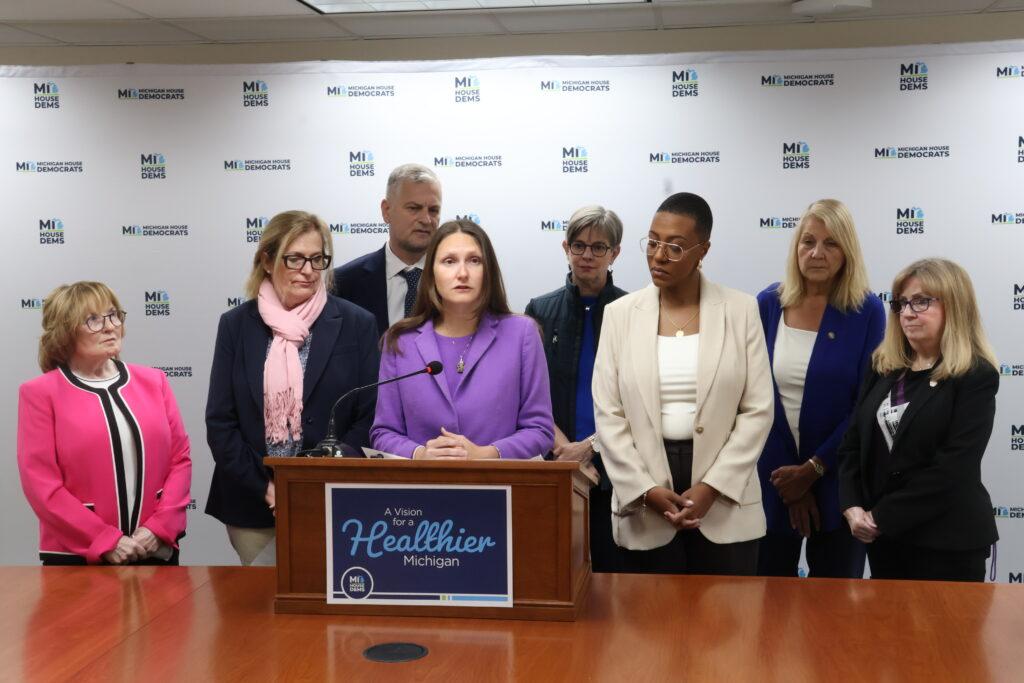
While Michigan has long been regarded as a leader in PFAS monitoring, Michigan House Democrats on Wednesday said it’s time for the state to lead on PFAS regulation and clean ups, with plans to introduce nine bills aimed at limiting residents’ exposure to these forever chemicals and holding manufacturers who use them accountable.
“For too long, the Michigan Legislature has avoided taking any substantive action on this issue, but we are here to say that we are done waiting,” Rep. Penelope Tsernoglou (D-East Lansing) told reporters. “Here in Michigan, the House Democrats have a vision for what a healthier Michigan looks like. It is one that includes clean air and safe drinking water that is not riddled with mysterious, invisible chemicals.”

PFAS are a family of chemicals, which break down very slowly, and can accumulate in humans and animals. They are commonly used to manufacture products like nonstick cookware, stain-resistant fabrics and fast-food containers and wrappers.
While research is ongoing to determine exactly how these chemicals impact human health, exposure to PFAS has been linked to higher risks for multiple types of cancer, increased cholesterol and risk of obesity, developmental effects or delays in children and reduced immune system responses.
- Requiring the Michigan Department of Environment, Great Lakes and Energy to notify households when they are investigating a potential PFAS site within one mile of their home
- Bar the use of PFAS in household products, opening companies up to civil liability if they continue to manufacture products with PFAS
- Helping farmers remediate their land contaminated by PFAS, while assisting with medical bills tied to PFAS exposure and providing income replacement
- Banning PFAS in cosmetics and personal care products
- Regulating PFAS in biosolids
- Codifying the Michigan PFAS Action Response Team in state law
- Codifying the Citizens Advisory Workgroup, which represents the concerns of communities impacted by PFAS
Rep. Phil Skaggs (D-East Grand Rapids) called on the House’s Republican leadership and House Speaker Matt Hall (R-Richland Township) to take action on the bills, saying it’s “obvious, common sense legislation.”
“We need will from Speaker Hall. We need will from the House Republicans,” Skaggs said. “Send it over to the Senate. I’m sure they’ll pass it.”
A request for comment from Hall’s office was unreturned.