
Source: Blake Callahan
Apr 21, 2026, 6:18 AM CT


Share
Purpose: To alert the weak to hidden disparities engendered in deeply deceitful plans that strengthen the strong and further weaken the weak.
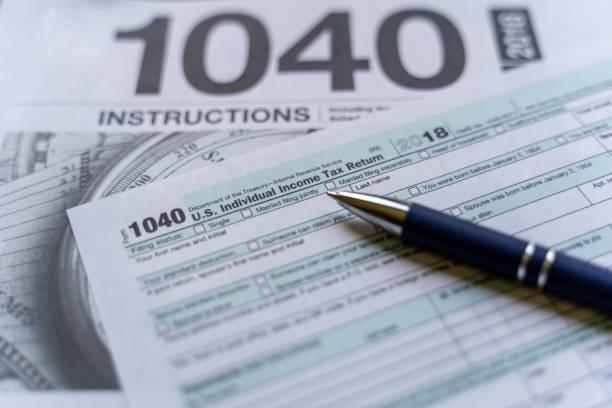
Today is April 15, 2026: Internal Revenue Service (IRS) Income Tax Filing Day!
While participating in a radio broadcast this morning, we heard an advertisement inviting those with IRS income tax debt and penalties to seek assistance from an income tax filing firm and to enjoy related reductions in debt, anxiety, and burden release. Importantly, the “voice talent” for the commercial was clearly Black American sounding (we do speak with distinction). The questions that arise concerning this scenario are:
- Why do any Americans—Black or White—experience difficulty filing their personal
income tax returns? This is not a question about income or wealth disparity, it is recognition
of a manufactured intellectual disparity. - There are many ways to organize tax filing documents that will generate nearly identical
revenue takes. Hence, it is arguably correct to scream that the IRS should promulgate the
simplest possible tax reporting forms. - While the official US Government position is that no racial bias is imbedded in the US Tax
System, too many researchers have identified countervailing evidence.i Why?
It is transparent to hypothesize that, given the relative dearth of entrepreneurial “cultural capital” in Black American areas of influence (communities), we would experience more difficulty in maintaining an orderly and accurate record keeping (financial accounting) system and would, therefore, experience more difficulty filing our tax returns and paying our taxes on time than would those confronting the opposite set of circumstances.
Our concern is not so much with the outcomes just described. Rather, our concern is with the reasons for the outcomes. A Purer Democracy is a 2022 BlackEconomics.org monograph that explores political innovations that may enable an improved democratic governance system that
leverages the technology available to us today. The following quote about the nation’s representative form of government from A Purer Democracy elucidates a logical view concerning the situation and condition that Black and other Americans face with the US Tax System.
As for legislative complexity, if the legislative process is too complicated for an electorate that has absorbed a minimum of 12 years of schooling, then why does the educational system produce an electorate incapable of understanding the workings of its government? It is a “Catch 22.” Either the “complexity of legislative proceedings” argument is a smoke screen, or the educational system is producing an inadequately trained electorate that cannot understand the governance process. If either situation exists, then it is time for a transformation of the system.
It reminds us that those less capable intellectually and financially due to their heavily biased burden cannot meet fines and penalties. That is, low-income earners among us are viewed as weak and powerless and are forced to bear an undue burden that may be beyond their control, while the
strong and wealthy escape “scot-free.”
As in a Purer Democracy, the “Catch 22” conveys the fact that tax officials render the tax system too complicated for the uninitiated poor (income- and training-wise), but not for the well trained and wealthy. Apparently, tax officials identify a wide range of methods and nomenclatures for collecting tax revenue that are designed to produce enough confusion on the part of income tax filers, who are poor. Therefore, they create demand for and consume services from an army of tax preparers—some of whom may amass a monetary take during tax preparing and filing season sufficient to meet their needs for the entire year.
This artificial derived condition reinforces the fact that public officials may have more interest in creating an elevated level of short-term employment and maintaining a low-as-possible unemployment rate; both of which help ensure that political incumbents remain ensconced in the Congress to do the bidding of the wealthy and strong. In the meantime, the poor and weak bear an undue tax burden. We all know this to be upside down: “The strong are to bear the burden of the weak” (paraphrase: Romans 15:1).

Want More Local News?

Civic Media
Civic Media Inc.
The Civic Media App
Put us in your pocket.