
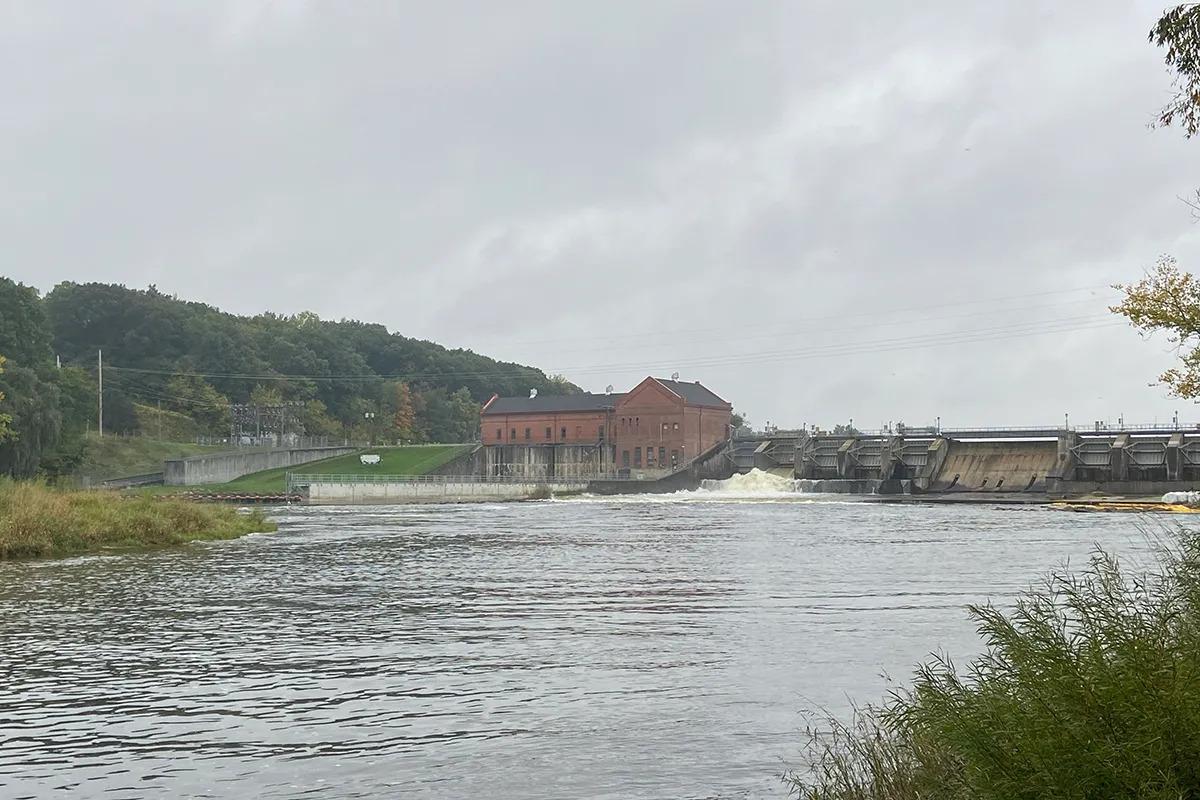


- The companies involved in a plan to sell 13 Michigan dams presented to the Michigan Natural Resources Commission Wednesday
- Members of the hunting and fishing regulator expressed concerns over the sale plan
- The Natural Resources Commission has no authority over the two companies but unanimously passed a resolution in opposition to the planned deal
Michigan’s hunting and fishing regulator voted unanimously Wednesday to pass a resolution opposing Consumers Energy’s planned sale of 13 hydropower dams.
“From a natural resources standpoint, in good conscience, I cannot see how this is good for the state of Michigan,” Michigan Natural Resources Commissioner Brandon Fewins said.
The Natural Resources Commission has no authority over the sale, but, during a presentation from critics last month, Fewins said, “We don’t have a vote, but we have a voice.”
The resolution approved Wednesday says the rivers impacted by the dams are public trust resources and decisions affecting them “must ensure their long-term protection, stewardship, and public use.” Aquatic habitat and fish could be wiped out by a dam failure, Fewins told Bridge Michigan.
Consumers announced last fall it wants to sell the dams to Confluence Hydro, a newly created subsidiary of Maryland-based Hull Street Energy.
If Confluence buys the dams, it wants to split up into 13 separate limited liability corporations, and Fewins worried one of those LLCs would declare bankruptcy in the case of a “catastrophic event.
“It’s going to be the state of Michigan, it’s going to be the residents that live along that river, and most importantly, for me, right now, as a Natural Resources commissioner, it’s the public resource that will be devastated from this type of event,” he said.
As part of the deal, Confluence would buy the dams for $1 apiece, then sell the power back to Consumers at double the market rate for comparable power — plus a 2.5% annual increase.
Before the sale can go through, it needs to be approved by the Michigan Public Service Commission, the state’s utility and energy regulator. Confluence’s dam operations would not be subject to that body’s oversight.
Confluence said it has a long track record of being in compliance with both federal and state regulations. It’s planning to hire some Consumers workers to maintain dam operations.
“One day we’ll be Consumers Energy, the next day we’ll be Confluence Hydro,” said Adam Monroe, the executive director of hydro generation at Consumers. “All we want the communities, the public to see is a change of a logo.”
Members of the Natural Resources Commission seemed skeptical that Confluence will hold on to the dams, despite intending to sign a 30-year contract.
Commissioner Mark Eyster asked if Confluence could decommission a dam and sell off the acreage during that time period.
“I guess you could do that, but that’s not our intention nor do we have a demonstrated track record of doing so,” said Jillian Lawrence, chief operating officer for Confluence.
She said there are sometimes restrictions on building after a dam is removed: “It is not an easy ‘drain the land, put condos on it.’”
Some commissioners were convinced Confluence, which has purchased 47 dams in the past and sold 45 of them, would soon sell the dams if it acquired them.
“I anticipate that you guys won’t even be the state’s partner two years from now,” said Commissioner James LaPorte. “Whoever you sell these dams to should really be part of this discussion.”
Confluence responded that holding the dams longterm is a new strategy for the company. The company said it has not had discussions about who to sell the dams to, that it’s planning near-term capital investments and is seeking to reap the full value of the purchase agreement.
The deal would bring in at least $270 million in new profits for Consumers at the expense of ratepayers. The utility has said customers would pay more if they held onto the dams because it would need to charge ratepayers to maintain or demolish them. Critics have disputed that math.
An administrative law judge will issue a preliminary recommendation on the proposed sale in June. Consumers said Wednesday that the Public Service Commission’s final decision is expected in August.
Kelly House contributed to this story.
Editor’s note: The Consumers Energy Foundation is one of several funders of Bridge Michigan. The foundation had no influence in reporting, writing or editing this story.