
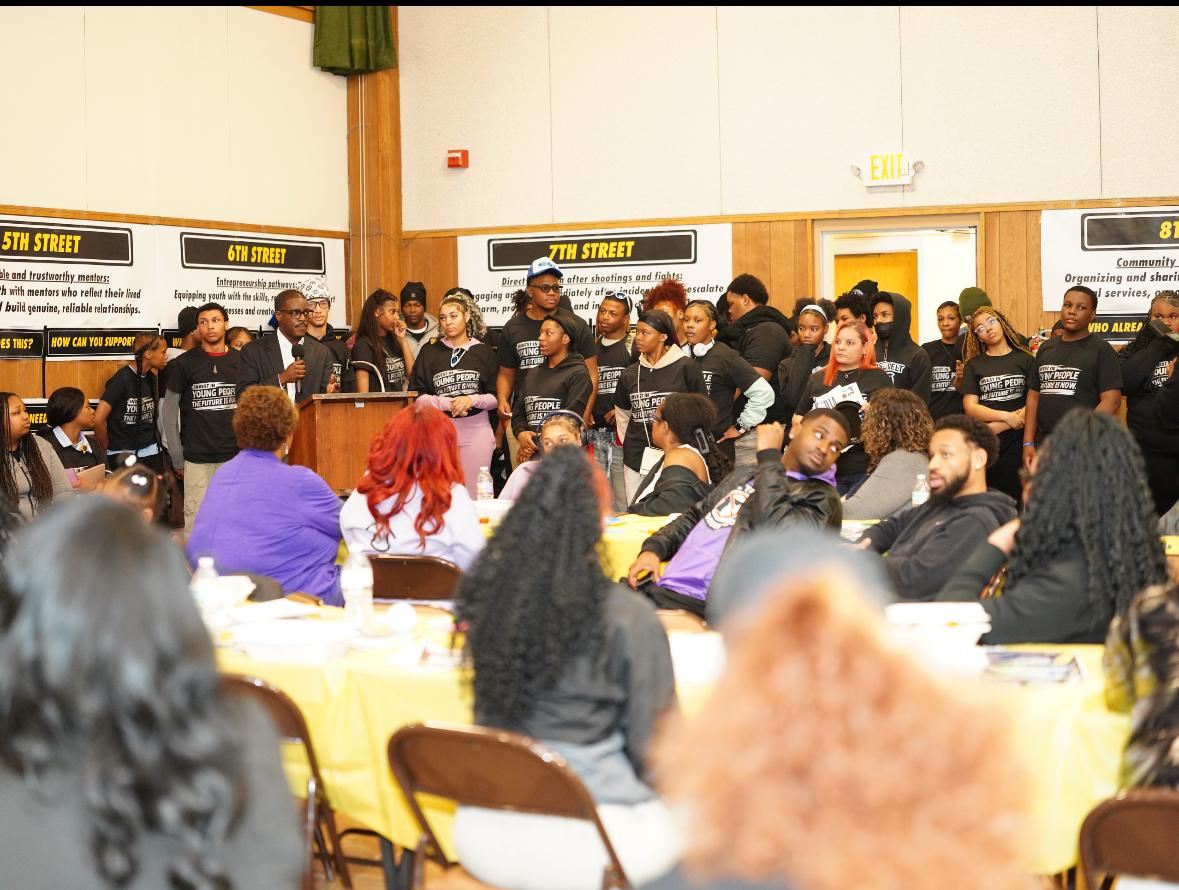
Source: Terrence Sims
Past, Present & Future: Youth Lead the Way in Milwaukee Violence Prevention Conversation
Mar 27, 2026, 5:50 AM CT


Share
Milwaukee’s ongoing conversation around youth violence took on new energy and direction this past Wednesday, March 25th, as more than 200 community members gathered at the Washington Park SOA Center for the “Past, Present & Future: Youth & Young Adult Violence Prevention Discussion.”
But this was not just another panel or policy-driven forum. What unfolded instead was a powerful, youth-centered experience that challenged traditional approaches to community violence intervention (CVI) and redefined what it means to truly invest in young people.
From the outset, organizers made one thing clear: this space would be led by youth, not simply including them.
And that decision shaped everything.
While the event, which was sponsored in large part by the Milwaukee County Department of Health and Human Services, began with a planned structure, organizers quickly realized that the original flow wasn’t connecting. Rather than forcing a rigid agenda, they made a critical pivot, one that ultimately became the defining strength of the gathering. By stepping back, adults created room for young people to engage authentically, connect with one another, and take ownership of the space.
The result was immediate and undeniable.
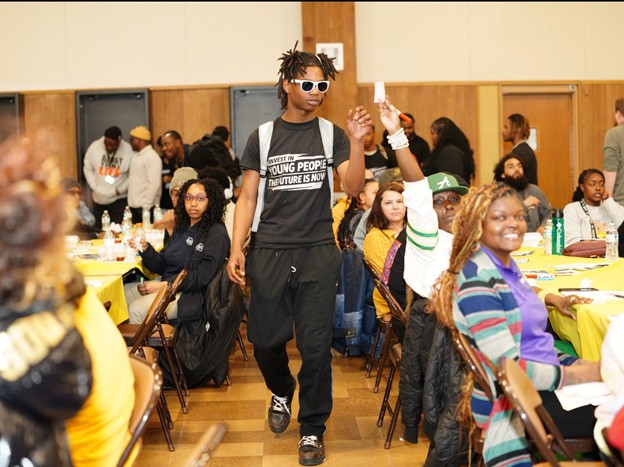
Young people were not only present, but they were also active.
“When youth are truly centered, everything else gets realigned,” one organizer reflected. “The mission becomes clear again.”
The numbers tell part of the story:
- Over 220 attendees participated
- More than 1,200 data points were collected
- 133 individuals committed to supporting youth-led strategies
But the most meaningful impact went far beyond metrics.
At the heart of the event, there were 47 young people who were compensated for their leadership, insight, and participation. Their presence wasn’t symbolic. They were treated as contributors, not just attendees.
And perhaps the most powerful moment came after the program officially ended.
As adults began to leave, the young people stayed behind—cleaning, laughing, dancing, and simply enjoying each other’s company. In that moment, the vision behind the event became fully realized: not just violence prevention strategies, but the creation of spaces where young people can experience joy, freedom, and a sense of belonging.
Community partners and collaborators, from grassroots organizations to public health leaders, played a critical role in making the event possible. But just as important was their willingness to trust the process, even when it meant relinquishing control.
“What I hope people take from this is a sense of hope,” said Aziz Abdullah, one of the event’s organizers. “Not surface-level optimism, but real belief that when we center young people and move together as a community, we can shift what’s possible in Milwaukee.”
Attendees left with more than ideas or talking points. They left with a shared sense of purpose, and a question that echoed throughout the evening’s debrief: When can the community do this again?

Want More Local News?

Civic Media
Civic Media Inc.
The Civic Media App
Put us in your pocket.