

Appeals court ends affordable SAVE Program for 7 million student loan borrowers Steep education staff cuts unable to correct loan servicer mistakes, says GAO

Mar 19, 2026, 6:48 AM CT


Share
On March 10, a federal appellate court order effectively ended the popular Saving on a Valuable Education (SAVE) program. The likely effect will be an increased financial strain on 7 million borrowers who used the program to keep their monthly student loan repayments affordable and manageable. Secondly, SAVE prevented balances from growing due to unpaid interest.
Other recent developments at the Education Department (ED) will make it more difficult for the current 42.8 million federal student loan borrowers to repay their collective $1.69 trillion in outstanding loans, as well as increase the likelihood that repayments will not be applied accurately.
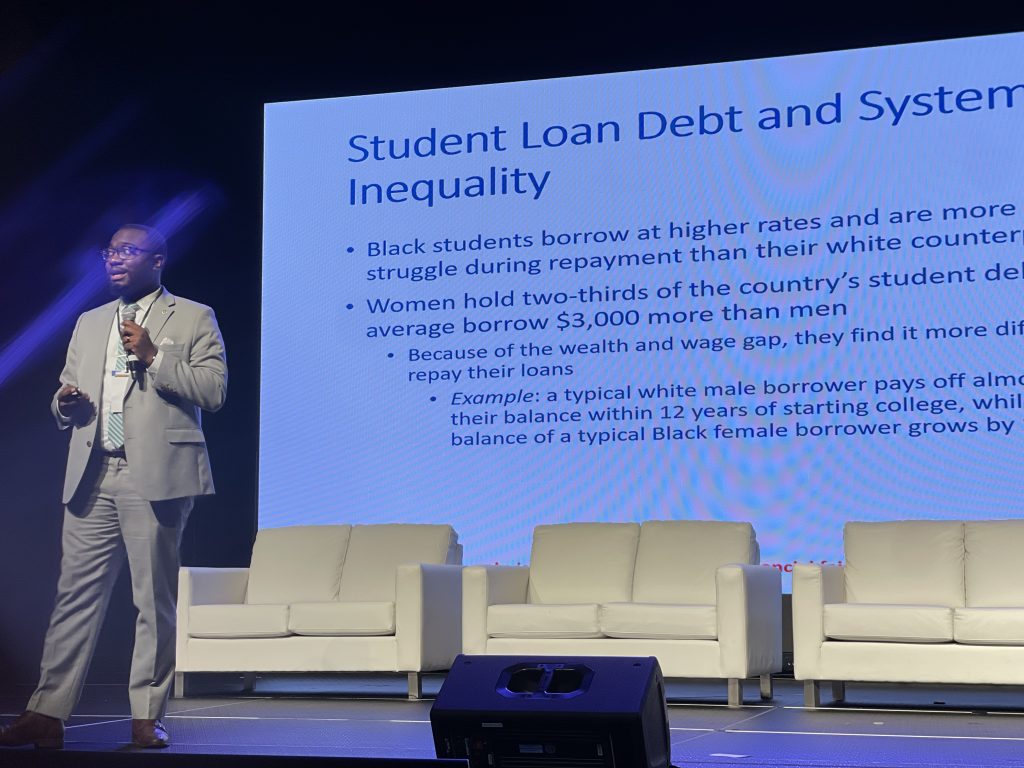
Photo Credit: CRL Image
The SAVE program provided the bulk of its benefits to students with the greatest financial need – those eligible for federal Pell grants – including Black, Latino, Native American and Alaskan Native borrowers. A recent study by The Century Foundation and Protect Borrowers anticipates that Black and Native American borrowers will be hit hardest by the end of SAVE. The study expects that the Southeast will see the largest number of loan delinquencies as a result.
“This outcome is unacceptable at a time when working families already face skyrocketing energy prices and a rising cost of living that is deepening the national affordability crisis,” said Mitria Spotser, vice president and federal policy director at the Center for Responsible Lending.
“Student loan policy should expand opportunity, not pull the rug out from Americans who relied on strong borrower protections and relief. Moreover, ending affordable repayment options through a backroom settlement not only places millions of families under unnecessary financial strain, but it also raises serious concerns about transparency and fairness,” Spotser concluded.
A similar reaction came from the National Consumer Law Center.
“Families relied on the SAVE plan to afford student loan payments while managing the rising costs of rent, groceries, childcare, and healthcare,” observed Abby Shafroth, managing director of advocacy at the National Consumer Law Center. “By eliminating SAVE, the Department is pulling the rug out from under these families and raising their bills while people struggle to afford the basics.”
One day after the SAVE court order, a newly released report added yet another dimension of worry for borrowers.
Between January and December 2025, Education Department staff reductions eliminated 656 personnel, leaving only 777 to carry out all departmental functions. As a result, the agency lost its ability to effectively monitor loan servicers and further added to a still-growing backlog of borrower requests.
The report stemmed from a request to review the Education Department’s capacity to carry out its statutory responsibilities. The General Accounting Office (GAO), the independent audit, evaluation, and investigative arm of Congress audited the Office of Federal Student Aid (FSA) documentation, servicers’ performance and billing reports and applicable laws. GAO also interviewed FSA officials as well as representatives of borrower advocacy organizations.
Specifically in February 2025, the Department of Education’s Office of Federal Student Aid (FSA) stopped assessing student loan servicers on accuracy and call quality due to lack of staff capacity, according to agency officials. Prior to discontinuing these quarterly assessments, FSA assessed servicers on two important metrics:
• Accuracy – FSA would review data for borrowers in servicer systems and compare it to data in FSA systems to determine if servicers were keeping accurate records for borrowers.
• Call quality – FSA would review phone calls between borrowers and servicers to determine if servicers provided good and accurate customer service.
Due to these staff reductions, borrowers who made payments in good faith now have no guarantee that their monies will be properly applied. As the report concludes:
“Education reduced its workforce by half and stopped key oversight of its loan servicers, which help manage a portfolio of more than $1.6 trillion in federal student loans. By discontinuing assessments of servicer accuracy and call quality, the agency risks overpaying servicers for poor service. In turn, borrowers may face financial consequences related to overbilling or being placed in the wrong loan repayment status.”
In a February 11 letter Richard Lucas, Acting Chief Operating Officer, rejected the report’s recommendations for improving servicer oversight, saying in part, “The Department of Education does not concur with the recommendation that FSA needs to reinstitute certain metrics introduced under the previous administration.”
Consumer advocates vehemently disagree.
“[S]tudent loan servicers—the private companies profiteering off pushing working families further into debt—are allowed to get off scot free for failing to do their jobs,” stated Protect Borrowers Policy Director Aissa Canchola Bañez. “This could not come at a worse time, as millions of SAVE borrowers will be forced out of their repayment plan and have no other choice but to rely on their servicer to maintain access to an affordable repayment option. Congress must hold this Administration accountable and demand that ED engage in critical oversight of its contractors.”

Charlene Crowell is a senior fellow with the Center for Responsible Lending. She can be reached at Charlene.crowell@responsiblelending.org.
Want More Local News?

Civic Media
Civic Media Inc.
The Civic Media App
Put us in your pocket.