


- Two Michigan counties were established during the 19th century, but were later absorbed by other counties
- Manitou County was created in 1855 by politician and religious leader James Jesse Strang but fell into disarray following his death
- The remote island of Isle Royale was once its own county, created solely for the production of copper
For 135 years, one thing has remained unchanged in Michigan, and that’s its 83 counties — stretching from Keweenaw at the tip of the UP down to Hillsdale in the southern Lower Peninsula. The last one to form, Dickinson County, dates back to 1891.
But there was a time when Michigan had even more counties, places whose names have been lost to history, including one that was ruled by a religious leader and another inhabited by people looking to get in on the copper industry.
Here’s a look back at two of Michigan’s “ghost counties:”
Manitou County (1855-1895)
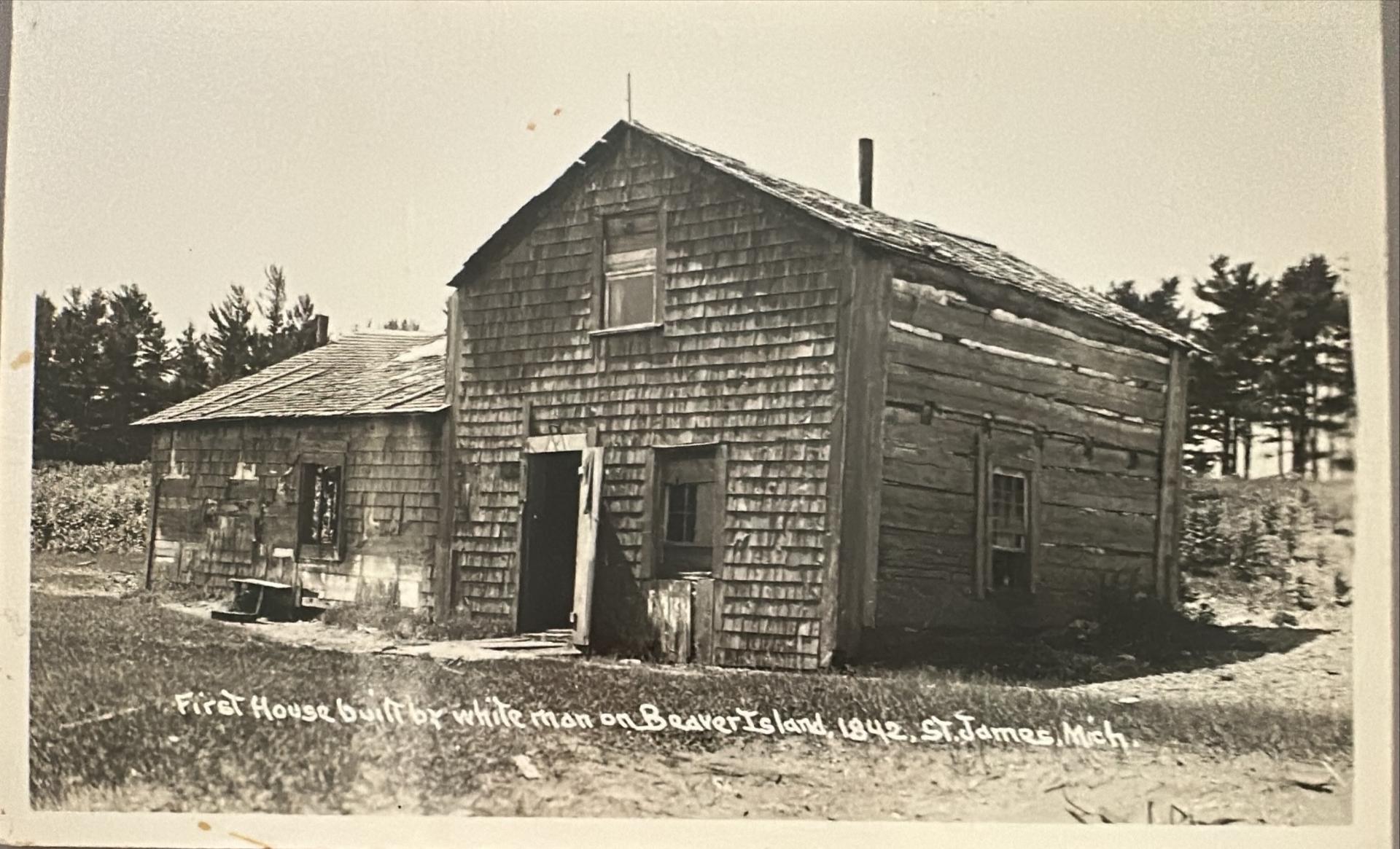
Manitou County was established in 1855 and encompassed the remote islands in northwest Lake Michigan, including Manitou, Beaver and the Fox Islands.
James Jesse Strang, a self-proclaimed Mormon king, promoted Manitou County as a place for Mormons seeking religious refuge in the late 1840s, historian Roger Van Noord wrote. Strang’s intentions were questioned, though. Accounts revealed that he was obsessed with the idea of power and dreamed of ultimate authority.
Van Noord, author of “Assassination of a Michigan King: The Life of James Jesse Strang” quoted Strang’s sister, who described her brother as “ a propagator of strange doctrines,” and that she had nothing to say “in regard to the motive which may have actuated” him.
After Mormon church founder Joseph Smith, was killed in 1844, Strang converted to Mormonism and became an ordained elder of the Mormon church, according to Van Noord.
Strang claimed that Smith wrote a letter to him before he died, predicting his martyrdom, and that an angel appeared to Strang shortly after Smith’s death and anointed him with oil.
He traveled around the Great Lakes, influencing people to follow him as the new leader of the Mormon faith, After several attempts at establishing a community, he finally landed on Beaver Island.
In 1852, he was elected to Michigan’s House of Representatives and spearheaded legislation that redrew Emmet County’s boundary lines so that Beaver Island would be part of the newly established Manitou County.
The move was frowned upon by mainland communities and created tension with fishermen and traders. Strang’s tight control over the county also created internal conflicts which eventually led to his assassination in 1856.
“They just didn’t have the population to maintain itself,” said Rachel Clark, archivist for the Archives of Michigan. “For the most part, especially during the mid-19th century, these counties are relying on their taxes to help keep them going.”
“Other than roads and basic infrastructure, the state’s not footing the bill for a whole lot for these counties,” she said.
Following Strang’s death, the county fell into disarray without a successor to govern it. Former Governor John J. Bagley described the place as “lawless” and urged it be dissolved.
“Once those taxes are gone … there’s nothing to maintain these counties, so they get absorbed into larger counties,” Clark said.
It wasn’t until 1895, nearly 40 years after Strang’s assassination, that the Michigan Legislature repealed the county’s organization and divided it between Charlevoix and Leelanau counties.
Isle Royale County (1875-1897)

Manitou isn’t the only county to disappear from the map. About 50 miles northwest of the Keweenaw Peninsula, Isle Royale, now a designated national park, once functioned as a self-governing county.
Isle Royale County was created in 1875 during the peak of the copper industry. The remote island was rich with copper and housed several mills.
But the copper mining boom was short-lived, and the small county could not financially sustain itself.
“The county was established solely because there was a mine there. It wasn’t like there was a population of any significance,” said Larry Wagenaar, executive director of the Historical Society of Michigan. “A county needs to have a decent amount of land mass … and a reasonably sized population.”
Isle Royale County was dissolved in 1897 and became part of Keweenaw County. The remote island is now referred to as just Isle Royale.
Manitou Island and Isle Royale, “were made for very specific purposes that probably weren’t even valid at the time. The land mass that’s involved with these two locations is small,” Wagenaar said.