



Federal regulators have a range of solutions available to tackle the widespread contamination of farmland with toxic chemicals, according to a new report by U.S. academics.
The report, published February 13 by the National Academies of Science, Engineering and Medicine and sponsored by the U.S. Department of Agriculture (USDA), offers a framework for the agency to address the contamination of US farmland with toxic per- and polyfluoroalkyl substances (PFAS), a class of human-made chemicals that accumulate in the environment and the bodies of humans and animals.
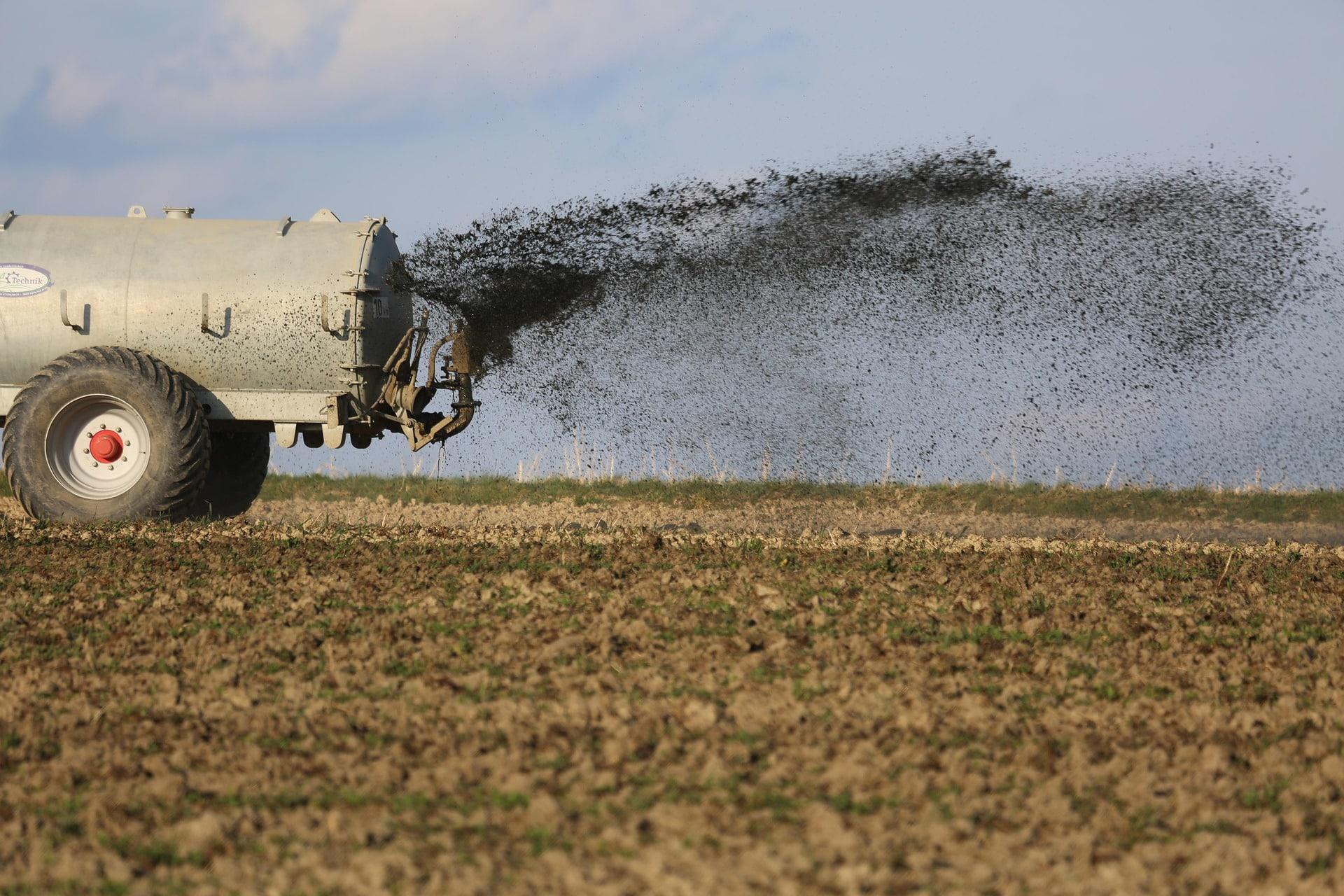
PFAS end up on agricultural lands when farmers apply sewage sludge as a fertilizer, contaminating crops and soil with chemicals linked to certain cancers and other health harms.
Nearly 70 million acres of U.S. farmland are potentially impacted, according to the Environmental Working Group. PFAS can also spread to farmland through pesticides laced with them—on average, 2.5 million tons of PFAS-containing pesticides are sprayed on crops in California alone.
“Even though many knowledge gaps about PFAS exist, there are sufficient opportunities … for the FPAC [Farm Production and Conservation] agencies to create a framework for responding to the impacts of PFAS contamination on agricultural land,” the authors wrote.
The USDA can use predictive models to identify farmland at risk of PFAS contamination, test for PFAS at specific sites if farmers choose to, and develop PFAS screening levels for different types of agriculture facilities, soil types and climates, according to the report.
It also calls for the agency to study how PFAS chemicals behave in diverse soils in different climates, develop better mechanisms to trap or sequester PFAS, and research ways to minimize the uptake of PFAS in plants and animals.
Learning more about how different plants absorb the chemicals could inform efforts to use certain plants to soak them up from the soil, the authors note.
“The report correctly finds that, in addition to testing data to determine the extent of PFAS contamination on our farms, much more research is needed into crop alternatives that do not uptake and transport PFAS so that contaminated fields can be safely and productively used without furthering toxic exposures to consumers,” says Emily Carey Perez de Alejo, executive director of Defend Our Health, a nonprofit based in Maine, which has led efforts to solve the PFAS and farmland crisis.
Efforts to assess the full extent of PFAS contamination on farmland and in the food system should look at PFAS as a class of thousands of chemicals instead of focusing on a handful of specific chemicals, she says.
On February 13, the day the National Academies report was published, the House Agriculture Committee released its draft 2026 Farm Bill, which includes language that would permit research grants on the agricultural impacts of PFAS in land exposed to firefighting foams, sewage sludge or compost containing the chemicals.
The draft calls for research on filtering out PFAS from sewage sludge intended for farmland, analyzing the uptake of PFAS by various crops or livestock, and remediating contaminated soil and water, among other research areas.
But U.S. Rep. Chellie Pingree from Maine said the draft bill reflected a “willful neglect of the PFAS crisis.”
“The bill acknowledges PFAS contamination on farmland—but then stops at research,” said Pingree. “While further research is a critical component to addressing PFAS contamination on farmland, we also need to support farmers who have already lost their livelihoods, their markets, and their land.”
Pingree is calling for a federal safety net to support farmers struggling with PFAS pollution that would work similarly to a fund Maine has already put in place, which supplements two years of lost income and helps farmers to sell their land to the state. As of mid-January, an estimated 111 farms in Maine were found to have been impacted by PFAS, according to state officials.
In early December, a bipartisan group of legislators, including Pingree, reintroduced the Relief for Farmers Hit with PFAS Act, which would create a federal program to authorize grants for states across the country to offer their farmers similar support. Pingree said she plans to offer an amendment to include the legislation in the farm bill.
This article first appeared on The New Lede and is republished here under a Creative Commons License.