


Feb 23, 2026, 3:15 PM CST


Share
Introduction
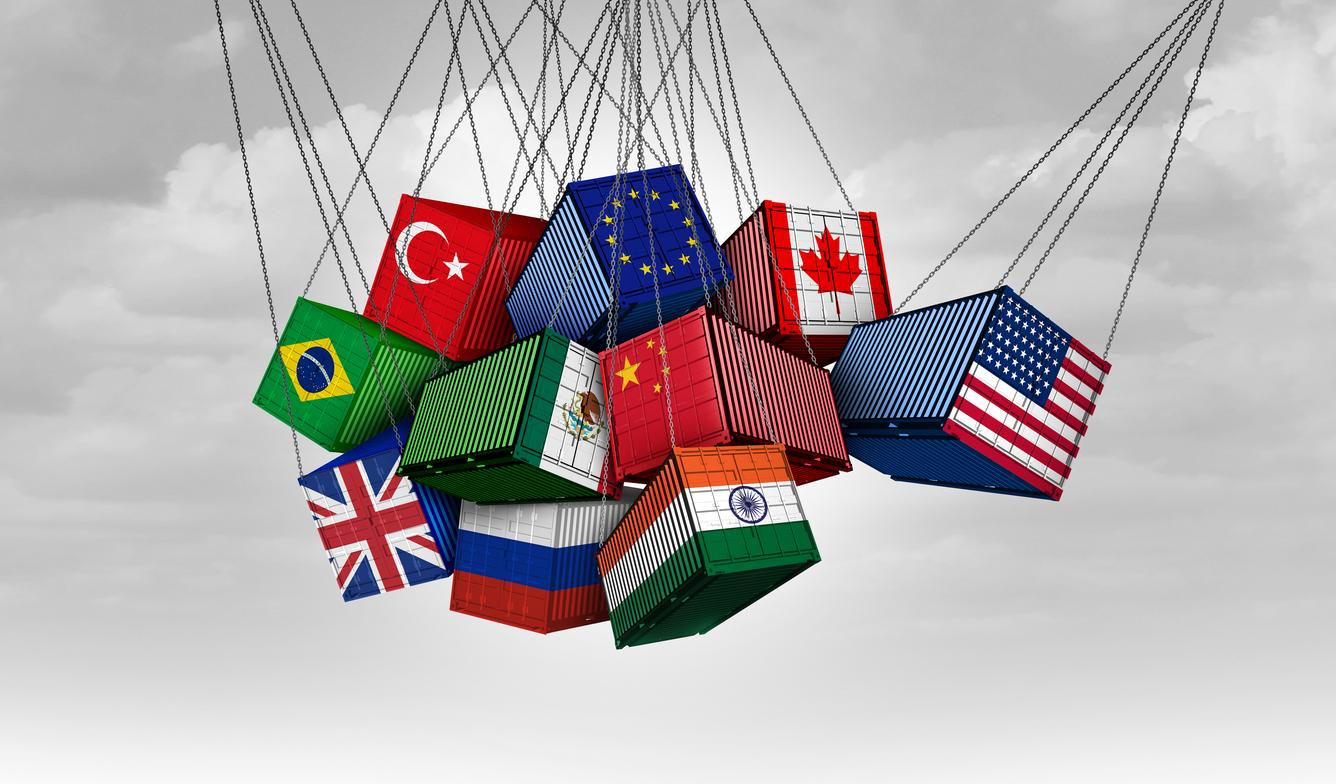
The Supreme Court of the US (SCOTUS) delivered an interesting and challenging decision for the Trump Administration on Friday, February 20, 2026. SCOTUS determined that much of the Administration’s wide-reaching tariff program, seemingly the centerpiece of Pres. Trumps economic policies, was outside the scope of his powers. The Administration acknowledged SCOTUS’s decision and responded with a new and higher “global tariff” rate that, too, will likely be challenged in the courts. This BlackEconomics.org Analysis Brief explores the following related concerns:
- How have Black and All Americans been affected by tariffs and the administration’s economic policies?
- What are other, selected and seemingly important Trump Administration economic policy results?
- What are the potential responding plays that Black Americans (Afrodescendants) can adopt in this national economic and geopolitical strategic game?
Brief Background
It is common knowledge that Pres. Trump’s Make America Great Again (MAGA) political mantra spearheaded his 2024 Presidential Campaign. It boldly featured plans to impose a new global tariff regime designed to reduce US imports, resurrect old and stimulate new growth in key US industries (especially manufacturing), create “great” jobs for average Americans, and keep the US economy simmering just below the boiling point measured by a new inflation target that he sought to impose on the Federal Reserve Board.
Viewed as an external, reliable, and potentially less biased source, we turned to the BBC for a summary of this over one-year-old “Trump Tariff Affair.”i The BBC highlighted the fact that, upon entering office in January 2025, Pres. Trump imposed new import taxes (tariffs) mainly on a country-by-country basis citing a 1977 US law: The International Emergency Economic Powers Act. Also, he used tariffs as a bargaining chip during trade negotiations with important US trading partners. Responding to a flood of litigation from US state governments and business enterprises, SCOTUS ruled last Friday (February 20, 2026) that the president’s actions were not approved by the US Congress and, therefore, were invalid. The administration responded to SCOTUS’s ruling by issuing a proclamation signed by Pres. Trump imposing new global tariffs set at a 10 percent rate. Other sources now report that the 10 percent tariff rate announced on Friday will rise five percent to a new 15 percent rate.
How Have Black and All Americans Been Affected?
A straightforward approach for assessing the effects of Trump Administration tariff policies is to perform a “before and after” statistical analysis—all the time swallowing hard when reviewing the results knowing that they reflect other domestic and geopolitical factors beyond tariffs, which should be excluded from the results, but are not. Four statistical results are fundamental and may provide reasonable answers for the subtopic covered here.
Table 1.—Selected Economic Statistical Results:
2024M01 – 2024M12 vs. 2025M01 – 2025M12
| Line No. | Selected Economic Statistics | (A) Results: 2024M01-2024M12 | (B) Results: 2025M01-2025M12 | (C) Difference (B-A) |
|---|---|---|---|---|
| 1 | Real GDP growth rateii (percent) | 2.4% | 2.2% | -0.2% |
| 2 | Balance on trade in goods (billions of dollars) BOP basis | -$1,215.4 | -$1,240.9 | -$25.5 |
| 3 | Inflation rate (CPIU, percent) | 2.7% | 2.9% | 0.2% |
| 4 | Unemployment rate annual average valueiii | |||
| 5 | National | 4.0% | 4.3% | 0.3% |
| 6 | Black (African) American | 6.0% | 6.9% | 0.9% |
Sources: (1) US DOC’s Bureau of Economic Analysis (BEA); (2) US DOC’s Census Bureau and BEA; (3) US DOL Bureau of Labor Statistics (BLS); and (4,5 and 6) BLS. Visualization by BlackEconomics.org.
With brevity in mind and to avoid entanglement in weeds, we provide explanatory caveats and then turn to comparative results presented in the rightmost column (C) of Table 1. The time periods compared are not “ideal” for a variety of reasons because they are not “precise and relevant,” and in no way reflect the full impact of the Administration’s tariff policies. Importantly, the second time period (column B) reflects the period that the Trump Administration has been operational; accordingly, it determined the first time period (column A) for comparison purposes. Also, while the Trump Administration came to power in January 2025, assigning economic results for his first months in office is imperfect as Biden Administration economic policies continued to reverberate through the economy. [Also see Endnotes ii and iii for more information about these statistics.]
None of the cells in column C of Table 1 appear favorable for the Trump Administration. Growth in estimates of the nation’s real (inflation adjusted) gross domestic product (GDP) declined slightly; the balance (exports less imports) on trade in goods went further south (the administration’s tariff regime was directed mainly at traded good, not trade in services); inflation increased slightly; and the unemployment rate increased for the nation slightly and for Black Americans significantly. These “unfavorable” statistics appears to have served as an impetus for the president’s moves to shake up leadership at the Bureau of Labor Statistics and at the Federal Reserve Board.
How has Black America been affected by the tariff policies? As mentioned in the previous paragraph, the Black unemployment rate increased nearly one full percentage point during 2025 over the unemployment for 2024. Also, given that line 3 of the table reflects an increase in the national inflation rate and BlackEconomics.org’s assertion that Black Americans have a different market basket and frequent different places of purchase than the nation broadly, we believe that Black America likely experienced a more adverse impact from inflation during 2025 than that cited in the column C row 3 intersection.iv
Before departing this Analysis Brief’s subsection, it is important to consider the following broad and sweeping statement concerning the impact of the Trump Administration tariff policies on Black America’s labor force and its about 4.2 million owned enterprises.v Our labor and enterprises are largely concentrated in services industries (e.g., Healthcare and Social Assistance; Transportation and Warehousing; Administrative and Support Services; and Public Administration/Federal Government), which are likely to be less affected by the tariff policies than labor and enterprises concentrated in goods producing industries—unless the service industries in which we are concentrated require a high proportion of foreign factor inputs.vi
Other Trump Administration Economic Policies
Besides immigration policies that we have already mentioned, two other important policy areas have been front and center during the first year of the new Trump Administration: (1) An increased push for the incorporation of emerging technologies (artificial intelligence (AI) and robotization; and (2) increasing geopolitical involvement and interventions that have involved the nation’s military. It is common knowledge that Black Americans are very underrepresented in almost all, if not all, aspects producing and using AI and robotization technology and we are not likely to benefit greatly from the 2025 technology boom (except, possibly as investors). However, given the nation’s historically favorable views about Black Americans’ performance in certain aspects of military operations and our participation in producing (manufacture of) implements of war, there were, and are, potential favorable opportunities in this sector of the economy.vii
A final point about Pres. Trump’s economic policies and what we view as a critical oversight, is the absence of crystal-clear communications concerning his grand vision for the coming world without work that he is systematically bringing into existence.
Potential Black American (Afrodescendant) Responding Strategic Plays
Black Americans’ ruminations and consternation concerning Pres. Trump’s economic policies generally—and tariff policies specifically—might best be considered from the following points of view:
- Recent statistics reveal that nearly 40 percent of Black American households have income in the $50K range or below. For such households, mere survival is the order of the day, and deep concern about national or local economic policies are unlikely to capture much of their thinking or worrying time. For the remaining 60 percent of Black Americans, it stands to reason that concerns about economic performance are to be substantially heightened over their lower income counterparts—especially as income and educational attainment levels rise in the latter group. This 40% vs. 60% distribution likely predominates Black American concerns about the Pres. Trump’s tariff policies.
- Like the remainder of the nation and the world, Black Americans with strong interests in the political economy had more than ample time to consider the president’s economic plan. Mandate for Leadership: The Conservatives Promise (aka Project 25), was developed with the help of the Heritage Foundation and published in April 2023. Project 25 includes 121 references to “tariffs.” Therefore, the tariff policies implemented by Pres. Trump should not have been, and should not be, a surprise. The other side of the foregoing statement is that, for a variety of reasons, there are too few Black economists, who are considered experts in the Public Economics subfield and who are experts on tariffs and other classifications of government revenue and expenditures.
- For Black Americans satisfied to remain fully integrated in the American political and social milieu, they are resigned to “take the bitter with the sweet.”
- Black Americans are now making seemingly insignificant progress on the Human Rights front as characterized by receipt of Reparations and the realization of self-reliance, self-determination, and liberty.viii The world is changing rapidly, but in directions inconsistent with our preferences; i.e., there is increasing adoption of political and legal policies, views, and mandates that are inconsistent with the Human Rights that we seek. Consequently, unless efforts to organize another big push on the Human Rights front commences soon, it may be increasingly difficult to reignite Black American energy to pursue these Human Rights ideals and to garner sufficient future support for them. In other words, a “local” (not a “global”) final pivot point for achieving favorable outcomes for Black Americans on this front may be now—or it may have already past.
- In the spirit of the Late and Great Rev. Jessie Jackson, we should “Keep Hope Alive,” and optimize our individual efforts to perform tasks that collectively could help us get where we want to be—enjoying our full Human Rights. If we persist with individual efforts, then the future may hold an opportunity to unify these individual efforts into a grand collective effort that can produce the world and life that we all desire.
Conclusion
The Trump Administration’s use of tariffs to achieve a variety of political economy and geopolitical objectives should not have been a surprise to Americans—Black or White. Project 2025 provided an ample warning. Also, the recent SCOTUS ruling to largely render the administration’s tariff regime invalid was also anticipated. What Black Americans and all Americans should know is that “things are not always as they seem.” Most if not all US firms that engage in a significant volume of foreign trade and confronted these tariffs through their foreign suppliers can obtain advice and counsel from excellent economists and attorneys, who should have been able to predict the outcomes that are now unfolding. To optimize our economic outcomes, it is incumbent upon Black Americans (Afrodescendants) to engage more vigorously on economic and geopolitical issues—even if they seem far afield from our lives. Almost everything is interconnected economically, and what we may believe is irrelevant can become very relevant when an economic policy reaches our doorstep in the form of higher prices, higher interest rates, higher taxes, etc.
In our view, the outcome of note is that the entire “Tariff Affair” was expected to be a quick source of revenue for the Federal Government, which would ultimately be returned in whole or in part to those paying the tariff. Importantly, economists will be the first to explain that consumers pay tariffs (taxes), which are passed on by sellers who confront higher prices from foreign suppliers. While analysis of last Friday’s SCOTUS decision has focused mainly on the forthcoming ordeal for deep pocket US firms to recoup their billions from the Federal Government’s coffer, an important question to ask is: “Which action should consumers take to obtain refunds from sellers who passed on the administration’s invalid tariffs to their customers after confronting higher prices from their foreign suppliers.” Suffice it to say that given the administration’s response to SCOTUS’s decision (a new round of tariffs that are likely to also be challenged in the courts), we are all likely to be wound up in the “Trump Tariff Affair” for years to come.
### — ###
Endnotes
i Natalie Sherman (2026). “Trump brings in new 10% tariff as Supreme Court rejects his global import taxes.” The British Broadcast Company (BBC). https://www.bbc.com/news/articles/cn8146l0n55o (ret. 022226).
ii Official estimates of US Real GDP growth are only available on a quarterly basis. Hence, line 1 of the table compares real growth for calendar year 2024 on a revised basis, with estimates of real growth for 2025 that are not final (BEA provided its “Advance” estimate for 2025Q4 on February 20, 2026, along with its first preliminary estimate for calendar year 2025. These estimates will undergo revisions and be equivalent to the estimates for 2024 in this table after BEA conducts its annual revision during the summer of 2026.
iii The US Department of Labor, Bureau of Labor Statistics’ estimates of the unemployment rate for calendar year 2025 are based only on 11 months of data (statistics for October 2025 are missing from the calendar year 2025 estimate due to the US Federal Government shutdown). Hence, unemployment statistics for calendar year 2025 are not strictly comparable with other complete calendar year estimates.
iv Brooks Robinson (2021). “A Black CPI?” BlackEconomics.org. https://www.blackeconomics.org/BEFuture/blackcpi.pdf (Ret. 022226).
v Census Bureau (2024). “Census Bureau Releases New Data on Minority-Owned, Veteran-Owned and Women-Owned Businesses.” US Department of Commerce and Census Bureau’s Annual Business Survey. https://www.census.gov/newsroom/press-releases/2024/employerbusinesses.html (Ret. 022226).
vi This information was obtained for Google’s LLM AI BOT (Gemini). The information request was: “Black employment in the top five NAICs four-digit industries.” Gemini’s response is available at: https://www.google.com/search?q=Black+employment+in+the+top+five+NAICs+four+digit+industies (Ret. 022226).
vii Brooks Robinson (2024). “Headline Thoughts No. 5.” https://www.blackeconomics.org/BEMedia/colshlt5102524.pdf (Ret. 022226).
viii Notably, the powerful surge in Black American interest in Reparations created persistent and loud chatter during the Biden Administration up through the 2024 Presidential Election. Afterward, interest waned to the point where little-to-no attention seems to be extended to this topic today.

Dr. Brooks B. Robinson is the founder and primary contributor of the 18-year-old BlackEconomics.org. He holds bachelor’s, master’s, and doctoral degrees in economics and spent 25 years as an economist and economic adviser with the U.S. Government, followed by five years with a leading international organization specializing in public finance and national economic accounts. He has taught at the graduate and undergraduate levels, worked across Africa, Asia, and the United States, and written and spoken extensively on Black economics.
Want More Local News?

Civic Media
Civic Media Inc.
The Civic Media App
Put us in your pocket.