
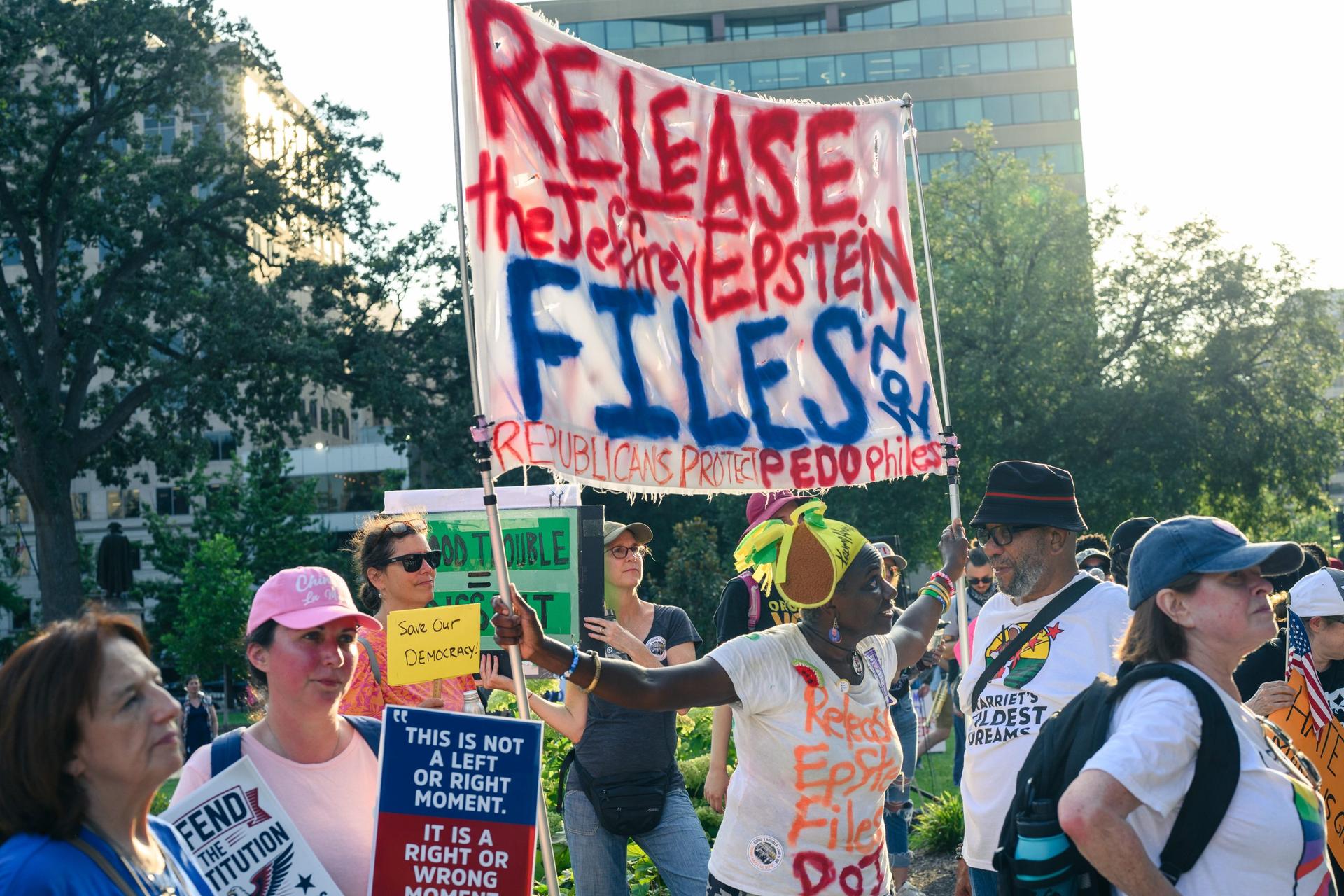
Source: Geoff Livingston
The Epstein Files: Why Ignoring Them is a Moral and Political Failure

Feb 13, 2026, 4:32 AM CT


Share
Years ago, as the Executive Director of African World Festival, I experienced firsthand the sobering reality of how widespread sexual abuse and exploitation truly are. During my tenure, the organization surveyed 400 women, asking if they had ever experienced sexual assault or abuse in their lifetime. Of those 400 women, 398 responded, and 378 confirmed that they had. Let that sink in: 378.
Their stories of trauma and survival were heartbreaking and, for me, transformative. Those surveys ultimately helped spark the creation of the Human Trafficking Task Force of Greater Milwaukee, an effort focused on combatting the systemic abuse and exploitation of women and girls in our community.
The Jeffrey Epstein case, his trafficking network, the young lives destroyed, and the enablers who stood by or participated, take me back to those early days of reading the responses to those surveys. The stories were nerve-racking, gut-wrenching, and infuriating. They reflected a reality that many people are too quick to ignore: sexual exploitation and abuse are not isolated incidents; they are systemic, pervasive, and often protected by silence and power.
In the heated political climate of today, debates often arise about where to focus our attention, and the Epstein files are no exception. Some argue that the web of abuse, exploitation, and the powerful individuals implicated is a distraction from more pressing issues like immigration policies, voter suppression, or political corruption. While these concerns are undoubtedly critical, dismissing the Epstein case as a mere diversion is a grave mistake. To ignore these crimes sends a dangerous message about accountability in America. And let’s be honest, after the January 6th pardons, we’re clearly already on shaky ground. Let’s be clear, this isn’t just about politics; it’s about our humanity.
America is capable of addressing multiple crises at once, and justice for Epstein’s victims does not have to come at the expense of tackling broader political concerns. In fact, the Epstein case is deeply tied to the very issues we aim to confront: the abuse of power, the corruption of institutions, and the complicity of elites who act with impunity.
The survivors of Epstein’s crimes are not nameless, faceless statistics. They are daughters, sisters, and friends. They are individuals who had their lives derailed by individuals who wielded wealth and influence to exploit them. Their stories deserve to be heard, and to dismiss their suffering as a “distraction” from larger political battles is to perpetuate the very culture of silence and complicity that allowed Epstein, and countless others like him, to operate for so long.
Dismissing the Epstein case as a distraction also feeds into a dangerous kind of political cynicism. It assumes that Americans are so politically entrenched, or perhaps so jaded, that they can’t afford to care about survivors of sexual abuse because they’re too focused on “winning” the next election or defeating a political opponent. This mindset is corrosive. It erodes our moral compass and sets a precedent that some injustices are simply not worth our time if they don’t fit neatly into a political narrative.
For me, the Epstein case touches Milwaukee in unexpected and unseen ways. While hundreds of miles from Little Saint James, where many of Epstein’s crimes were said to have occurred, the horrors of sexual abuse transcend location. As a country, we must hold space for multiple causes. We cannot claim to fight for democracy, equality, and justice while ignoring systemic sexual abuse and exploitation. The suffering of women and girls, from across the globe, can never be dismissed as a mere “distraction.”

Michelle Bryant is host of “Say Something Real with Michelle Bryant,” a morning drive political talk program on WNOV 860AM/106.5FM. She is a political strategist, president of CMB Consulting & Associates, and a weekly columnist for the Milwaukee Courier Newspaper. A former Chief of Staff in the Wisconsin State Legislature—where she also served as Budget and Policy Director and Clerk of the Senate Committee on Judiciary and Public Safety—Bryant brings decades of experience in legislative leadership, campaign management, and public policy. She is a graduate of the University of Wisconsin–Milwaukee and a longtime advocate for civic engagement and equity.
Want More Local News?

Civic Media
Civic Media Inc.
The Civic Media App
Put us in your pocket.