
When the pulpit speaks, communities listen
The vital role of faith leaders in civic justice

Feb 6, 2026, 5:50 AM CT


Share
I’ll be honest, since the pandemic, I haven’t attended church in-person very often. Online services have been a spiritual lifeline, as well as allowing me to worship with churches across the country. Lately, I’ve taken to joining Milwaukee’s Christ the King’s services, and I must admit, last Sunday’s message made me regret that I wasn’t sitting on a pew.
In a time when societal divisions and civic challenges are reaching critical levels, the role of clergy in addressing these issues has become a topic of significant discussion and a source of strength. Historically, faith leaders have been at the forefront of social justice movements, yet today, many shy away from political observation from the pulpit. This hesitation is particularly noticeable among Black faith leaders, even as our communities often bear the brunt of systemic injustices. The reluctance to engage in civic discourse is a missed opportunity that often leaves congregants without the spiritual guidance needed to navigate the complexities of contemporary issues. But Pastor Treyvon Sinclair walked right up to the plate, took a swing, and Jackie Robinson would have been proud.
In his sermon, Sinclair exemplified the power of biblical references to shed light on modern struggles. Preaching from Genesis 4:10, where God confronts Cain after the murder of Abel, the skilled orator drew a compelling analogy between the ancient story and today’s societal ills. Cain, consumed by his frustration and jealousy, redirected his anger toward his brother, resulting in violence. Pastor Sinclair likened this redirection of frustration to the attacks we see today on marginalized groups, those who differ in race, religion, gender identity, or socioeconomic status. In his sermon, he emphasized that when people fail to address the root causes of their own dissatisfaction, they often scapegoat others, leading to segregation, alienation, and in extreme cases, violence or death.
This bold sermon underscored the fact that religion has never been, and never should be, a neutral bystander in the face of injustice. Religion, at its core, is meant to guide people toward truth, justice, and compassion. Avoiding discussions of systemic oppression, inequality, or abuses of power under the guise of political neutrality does a disservice to congregants. However, being a truth-teller is not always easy.
Dr. Martin Luther King Jr., one of the most prominent faith leaders in American history, faced significant opposition from fellow clergy during the Civil Rights Movement. Many churches distanced themselves from him, fearing retribution for taking a political stance. This fear persists today, with some pastors mistakenly believing that their 501(c)(3) tax-exempt status prohibits them from addressing civic matters. However, this is a misconception. While tax-exempt organizations cannot endorse specific candidates, they are free to educate their communities about social issues and advocate for justice.
Many of the rights gained by African Americans over the years were achieved with the help of faith leaders. From organizing protests to providing moral clarity, these leaders understood that their faith demanded action. Today, we face new challenges that threaten civil, voting, and basic human rights. The pulpit is not just a place for spiritual reflection; it is a platform for moral leadership.
Pastor Sinclair’s sermon reminds us that the Bible is rich with stories, which resonate with today’s challenges. Faith leaders must use these lessons to foster understanding and inspire engagement. Inside or outside the church, all of us have a role to play in advocating for social justice.
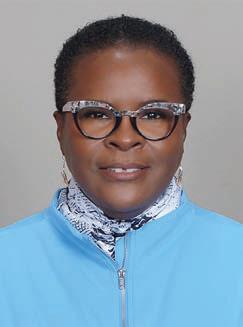
Michelle Bryant is host of “Say Something Real with Michelle Bryant,” a morning drive political talk program on WNOV 860AM/106.5FM. She is a political strategist, president of CMB Consulting & Associates, and a weekly columnist for the Milwaukee Courier Newspaper. A former Chief of Staff in the Wisconsin State Legislature—where she also served as Budget and Policy Director and Clerk of the Senate Committee on Judiciary and Public Safety—Bryant brings decades of experience in legislative leadership, campaign management, and public policy. She is a graduate of the University of Wisconsin–Milwaukee and a longtime advocate for civic engagement and equity.
Want More Local News?

Civic Media
Civic Media Inc.
The Civic Media App
Put us in your pocket.