
Wisconsin schools score high — but are they preparing citizens?
Jan 14, 2026, 11:15 PM CT


Share
This story was originally published by The Dairyland Patriot.
Wisconsin schools are earning high marks – but deep cuts to arts, languages, and civic learning raise questions about whether students are prepared for a complex, rapidly changing world. Nearly every public school district meets or exceeds state standards, yet the broader education ecosystem – from K-12 through higher education – is narrowing in ways that may weaken civic capacity, social equity, and long-term economic resilience.
Nearly a decade ago, Paul Linzmeyer, former chair of the Wisconsin Council on Workforce Investment Board, warned that reshaping education primarily around short-term labor market demands risked hollowing out the human and civic foundations democracy depends on. His warning is increasingly urgent today as schools and universities define success through efficiency, credentials, and workforce alignment, while arts, humanities, and civic learning are treated as expendable.
High ratings, narrow measures
This fall, the Wisconsin Department of Public Instruction released redesigned report cards showing that 94 percent of public school districts statewide met or exceeded expectations, with 85% of individual schools earning three, four, or five stars.
Yet these ratings emphasize what is easiest to quantify – test scores, growth, graduation readiness, and workforce preparation – while offering little insight into whether Wisconsin students are developing ethical reasoning, creativity, civic participation, or the ability to navigate complex situations. Persistent inequities remain, including one of the nation’s largest Black–white achievement gaps, highlighting the limits of star ratings as a measure of educational health.
From workforce pipeline to civic infrastructure
As early as 2016, Linzmeyer cautioned that education policy was drifting toward producing compliant workers rather than independent thinkers. In a recent interview, Linzmeyer said:
“At a time when we are rapidly moving toward an AI-dominated culture, it is especially troubling that we have lost sight of the fact that our humanness is our only true advantage. Higher education leaders have begun calling for a renewed focus on ‘humanics’ so that we can survive – and thrive – in an AI-driven world.”
Education – once understood as civic infrastructure – is increasingly framed as a workforce pipeline, often at the expense of creativity, critical thinking, and civic engagement.
A systemic retrenchment in higher education
The narrowing is stark in higher education. An Isthmus analysis of University of Wisconsin System records shows that 82 academic programs have been suspended or eliminated since 2022, more than half in the humanities or social sciences.
UW-Stevens Point, for example, suspended French and geoscience programs in 2020 while attempting to stabilize finances. Of the 63 programs cut without replacement, 27% were in the humanities and 24% in the social sciences. Business, engineering, and medical sciences accounted for a far smaller share of eliminations. Meanwhile, the UW System added 103 new programs between 2022 and 2025, concentrated in business, engineering, and applied technical fields, leaving students at regional institutions with fewer opportunities for a broad liberal education.
Equity and the geography of opportunity
Cuts fall hardest on students with the fewest choices. Jon Shelton, president of the American Federation of Teachers–Wisconsin, notes that regional campuses disproportionately lost programs in history, world languages, geoscience, political science, and other fields central to civic engagement and public service.
For many first-generation and rural students, these campuses are destinations, not stepping stones. When programs disappear, so do pathways into teaching, public administration, environmental stewardship, and community leadership – often without nearby alternatives.
Private colleges mirror the trend
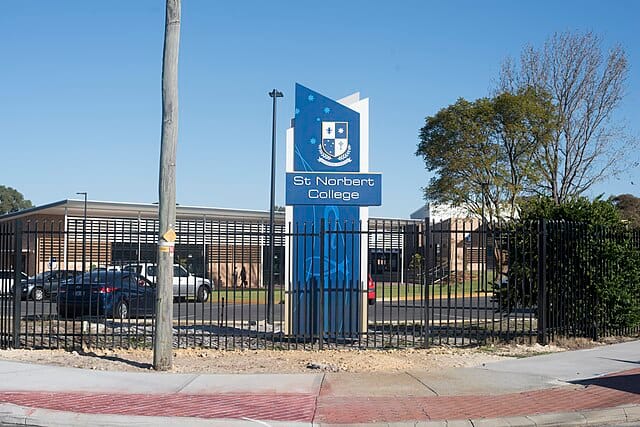
The contraction is not limited to public institutions. In March 2025, St. Norbert College discontinued 20 majors and minors, including studio art, history, international studies, French and Francophone studies, Spanish, theatre studies, theology, physics, chemistry, geology, and mathematics. While financial pressures and demographic headwinds were cited, the breadth of eliminations reflects a broader redefinition of institutional priorities across Wisconsin.
Student and faculty perspectives
Students demonstrate adaptability and commitment. Leaders of student organizations in classics, sociology, and psychology are reshaping programming to maintain research opportunities and preserve access to a rigorous liberal education.
Celia Barnes, Professor of English at Lawrence University, emphasizes the dual value of humanities classes:
“Humanities courses give students sustained practice in close reading, critical thinking, and clear, persuasive writing – all skills employers value and that citizens need to navigate an information-saturated world. But higher education can’t be only about career preparation. Humanities classes also help students understand how different cultures, histories, and voices have shaped the present. Sustained engagement with literature builds intellectual sharpness and empathy – something we need at a moment when public discourse can feel fragmented and shallow.”
Barnes concludes:
“The question isn’t whether we can afford to support the humanities, but whether we can afford not to. Our students and our communities are better served when higher education invests in forms of learning that cultivate thoughtful, informed, and empathetic people.”
The humanics imperative
Across Wisconsin, faculty, administrators, and students emphasize that humanics – interweaving technical skill, critical thinking, ethical reasoning, and creativity – remains vital. Departments are adapting by integrating interdisciplinary minors, study abroad programs, and courses emphasizing civic engagement and human-centered problem solving. Linzmeyer’s 2025 warning rings especially true in an AI-driven economy: the ability to synthesize, communicate, and think critically may be the most enduring advantage.
Preparing citizens, not just workers
The central question is not whether schools and universities meet expectations, but whose expectations they serve – and whether Wisconsin is preparing citizens capable of sustaining a free, creative, and resilient society. From K-12 classrooms to UW campuses, the story of humanics is one of preservation, adaptation, and foresight: maintaining the humanities and social sciences while evolving for the future.
Top Wisconsin Humanities & Social Sciences programs
- UW-Madison: Extensive programs in history, English, political science, global studies, and languages; robust research and fellowship opportunities.
- UW-Green Bay: Applied learning and community engagement help students explore human experience through literature, history, and digital media.
- UW-La Crosse: Interdisciplinary strengths in political science, Latin American studies, and public administration; emphasizes communication and teamwork.
- UW-Milwaukee: Programs in art history, journalism, linguistics, and Latin American & Caribbean studies; centers support civic engagement.
- UW-Stevens Point: Interdisciplinary minors in museum studies, women & gender studies, and environmental studies alongside strong social sciences.
- UW-Stout: Applied social science focus, including criminal justice and human development & family studies; prepares students for career-ready opportunities in local and regional communities.
Across these campuses, the principles of humanics – creativity, critical thinking, ethical reasoning, and adaptability – remain central, demonstrating that Wisconsin’s higher education system can sustain both workforce readiness and the civic and cultural capacities essential to a thriving society.
For this and other stories, visit the Dairyland Patriot here: LINK.

Want More Local News?

Civic Media
Civic Media Inc.
The Civic Media App
Put us in your pocket.
