
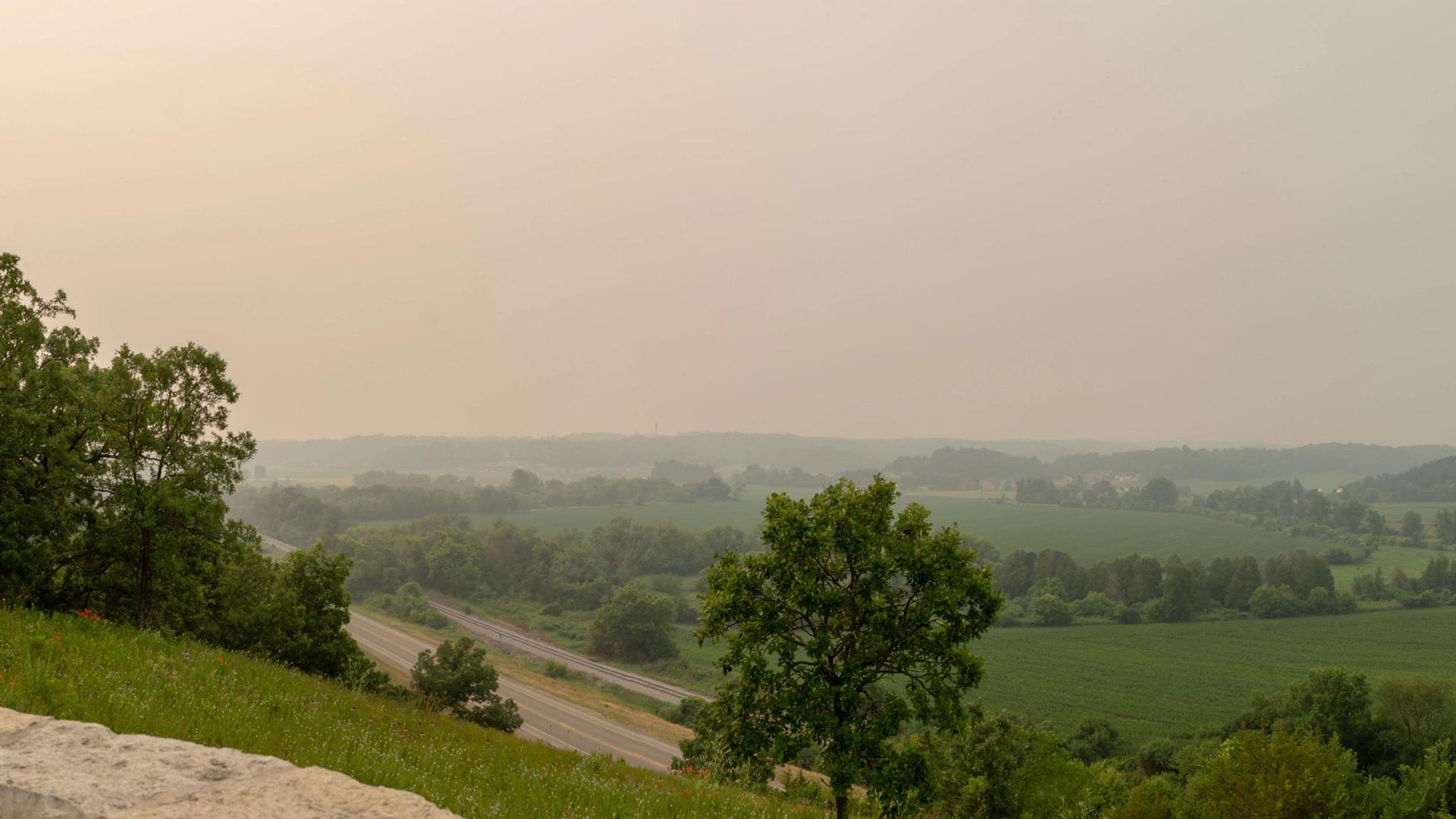
Source: Wisconsin Department of Natural Resources

May 30, 2025, 9:35 AM CT


Share
MADISON, Wis (CIVIC MEDIA) – Smoke from wildfires burning in Canada has swept across the state and may cause some to feel sick – here’s what we are breathing in.
Over 170 wildfires are blazing and burning in Canada, and only about half are controlled. The country raised its National Preparedness Level to five out of five on Thursday, May 29.
The largest evacuation in living memory is now underway in Manitoba and Saskatchewan, where a combined almost 870,000 acres have burned and continues to threaten towns.
As the winds shifted in the Midwest to pulling harder out of the northwest, the smoke gets dragged in that air. It’s a thick haze that’s blocking the sun in many places in the state.
The smoke can make anyone sick, but some people may be at higher risk. Currently we are in a moderate “orange” level, which is unhealthy for sensitive people.
What’s inside of this air is a mix of gases and fine particles from burning trees, plants, buildings and other materials. So, no wonder breathing it in can make you:
- Cough, wheeze, and have trouble breathing; can cause an asthma attack.
- Stinging eyes, scratchy throat, runny nose and irritated sinuses.
- Headaches, tiredness, chest pain and a fast heartbeat.
If you have heart disease, asthma, COPD, diabetes, are pregnant or have young children, you should take steps to avoid going outside – wear a mask and use an air purifier inside of the house.
You can see current air quality conditions here.

Brittney Merlot is Civic Media’s Meteorologist. Email her at brittney.merlot@civicmedia.us.
Want More Local News?

Civic Media
Civic Media Inc.
The Civic Media App
Put us in your pocket.