

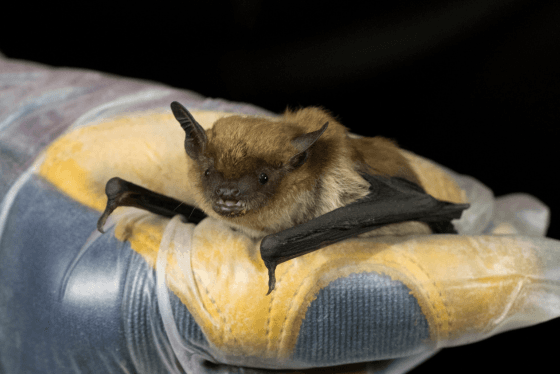
Source: Courtesy: Wisconsin DNR/Michael Kienitz

Oct 28, 2024, 2:17 AM CT


Share
MADISON, WI – (CIVIC MEDIA) – It is the week of Halloween. It is also International Bat Week. The Wisconsin Department of Natural Resources (DNR) encourages Wisconsinites to help the bats this week.
The DNR said bats are vital to the ecosystem and save farmers and foresters billions of dollars every year by consuming agricultural pests and insects.
“Bats are some of the most gentle, valuable and mysterious animals in our neighborhoods,” the DNR said in a press release. “They are vital to many ecosystems and have significant positive environmental, economic, and public health benefits. Insectivorous bats consume large numbers of agricultural pests, saving farmers and foresters billions yearly.”
They said a bat will eat up to 1,000 mosquito-sized insects per hour. And can eat the equivalent of its body weight in insects every night.
Of the eight bats found in Wisconsin, four are state-threatened species – the big brown bat, little brown bat, northern long-eared bat (also federally endangered), and tricolored bat – and one, the silver-haired bat, is of special concern, meaning the population is declining and in need of conservation action.
The DNR said a white-nose syndrome or WNS is a partial cause of the decline in bats in the state. It’s caused by a fungus that attacks the bare skin of bats during hibernation. The disease exhausts their energy stores and leaves them vulnerable to starvation.
While recent Wisconsin Bat Program survey counts show rebounding numbers at some significant hibernation sites across the state, there’s still a long way to go.
“Our program concluded hibernation surveys at our largest sites in early 2024, and we were surprised at how rapidly numbers were rising for three winters in a row,” said Jennifer Redell, DNR conservation biologist and bat program cave and mine specialist. “Moments like these have been few in North American bat conservation since WNS entered the continent.”
Despite some population recovery in little brown bats, hibernating bats are still stressed by WNS each winter.
Tips to Help Backyard Bats
Help take care of these valuable mammals in your area by taking a few simple steps.
- Learn how you can build your own bat house.
- Participate in an International Bat Week event.
- Plant native plants that are foundational to a healthy backyard ecosystem.
- Control burdock on your property, which can fatally entangle bats and small songbirds. After burdock has gone to seed, avoid composting, which may allow it to spread.
- Maintain an insecticide and herbicide-free yard. They can harm bats through the food they eat.
- In outbuildings and basements frequented by bats, keep buckets overturned or on their sides to avoid trapping bats and other small mammals.
Volunteer And Support Opportunities
- Become a Wisconsin Bat Program volunteer and participate in Roost Monitoring or Acoustic Monitoring.
- Sign up for email updates about bats and bat conservation.
- Donate to the Endangered Resources Fund to support threatened and endangered species and habitat protection in Wisconsin.
For more information about bats, visit the Wisconsin DNR’s frequently asked questions webpage.

Lisa Hale is Northeast Wisconsin Bureau Chief and the voice of newscasts on WISS. Email her at lisa.hale@civicmedia.us.
Want More Local News?

Civic Media
Civic Media Inc.
The Civic Media App
Put us in your pocket.