
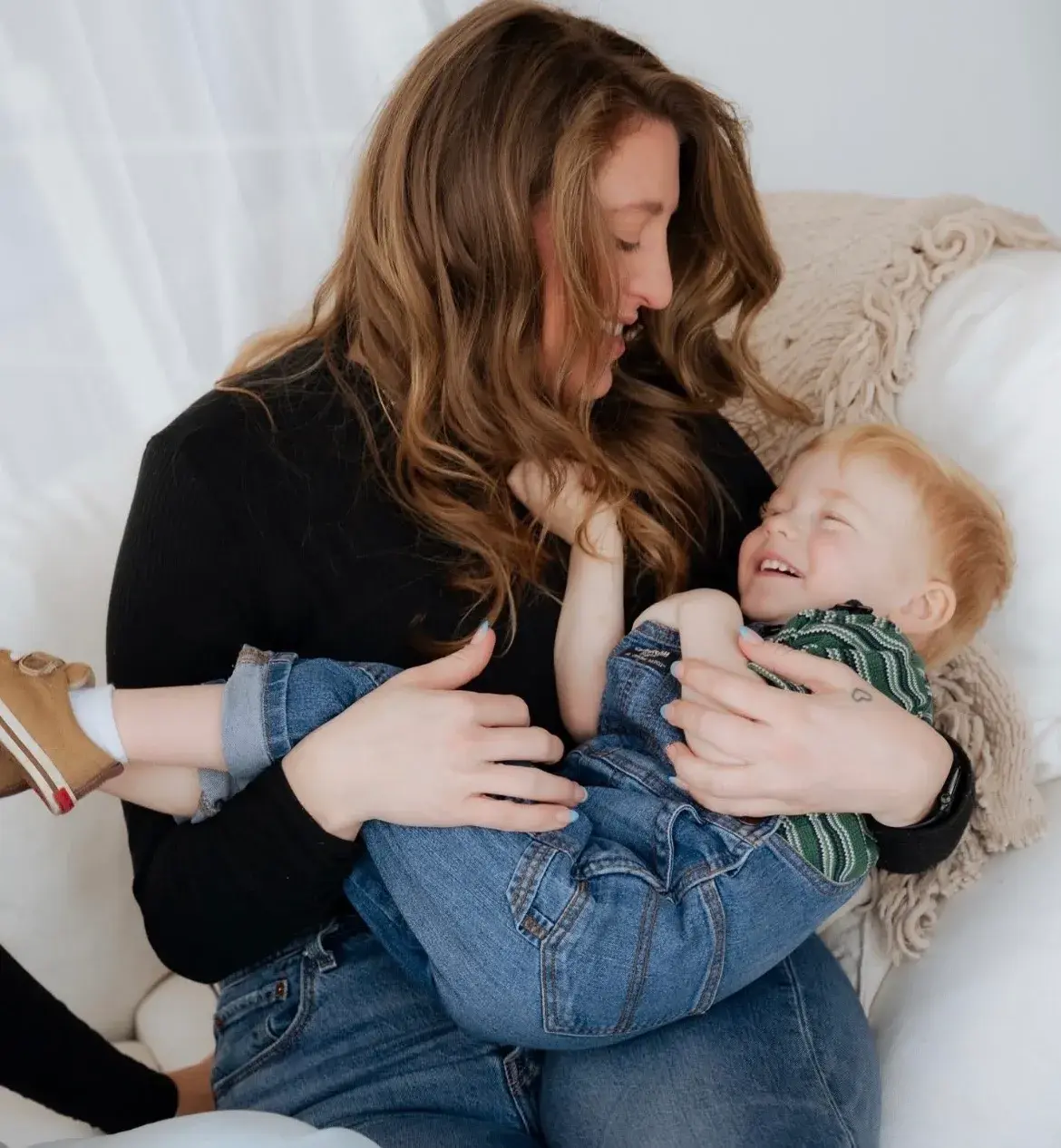
Mother of child with acute needs says system is set up to punish those who need it most
Jun 9, 2026, 9:27 AM CT


Share
Her difficult experiences with Social Security have been reported across the nation since the Trump administration cut 13 percent of SSA’s call center staff – including specialized claims processors – and closed four of its 10 regional offices.
Three-year old Oliver is currently receiving the care he needs to sustain him against the ravages of neuropathic cystinosis, a rare disease that affects kidneys as well as all the systems in the body by forming crystals in cells that damage vital organs.
It is care he will require for the rest of his life, from feeding tubes to expensive formula to a life-sustaining drug that runs as high as a half-million dollars a year to likely multiple kidney transplants later in life.
What Oliver is blissfully unaware of is just what it takes – in time, paperwork, arcane bureaucracy, unanswered phone calls, accusations of fraud, economic harassment and other indignities – for his mother, Taylor, to make certain they remain in compliance with complex Medicaid requirements so that he never goes without.
America became committed to the idea that those in dire need would not go without, that everyone deserved certain things under the banner of life, liberty and the pursuit of happiness. That certainly included sick children.
Along the way, of course, there would be people who would game the system, who would take advantage of American kindness through fraud and abuse. CMS, the Centers for Medicare and Medicaid Services, estimated an improper payment rate of a little more than 6 percent last year, or about $37 billion.
‘So heavy, so hard to deal with’
That sounds like a lot of fraud. Yet CMS goes on to point out that nearly 80 percent of those improper payments were due to insufficient documentation or administrative error. In other words, very little of that $37 billion was the result of individuals trying to scam the system.
Factor in also that an estimated 90 percent or more of actual fraud is the result of providers and facilities bilking the system. Or that the paperwork required for an individual to qualify for benefits is exhaustive and nearly fraud-proof. Ask anyone responsible for filling out these twice-yearly forms and they will laugh at the idea that they could sneak something past administrators.
Which is why Oliver’s mother, Taylor, grateful as she is for an America gracious enough to provide for her son, is at her wit’s end. It is why she has decided to take the tedious, difficult step of removing her son from Social Security’s Supplemental Support Income (SSI) and enrolling him in another program to access his Medicaid – either through the county waivers program or Katie Beckett Medicaid, which provides for kids with disabilities until they turn 19.
She’s doing this despite SSI being what she calls a Tier 1 program for Medicaid. In addition to health care coverage, SSI offers cash assistance to families who qualify.
“This was a really hard decision to come to, because it’s around $500 a month that really helps my family that we’re giving up,” she says. “But the headache and the threat and the constant … I mean, I see SSI pop up on my phone when they call me, and I get nauseous, and I go and take a Zolfran in the bathroom, and like take a deep breath, so that I don’t get too nauseous on the phone with them, because it’s just honestly so heavy, so hard to deal with.”
Taylor’s experience with Social Security has been reported across the nation since the Trump administration cut 13 percent of SSA’s call center staff – including specialized claims processors – and closed four of its 10 regional offices. Staff is at a 59-year low despite a threefold increase in caseload over that period.
“They’ve always been the agency out of all the agencies that are the most difficult to work with, the most challenging for families,” Taylor says. “And the reason is they come in hot every time. They threaten you with fraud and fines, and all these things. About twice a year, we get a letter in the mail saying we owe them money, you know, which obviously, if you’re receiving a social security check, it’s because you can’t work for some reason. Oliver is three with a genetic condition that’s not going to change.”
Among the complaints around the nation are extremely long wait times, inadequate training that leaves customer service agents ill equipped to answer questions or resolve issues, hang-ups, rudeness, threats and harassment.
Taylor says agents routinely ask her if she’s reporting everything and reminding her that it’s a crime not to.
“They act like I might be trying to game the system or commit some sort of fraud,” she says. “It’s scary. I’m not equipped for that. I’m not a lawyer, I’m not a finance expert. I only know how to fill out the paperwork they ask, and I do my best with that.”
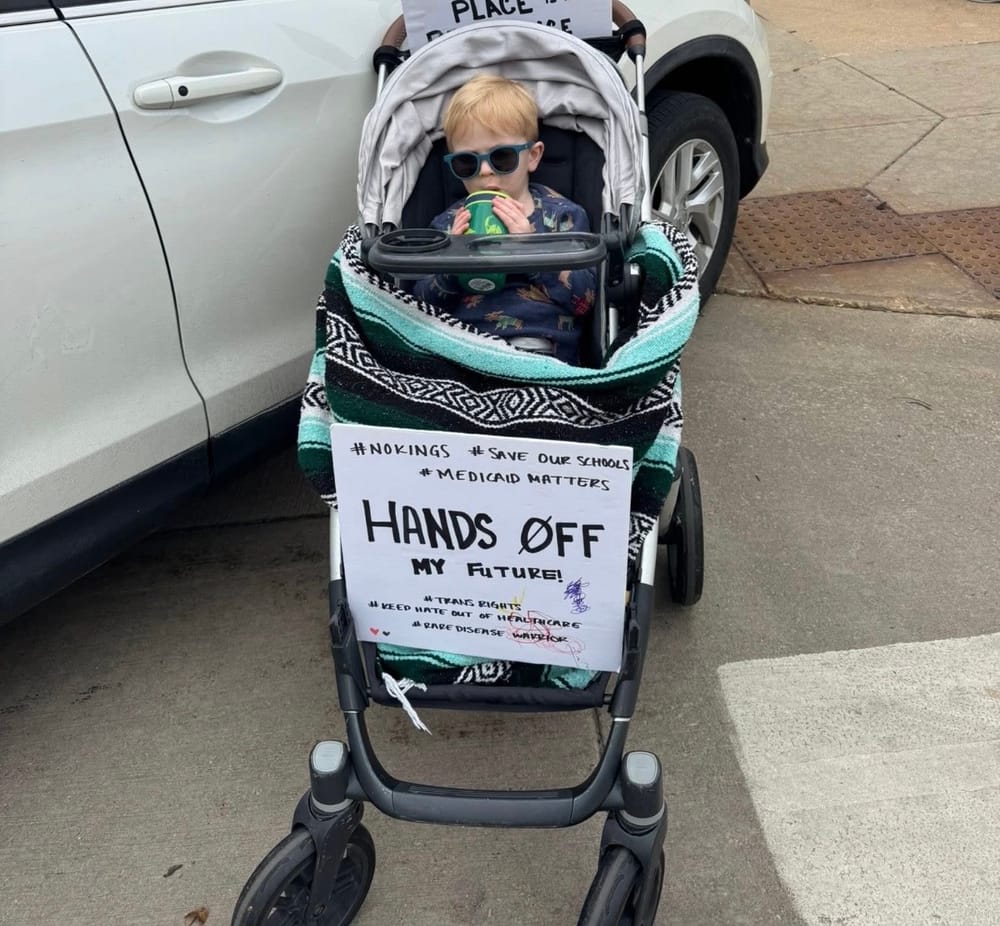
They see him as a number
Oliver, who cannot swallow food and takes his nourishment through a tube in his belly, has lustrous strawberry blonde hair, gray eyes and a shy – or perhaps mischievous – smile. He is independent because his mother lets him work out frustrating situations on his own, such as when he’s misplaced something. “You’ve got to put your thinking cap on,” she tells him.
He calls himself a ‘Cystinosis warrior’ and flexes his bicep. He likes to watch KPop Demon Hunters on his I-pad.
But Taylor doesn’t think the bureaucrats or the insurance people making the call see Oliver as an actual person. And she sees that as the way the system is designed. So that even when it should be clear that her family cannot possibly afford the $70,000 a month for the drug Procysbi that helps protect Oliver’s organs, they neither understand nor care to understand it, she says.
“Theydon’t have any doctors on staff so they just want to know what the bottom line is,” she says. “And when they see an expensive kid, they say, ‘we’ve got to look into this more and see if we can cut costs.’”
As a result, people besides those who should be looking out for Oliver’s welfare are making critical decisions. She points out as an example that if Oliver is forced to switch formulas, it should be up to his nephrologist and nutritionist to determine which is the one he needs. That, she says, is where the conversation should begin and end, with the people who have been monitoring him and can make the best decision. Instead, she says, there are “five more people” between Oliver’s need and the fulfillment of that need.
“I have to follow up with the supply company,” she says. “I have to make sure they even have it. And the reason that they wouldn’t be able to have all different types of formula or be able to get it is because of how Medicaid dollars are allocated, what gets approved, how it gets approved. There’s a whole bunch of red tape for that. Then I need to speak with ForwardHealth and make sure that they’re going to actually cover it. If they’re not going to, I’m going to have to talk to Children’s Long Term-Support (CLTS) and the WIC (Women, Infants and Children) office to see if they can help get us the resources that we need.”
A bitter irony
Taylor says she can’t believe what the system puts families in need through just to get the basic stuff of life for their kids. She works three marketing jobs from home and must arrange to deal with all of the many bureaucratic necessities during those work hours when the offices she needs to contact are open. It results in her not always being able to take care of her clients in a timely manner. It means she can’t work away from home in a job that would likely pay her more. This, she sees, as a bitter irony, given that the system – and the more stringent administrators in the Trump administration – demands that she do better for herself.
“It’s such unnecessary strains and such a huge stressor,” she says. “With all the new laws coming into effect, it’s only going to get harder from here. I’m already swimming upstream, doing the best I can and all of this just adds another layer. Another barrier across something that should have no barriers whatsoever. As simple as a child needing to eat.”
And her dealings with ForwardHealth, the conduit through which the Wisconsin Department of Health administers health and nutritional programs, sound Kafkaesque.
“You don’t get a person for a very long time, and when you do get a person, they hang up on you if they’re not the right person to answer the question,” she says. “They just say, ‘nope, sorry, we can’t help you with that. Goodbye.’ And if you’re in the call queue and you’re trying to figure out an answer to something and you hit a dead end and you don’t want the thing that you have gotten yourself to by pressing all the different number cues that you go through, they just hang up on you.”
He needs the care he needs
Taylor sees our entire health care and economic system through both the micro lens of her son’s situation and, as an activist, the macro lens of how it has devolved into an economic trap for people. Poverty, she says, is a choice our country makes through policy and she points out how people in need – and especially those who have a sick child – are set up for perpetual struggle, all the while being derided as takers.
“The requirements to get a job and hold a job are decided by what we allow in society,” she says. “There’s a minimum that a person’s 40 hours are worth. We know that’s not a livable wage. So, the types of jobs that a family who needs flexibility or a single parent who has a medically complex child can get are very limited. I have three degrees in my field, I can’t find work that will accept the needs of my family, so I’m working for less than I’m worth, because I have needs that my family just can’t go without.
“Oliver needs the care he needs, I can’t change that. If I could I would, believe me. So now I’m being called a fraudster or a villain because I’m not able to do more or make more with the time that I do have to work.”
H.R. 1 could impact Oliver’s future
Her concerns are also for Oliver’s future. The requirements for Medicaid coverage for a child are not the same as an adult. While H.R. 1, the Republicans’ so-called ‘Big Beautiful Bill’ that cuts nearly a $1 trillion from Medicaid, provides exemptions for medically frail or disabled people, the National Kidney Foundation warns that trying to navigate the complex paperwork required by Medicaid becomes even more difficult for someone with a serious illness.
The risk is a lapse in enrollment for a person whose life is dependent on comprehensive coverage for otherwise unaffordable medication, kidney transplants and vital post-transplant care.
Increased cost-sharing is another worry as states suffer from greater budget deficits due to federal Medicaid cuts. It could very well force states to cut back on or require onerous co-pays for “orphan drugs” such as Procysbi that Oliver needs to protect his organs.
Furthermore, as an adult, Oliver might be subject to asset limits of $2,000 in order to receive Supplemental Security Income or other Medicaid.
Indeed, the American College of Obstetricians and Gynecologists warns that nephropathic cystinosis patients who reach the age when transplants become a necessity are a demographic that could well be heavily impacted by H.R. 1’s cuts.
“I know that coverage for adults is a lot worse than coverage for kids, and that scares me for his future,” Taylor says. “I can do everything right in the world and make sure that he gets every single thing that he needs, but if at 18 it’s in his hands, and under this new bill he forgets to turn in a piece of paper, and that will cost him $70,000 a month, he’s not going to have that medication. This is a lifelong ripple effect that is going to, with no doubt in my mind, shorten his life on this earth. That’s wrong.”
A people-first issue
Taylor says this country has the resources to provide for kids like Oliver and for others who fall through the cracks. She points to the NIH, science, medications and FDA-approved treatments – all things that can keep people safe and healthy. She calls it cruel and calculated that we don’t better prioritize those resources to help those in need.
“People are suffering because somebody in a room not affected by what they’re doing decided my kids should suffer. Then your red or blue teams don’t really matter at that point. At some point, it has to become a people-first issue. And what these laws do is reduce us down to the numbers, and I think that’s wildly irresponsible and dangerous.”
She says the consequences of it all are real and dire for those with the greatest needs. Yet she thinks a certain segment of society views disabilities as a moral failing.
“If you’re not able to work because you have a disability, that’s not a character failure, that’s just a fact of life,” she says. “And we as a society need to decide that people are worth taking care of, and that will mean that some people will take more than they give, and that’s not because they’re being selfish. That’s because they need more just to get to the starting line, just to be able to stay alive today.
“For Oliver, things are fairly well managed today. My greatest fear for him is that we will not be able to continue to keep things well managed and that will have lifelong effects for him and shorten or destabilize what quality of life he will have into his adulthood.”

Want More Local News?

Civic Media
Civic Media Inc.
The Civic Media App
Put us in your pocket.
